
 By Jason Hayes
This article originally appeared in the Detroit News August 30, 2023.
The protective veil of government influence that normally shelters Michigan’s monopoly utilities is being ripped away, over and over again, as a string of storms has damaged an increasingly fragile electric infrastructure during the past several months.
Michigan’s Legislature is considering a bill to change the default option for members of the state-managed school retirement system from a 401(k)-style plan to a pension option. This change will put the state at further risk of deeper pension debt. Lawmakers should not put more people in a system that lets the state promise benefits now and pay for them later.

Michigan legislators are debating bills that would let Detroit substitute some of its property taxes for a land value tax. Detroit Mayor Mike Duggan is the biggest proponent of this legislation, which he sees as a way to address a problem in the city. Detroit has the highest property tax rates in the country. This affects the value of property and the city’s rate of development. Tax something and you get less of it.

This article originally appeared in Crain’s Detroit Business August 22, 2023.
Michigan's budget is unsustainable. The large increases in the budget can't continue, because state spending has grown more than people's ability to pay. And lawmakers have approved a budget that spends more money than they are entitled to receive. The state government, its taxpayers and everyone who depends on it would be in a better position if lawmakers practiced a little restraint.

The United Auto Workers union is on strike. Auto companies – backed by massive state and federal incentives – are seeing profits, and the union wants its members to get paid more. But there are many reasons to worry that this will end up leaving Michigan worse off.

Organized labor is more popular than it has been in decades. The polls show it, the media cover it, and politicians are reacting to it.
But are labor unions actually popular? Only in theory, if not so much in practice.
Gallup has long-term polling on how people feel about unions. The polling suggests unions are viewed more favorably than they’ve been in decades.

Last week one of these authors (LaFaive) had the pleasure of working with a network of colleagues on an important economic measure published annually by the Fraser Institute. It is known as the “Economic Freedom of North America” index and it is designed to objectively measure economic freedom in the 50 United States, Mexican states and Canadian provinces by the degree to which each is more or less economically free.

The future of Michigan’s tax cut is headed to court after the Mackinac Center for Public Policy sued Treasurer Rachael Eubanks late last month. The suit, which was filed on behalf of individual taxpayers, business groups and two lawmakers, seeks to preserve a legally mandated reduction in the personal income tax rate.

American taxpayers are spending billions of dollars to fight climate change with more renewable energy. But is putting all our eggs in this basket distracting us from other important opportunities to prepare for a hard-to-predict future climate? Even if renewables achieve everything their proponents hope for and more, we may still fall short if they come at the cost of investing in strategic infrastructure that could alleviate destructive events.
Some important economists have argued that economic liberty improves a country’s economic prosperity. When policymakers secure property rights and stay out of voluntary exchange, the whole society is better off. Bob Lawson works on the Economic Freedom of the World project, where he tests this theory by measuring economic liberty. I speak with him about it for the Overton Window podcast.

Last year, the United States experienced a severe shortage of infant formula. Excessive federal regulations and extremely high tariffs has caused severe market concentration, meaning a recall resulted in a cascading negative chain reaction. Prices skyrocketed and parents looking for food for their babies were often out of luck.
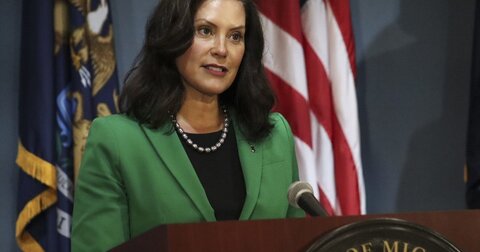
Strong winds and heavy rain, accompanied by half a dozen tornados, damaged areas of Michigan about three weeks ago. Hundreds of thousands of people lost power for days, but fortunately, casualties were minimal.
In response, Gov. Gretchen Whitmer declared a state of emergency for some areas of the state. But the governor has since unilaterally extended those emergencies, in a manner similar to what she tried to do during the 2020 COVID-19 pandemic.

This article appeared July 9 2023 at American Institute for Economic Research.
Since 2008 we have published (with the Washington, D.C.-based Tax Foundation) estimates on the degree to which cigarettes are smuggled, by state, including those exported to Canada or imported from Mexico. New rules to ban menthol cigarettes being considered by the Food and Drug Administration may dramatically hike cigarette smuggling.

 By Molly Macek
Michigan public school students recently performed below pre-pandemic levels in reading and math, according to the latest statewide standardized tests. This happened even though schools received record funds to help students recover learning losses incurred during school closures.

During the COVID-19 pandemic, the American Federation of Teachers regularly pushed to keep schools closed. The Detroit chapter — the Detroit Federation of Teachers — even approved a strike to stop the district from reopening classrooms.
The union has changed its tone since, but it was a strange position to argue that in-person teaching, the core job of its membership, wasn’t all that important.

This article originally appeared in the Detroit News May 22, 2023.
Gov. Gretchen Whitmer announced during her “State of the State” address that she wants to expand taxpayer-funded pre-K to all of Michigan’s four-year-olds and is proposing more than $250 million “toward the goal” of universal pre-K. But preschool for every child would be costly, primarily benefit higher-income families, is unlikely to result in educational gains and will harm lower-income Michigan families.

Government is good at funding services – not too hard, given its ability to tax – but not all that great at providing them. It is slow to respond to demand. Lawmakers are bad at anticipating the future. Well-intentioned laws end up delaying projects and stifling growth. There are many competing priorities among different government officials – and true cost-benefit analyses are rare.

Lawmakers in every state offer cash and other favors to select companies. Often the companies and politicians sign nondisclosure agreements that oblige both parties to keep quiet about negotiations. Pat Garofalo is appalled by this lack of basic transparency. Garofalo directs state and local policy at the American Economic Liberties Project, working with a coalition of groups and lawmakers to outlaw legislative nondisclosure agreements. I speak with him about his efforts for the Overton Window podcast.

Wayne County, which includes the city of Detroit, has long run a program where it seizes cars and cash from people police say might be involved with illegal drugs or prostitution. The problem? Most are never criminally convicted of or even charged with a crime.

Teen anxiety and depression are on the rise. And that’s not just since the COVID pandemic – it is a trend that’s been happening for more than a decade.
Experts disagree on the extent and causes of the problem. But most agree on the solution: building up resiliency. Adults, teens, children – it’s important for everyone to have the ability to be able to bounce back from problems and even tragedy.

This article originally appeared in the Detroit News July 13, 2023.
There are efforts underway in Michigan to prematurely expand Michigan Reconnect, a taxpayer-funded college scholarship program that is ripe for abuse.
Under the program, state residents who have not obtained a college degree can take community college classes without paying tuition. The program used to be limited to people 25 and over, but lawmakers recently appropriated federal funds in the FY23-24 state budget to make it open to those 21 and older.

This article originally appeared in Bridge Michigan June 22 2023.
Michigan Senate bills to hand out fresh millions to brownfield developers follow a familiar corporate welfare script: Multiply benefits, ignore costs and declare success.
Senate Bill 289, which recently passed the Senate with bipartisan support, would remove the $1 billion limit on how much the state can authorize in subsidies. This “transformational” legislation has the support of Gov. Whitmer and received the support from seven Republican senators and the opposition of two Democratic senators.
By Jason Hayes
In today’s “What’s Next” speech, the governor doubled down on her commitment to an energy policy that is making Michiganders colder, poorer, and more vulnerable to the cruelty of nature.
“We can achieve 100 percent clean energy while balancing reliability and affordability,” Whitmer said in a speech touting wind, solar and some “other common-sense sources” she chose not to define.
By Jason Hayes
This article originally appeared in the Washington Examiner July 12, 2023.
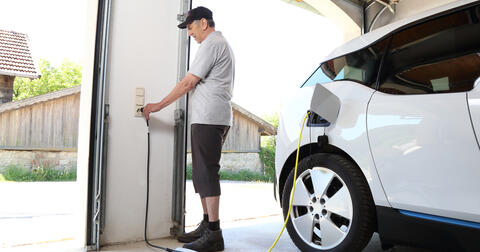
Big government mandates are forcing the national transition to electric vehicles. Consumer demand doesn’t appear to matter.
Government is doling out billions in special loans and subsidies to select companies and twisting tax policy to make EVs appear cheaper. At the same time, heavy-handed mandates are making traditional, reliable cars more expensive and harder to produce.

Michigan’s government spends a lot more than it used to.
The budget was $58.3 billion prior to the pandemic. Of that, $23.5 billion came from the federal government and $34.4 billion from state taxes, with local and private money making up the difference.



