
 By Molly Macek
The West Michigan Aviation Academy produces results. This happens even though it, like some other charter schools, contracts with a for-profit management organization. Its investment in innovative programming produces impressive student outcomes that counter claims of mediocre performance among charter schools supported by for-profit companies.

Under current policies, Michigan’s taxes are lower than the average state’s, but not quite in the lowest tier among states. Lawmakers can do more to make Michigan a low-tax state.
The Census Bureau publishes a finance report that covers the total collections of taxes at the state and local government level. These can be compared to other states by dividing total revenues by population, employment and GDP. Michigan has lower taxes than the average state but is not quite in the top tier.

This article originally appeared The Hill December 17 2022.
Growing up in the United States was a privilege. I have distinct boyhood memories of the old Soviet menace, but also of the sense that Americans were relatively safe and wealthy and that America was a beacon of hope for the oppressed. I also remember, later, the Soviet Union being dissolved, its flag with hammer and sickle lowered at the Kremlin and a new Russian flag being raised on Christmas Day, 1991. Talk about symbolism!

This article originally appeared in The Detroit News February 20, 2023.
Michigan spending has ratcheted up, and the governor’s spending proposals would keep it up.
Lawmakers increased the state budget from $34.4 billion to $45.8 billion during Gov. Whitmer’s first term, excluding federal transfers as well as small amounts of local and private funding. That is a 22% increase above inflation, including the recent spike. State revenue is up by a lot, even though many budget experts feared the state’s pandemic job losses would take a chunk out of tax income.

Millions of people look to daily TV news commentators to help inform their political opinions. Tucker Carlson, host of Tucker Carlson Tonight, is one of the most successful of those commentators, and he talks about how it works on this week’s Overton Window podcast.

A little more than 50% of Michigan residents aged 25 to 64 had a credential, associate degree, college degree or higher in 2021, according to new data released by the Lumina Foundation.
That’s slightly up from 49.1% in 2019. The organization did not release 2020 data.

Some people believe the only reason tuition at Michigan’s state universities has been going up is that state lawmakers have not given the schools enough money to keep tuition down.
Is that true? Theoretically, lawmakers could write checks so large that colleges would then be able to bring down tuition. But it would take a huge amount of taxpayer dollars to keep up with what the schools want to spend. Such an investment would not pass the test of a simple cost-benefit analysis.
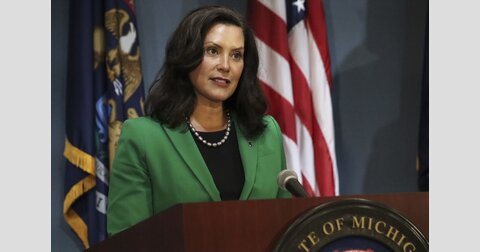
Gov. Gretchen Whitmer said in her State of the State address a couple weeks ago that she aims to “move Michigan forward.” Her policy priorities and those of her political allies, however, would take Michigan back in time. Most of the ideas coming out of the new Democratic-controlled Legislature simply reverse changes Republicans made when they were the majority.

By Molly Macek
Nearly half of eligible children choose not to enroll in Michigan’s Great Start Readiness Program, a taxpayer-provided preschool initiative. The state might make a positive long-term change in student achievement by trying to increase enrollment of the needy students for whom this program exists.

While 25 other states have fully recovered the jobs they lost during the pandemic, Michigan is still down 71,400 jobs, a 1.6% decrease. It doesn’t look like the state is going to get above pre-pandemic levels any time soon, either. The state won’t recover the jobs lost until 2026 at the rate of growth we have experienced over the past five months.

Note: The author will be discussing economic development incentives Monday, February 13 at a special meeting of the Big Rapids Charter Board at 7:00 p.m.
The Michigan Strategic Fund approved a deal in October to grant massive subsidies to a for-profit corporation known as Gotion, Inc. It includes state and local incentives worth up to $733 million. This is a bad deal for a number of reasons, not the least of which is the size and length of state and local incentives.

When people flip their light switch, they expect the lights to turn on. That forms one bound of the Overton Window for electricity regulation. The window has been shifting in recent years because people also want electricity generation to emit less carbon dioxide. I discuss this with my colleague Jason Hayes, the Mackinac Center’s Director of Environmental Policy, for this week’s Overton Window podcast.

By Molly Macek
No matter how much money schools get, you can find claims that they are underfunded. Even today, with Michigan schools spending more than they ever have before, we see that claim. But it’s misguided.
A recent editorial in the Iron Mountain Daily News laments teacher shortages and asserts that Michigan school districts can’t fix the problem because they are “strapped for cash.” Paula Herbart, president of the Michigan Education Association, similarly calls for more funding for schools so they can increase teachers’ salaries.

The Mackinac Center strongly opposes the new version of HB 4001 to be considered later today. We specifically object to two provisions of the agreement:
Were the “inflation relief check” proposal packaged as a separate item and not as part of a manipulation to disable the automatic tax-cut trigger, its single virtue would be that it disgorges excessive tax revenues from government and returns them to the taxpayers rather than wasting them on new programs and bloated bureaucracy.
Steve Liedel of the Dykema law firm made two fundamental legal errors when he was interviewed on this week’s MIRS Monday podcast.
In a discussion of Gov. Whitmer’s response to an automatic income tax rollback that could be triggered this year, Liedel took the view that the 2015 law creating the rollback is misunderstood and/or is unconstitutional. But he got two important points wrong.

Michigan lawmakers should be careful about the upcoming year’s budget.
There is a lot of uncertainty about what is coming, but lawmakers have more than $8 billion in extra cash on their hands. They should adopt a Sustainable Michigan Budget to ensure that spending grows no more than the average taxpayer can afford.

Lawmakers portray themselves as being in a high-stakes war with other states over jobs, thus needing to offer select businesses more subsidies in order to grow the economy. “For too long, we were fighting with a hand tied behind our back. Now we’ve got the upper hand,” Gov. Gretchen Whitmer said in her State of the State address.
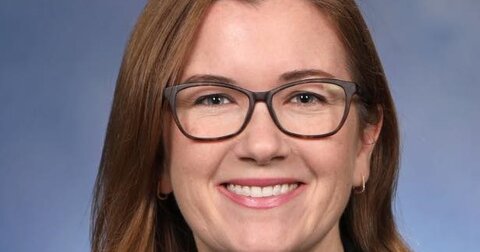
In the two capital cities that matter to Michigan — Lansing and Washington, D.C. — lawmakers in both parties have moved past their COVID concern.
If you were looking for a sign that life was back to normal, consider the case of State Rep. Natelie Price, D-Berkley.

The percentage of workers who are members of a labor union is the lowest that has ever been recorded, according to recently released federal data.
Only 10.1% of workers belonged to a union in 2022. The percentage of private sector workers who are members of a labor union was 6.0%. The percentage of unionized public sector workers was also down, from 33.9% in 2021 to 33.1% last year.

The federal 340B drug pricing program isn’t a bad idea in theory. The federal government requires manufacturers to sell discounted drugs to nonprofit hospitals serving a high percentage of low-income residents. The idea is that this will lower drug costs for the poor. The government essentially offloads the costs of providing drugs from taxpayers to drug manufacturers.

By Molly Macek
In its latest report, Education Trust-Midwest calls for “solution-based, research-based strategies” to address the disparate learning losses experienced by low-income students during the pandemic. One of Ed Trust’s top priorities for increasing test scores is to significantly increase the amount of money schools receive on behalf of their low-income students.
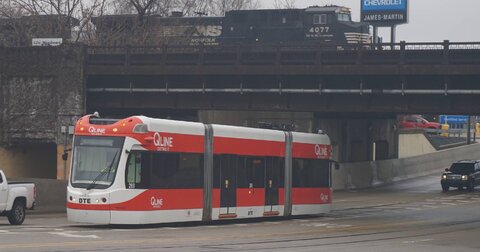
The QLine, initially known as the M-1 Rail, is a streetcar running three miles along Woodward Ave. in Detroit. It has not lived up to any of the overwrought promises advocates made. Fiscal conservatives and transit advocates alike criticize the line, which has never seen significant ridership.

The Mackinac Center debuted its Business Subsidy Scorecard, hosted by MichiganVotes.org, in 2018. The scorecard attempts to quantify the dollar value of business subsidies authorized by each Michigan legislator since 2001. An explanation of the criteria by which legislative record votes are added to the scorecard can be read here.

When Michigan lawmakers increased fuel and vehicle registration taxes in 2015, they also pledged to reduce income tax revenue in the future if a certain condition was met. Now it has been met, but Democratic lawmakers are reportedly working to stop the income tax cut for everyone in order to shift hundreds of millions of dollars to big corporations.

In her 2023 State of the State address, Gov. Whitmer proposed an age eligibility change to Michigan Reconnect, a program that allows Michigan residents 25 and older with no degree to attend community college at no additional cost to them. The governor wants to lower the eligibility age for Michigan Reconnect to 21.