
State budget officials estimate that Michigan tax and fee collections will rise in the upcoming fiscal year and the next one. The question now is whether lawmakers will use the extra money to fund what appears to be their highest shared priority: increased road repair spending. Last year’s stalemate over state road spending and taxes complicates current efforts to direct this growing revenue to roads.

Elected officials in Southeast Michigan want to put another tax hike on the ballot to pay for more bus lines or whatever else they may fit into their tax-and-spend transit plan. They also want state lawmakers to change some of the rules about funding transit before they seek to get it approved. Transit supporters should instead try to find out how to make the transit they already have work instead of asking for more money.

Michigan began 2020 without its taxpayer-funded Pure Michigan advertising campaign, having zeroed it out during last year’s budget debate. The appropriation should remain at zero as the Pure Michigan program is demonstrably ineffective, expensive and unfair.
Editor's Note: This article was first published in The Hill on December 13, 2019.
Michigan’s crime rate presently sits at a 50-year low and its prison population at a 20-year low. So it should follow that the state’s jail population also should be declining, as it has nationally since 2008. Instead, Michigan’s jail population has tripled since the 1980s — with no sign of abating.

 By Jason Hayes
Editor's Note: This article was first published in The Hill on December 11, 2019.
At this time of year, it’s normal for people to look back and consider the many blessings they enjoy in their lives. There’s no escaping the fact that the people of this nation are richly blessed.
Editor's Note: This article first appeared in The Hill on December 20, 2019.
Florida’s state government is suing Planet Hollywood, arguing that it paid the company to create jobs that never appeared and it wants its money back. Clawbacks such as this one are a regular feature of state deals with companies, and states tend to get repaid without court intervention. The bigger question is why state lawmakers around the country think they need to offer corporate handouts in the first place.
 By Ben DeGrow
Presidential election season must be heading into full swing. Left-leaning activists are crafting messages to persuade fellow Democrats about how to perceive certain issues in choosing a candidate. Education is no exception.
In a recent example, podcaster Jennifer Berkshire recently tried to downplay racial divisions within the Democratic Party over charter schools. Her Dec. 30 column for The Nation frames the issue as “liberals vs. moderates,” which misses both the plight of real students and families and the broad support for educational options from minorities.
While there were important laws passed in the statehouse in 2019, what didn’t get passed was just as noteworthy. There was no large tax increase, despite it being governor’s highest priority. There was less road funding in the budget, despite a consensus between legislators and the governor that that the state ought to spend more on road repairs. This was also a light year for business subsidies, and our business subsidy scorecard — which records legislators’ votes on such matters — contains only one small addition.

Miladis Salgado is a Florida mom who had $15,000 seized and forfeited by the federal government. But she was never even charged with criminal activity. For two years, she fought in court and eventually had her property returned.
But, in the meantime, she spent a third of her life savings on legal fees. An innocent woman lost several years of her life and a lot of her money. She has no recourse to correct this wrongdoing by the government except to continue her fight in court.
Interest groups will increasingly make their case about why they like or dislike different candidates as the 2020 election approaches. Perhaps this is why union officials have repeatedly claimed that the 2017 tax reform package hurts their members. But it isn’t true: Almost everyone got a tax cut.
 By Jack McHugh
The 100th Michigan Legislature completed its 2019 business and will commence its second year of regular sessions on Wednesday Jan. 8. The next Roll Call Report will be posted on Jan. 10. This report recaps the 2019 legislature’s volume of activity.
Since 2001 MichiganVotes.org has provided concise, objective and plain-English descriptions of every bill, amendment and vote introduced or taken in the Michigan legislature.

Editor's Note: This article first appeared in The Detroit News on December 15, 2019.
According to a recent estimate, there are more than 3,100 criminal acts defined in Michigan statutes, and lawmakers add dozens more every year, on average. No person could keep track of all these offenses, leaving citizens unsure if their behavior is potentially criminal or not: This is the problem of overcriminalization. A package of bills being considered in Lansing provides a perfect example of both how this problem develops, and the dangers of lawmakers creating so many crimes.

Michigan will end 2019 with some great news: State lawmakers didn’t re-up the audaciously named “Good Jobs for Michigan” corporate handout program. The state will not be able to give away new deals for taxpayer cash to companies through this program starting in 2020.
On Jan. 1 the Mackinac Center’s Morey Fiscal Policy Initiative posted and distributed its first policy recommendations of the year. The essay was titled “2019 State Budget: Cut Corporate Welfare for Roads and Economic Growth,” and it described the shortcomings of the state’s subsidy programs and how money now dedicated to them might be better spent.

By Jack McHugh

Michigan voters legalized recreational marijuana through a ballot proposal last year, and labor unions are seeing green. Big Labor and its allies are trying to use state regulations to grow union revenue.
After Michigan became a right-to-work state in 2013, most its largest unions have seen big declines in membership and revenue. State law and U.S. Supreme Court decisions have rendered it illegal for unions to force workers to pay them money in order to hold a job. This has freed hundreds of thousands of teachers, auto workers, day care employees, state workers, home caregivers and more.
By Ben DeGrow
Gov. Gretchen Whitmer’s Tuesday announcement that she would sign the supplemental school aid bill signals the end to a lengthy appropriations debate, finally wrapping up more than two months into the fiscal year. The prolonged drama could easily obscure the final result, which is well within the trend of increased state spending on education.
Six years ago I criticized a chart that President Obama published about job growth. It implied that he was single-handedly responsible for ending the Great Recession. In presenting the same information in a slightly different manner, the data suggested that the recession continued to intensify for months after the president took office. It’s worth a second look with new data and a new administration.

By Jack McHugh

Last week, the Mackinac Center published a study about the problem of letting administrative agencies define criminal behavior. This happens when the state Legislature empowers a state department to write legally binding rules to execute a statute and then declares that anyone violating the statute or these rules is guilty of a crime. In effect, then, unelected bureaucrats in these agencies can determine what constitutes criminal behavior.
By Ben DeGrow
(Editor's Note: This is the third in a series of articles featuring the perspectives of current and recent Michigan public school teachers’ experiences with school choice. See the first two articles here and here.)
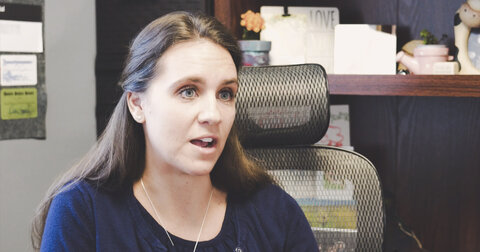
Meeting Amy Dunlap now, it’s hard to imagine. But in the early part of this decade the energetic and passionate young woman was ready to give up on her teaching career. From defiant, disruptive students to uncooperative colleagues, her classroom experience had become far more frustrating than fulfilling. “You start to rethink why you went into the profession,” she said.
Counselors, insurance agents, cosmetologists and athletic trainers are all set to more freely practice their jobs under bills recently passed or expected to move soon in Michigan. These are all good steps toward reducing unnecessary regulation, but they also show the need for more comprehensive licensing changes.
By Jack McHugh

By Jason Hayes
Editor's Note: This article first appeared in The Hill on November 2, 2019.
President Trump's offer to purchase Greenland from Denmark was front-page news in August, but a better option for expanding the country’s geographic footprint would be to offer statehood to the Canadian provinces of Alberta, Saskatchewan and Manitoba, as well as the interior of British Columbia.
Editor's Note: This article first appeared in The Hill on October 26, 2019.
Young people extolling socialism have caused conservatives to sound alarms about the direction the country is going. But the reappearance of socialism is more a sign of a wide partisan divide than it is evidence that people want to change America’s economic system.



