Gov. Gretchen Whitmer finally released more detailed information about the approach her administration is taking to combating the novel coronavirus, including a rubric to guide decision-making. The MI Safe Start plan defines six phases the governor will use to methodically reopen Michigan society. While this sheds some new light on the governor’s strategy, it lacks necessary detail and leaves the public still largely in the dark.
The Mackinac Center for Public Policy last Friday announced it had spearheaded a letter to congressional leaders and the White House in opposition to calls for state and local bailouts that predate the COVID-19 pandemic.
This letter — signed by 24 institutions in the State Policy Network — was inspired in part by the brazen request of Illinois politicians for a $40 billion-plus bailout. This would be in addition to federal resources already approved for states and their citizens. A portion of the requested bailout included $10 billion just to subsidize government pensions in the Land of Lincoln. Those pensions were underfunded by more than $100 billion well before any economic impact from the pandemic.
Editor's Note: This article was originally published in The Detroit News on May 6, 2020.
It seems like ages ago — before the 2020 elections and coronavirus flooded our screens — when Michigan legislators and Gov. Gretchen Whitmer agreed to significantly change Michigan’s auto insurance laws. If you’re like me, you’d prefer to give just enough thought to auto insurance to avoid being completely irresponsible. If that’s true, I have some bad news: You’re going to have to make new decisions about your auto insurance. But I also have good news: You can save money based on what you choose.
Gov. Gretchen Whitmer has issued more than 70 executive orders in response to the COVID-19 coronavirus. These orders, impacting the lives of millions of Michiganders, have drawn a significant amount of attention. But emergency executive orders are nothing new. Gov. Whitmer made wide use of her power to declare official state emergencies before the coronavirus landed on these shores.
 By Ben DeGrow
Imagine the organized chaos of an online gathering of 20 children, all 5 or 6 years old. A friendly, authoritative voice pierces through chatter — mostly, the eager answers to her questions —with words of encouragement, guidance and praise.
Seated at her dining room table and aided by her daughter, who is in the same room, veteran Richland Elementary teacher Pam Gernaat holds the attention of nearly all her kindergarten students. For 25 minutes, she leads them through flashcards, writing practice and show-and-tell. Children energetically demonstrate their recognition of key letter sounds and give brief accounts of a favorite stuffed animal, piece of homemade jewelry or family pet.
Gov. Gretchen Whitmer is making unprecedented use of executive power to respond to the COVID-19 pandemic. She says this is necessary to protect public health, but the case she makes in public to justify these actions is confusing and lacks detail. Although claiming to use “the best science,” Gov. Whitmer has provided virtually no details over the last eight weeks as to what that means.

In the Mackinac Center’s research and education programs, we consider all people, all institutions, all disciplines and all times. I emphasize the word all because it is a word that too many of our elected leaders are presently failing to consider, and candidly, too many of our neighbors have yet to fully absorb.
 By Holly Wetzel
We’re continuing our coverage of what businesses and individuals across the state are doing to help during the COVID-19 coronavirus pandemic. It was announced earlier today that Pfizer and BioNTech selected Michigan as a manufacturing site for possible COVID-19 vaccine production. This means several thousand Michiganders will potentially be manufacturing vaccines, hopefully in the near future.

The 50th anniversary of Earth Day has come and gone. But doom and gloom predictions from green groups — about pollution, climate, overpopulation, and overconsumption — linger on even though science and statistics demonstrate there is a great deal for people to be optimistic about.
Many people predict doom for the state budget as the pandemic threatens to lower state tax revenues. This happens, in part, because lawmakers are deliberately shutting down large portions of the economy to slow the spread of the virus. But the state government can be resilient, and lawmakers have the tools to prepare for any fiscal harms the pandemic may inflict.

Editor's Note: This article first appeared in The Detroit News on April 30, 2020.
The most important thing during the COVID-19 pandemic to protect the health and welfare of Michigan citizens in the short-term is staying home and away from other people, as much as possible. For most households, having reliable, high-speed internet and data access makes that a lot easier.
 By Jack McHugh
Senate Bill 858: Accelerate lifting of epidemic lockdowns: Passed 22 to 16 in the Senate
To amend a 1976 “Emergency Management Act,” one of two state laws that grant extraordinary emergency powers to a governor. This law limits these powers to 28 days unless extended by the legislature, which on the same day as this vote the legislature declined to do. This make makes Gov. Whitmer’s exercise of emergency powers more reliant on a 1945 “Emergency Powers of Governor” law, which does not limit how long a governor may retain these powers and does not require legislative approval.
The bill does two things. It essentially “writes into” this law (“incorporates by reference”) the current coronavirus epidemic executive orders that have been imposed under its authority, but with different termination dates for many than in the governor’s order. In general, orders that are more restrictive of business reopening get earlier end-dates, and ones easing state regulations (including those on medical care providers and facilities) are extended for a longer time. Bars and restaurants could reopen with social distancing protocols on May 16 under the bill.
Second, it adds to this law “social distancing” protocols for businesses and public accommodations that are somewhat more general and flexible than those in the current orders.

Editor's Note: This article first appeared in The Hill on April 7, 2020.
We will get through this. The COVID-19 public health emergency will end, and eventually the economy will come back. As a nation, we will come out stronger — as we do after every crisis.

“Planet of the Humans,” a new documentary by the progressive filmmaking duo of Jeff Gibbs and Michael Moore, stands and falls on two key themes. On the one hand, the director and narrator, Gibbs handily debunks the misguided notion that renewable energy is a morally and environmentally superior, low-cost and reliable means of greening our electricity supply. On the other hand, Gibbs undercuts that service by miring his narrative in an anti-human muddle that claims only a “major die-off” or having “our ability to consume reined in” will keep humans from destroying the planet.
The earlier goodwill between lawmakers in their response to the COVID-19 pandemic is over. Trust has been severed and there seems to be no hurry to gain it back. This may mean that people will have to decide for themselves how to best keep safe in this pandemic rather than to rely on orders and leadership from Lansing. This may sound like a radical change, but maybe things won’t be different from what they are now.

Editor's Note: This list originally included a higher amount of unrestricted general fund appropriations for the state licensing department. It has been corrected.
The state of Michigan will soon grapple with a significant drop in taxpayer dollars flowing to its treasury. The estimated decline now ranges between $1 billion to $3 billion this year, which would be a 2.9% to 8.6% drop in state revenues. Lawmakers have taken some steps to rein in spending already and deserve to be applauded for doing so, but much more will need to be done.
By Ben DeGrow
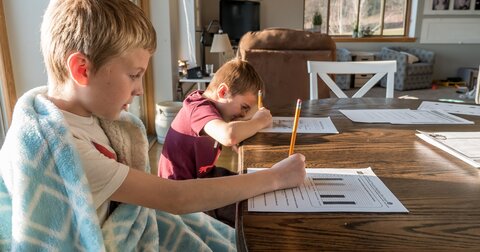
Last month, Washington lawmakers responded to the educational challenges created by the COVID-19 pandemic. They opened up the national treasury with CARES Act payments that primarily support school districts and charter schools. But as schoolhouse doors stay shut, any additional federal response should also include direct relief toward families as they support their children’s learning in the uncertain times ahead.

It’s April once more, which means that spring is struggling its way past the occasional morning freeze, trees are budding out, and the snow has pretty much gone. April also means that Earth Day arrives again, and this time it marks 50 years since it was first held on April 22, 1970. Throughout its relatively brief history, the holiday has had a consistent, urgent theme that is still echoed on the official Earth Day website: “Earth Day was a unified response to an environment in crisis — oil spills, smog, rivers so polluted they literally caught fire.”
Editor's Note: This article first appeared in The Detroit News on April 19, 2020.
These are unprecedented times. Gov. Gretchen Whitmer’s declared emergency may be the longest in the state’s history. The coronavirus outbreak and subsequent orders have Michigan residents everywhere stressed and worried for their health and their family and friends. But they’re also increasingly concerned with what this all might mean for the health of the state’s economy. Policymakers need to start planning to reopen Michigan’s economy as soon as possible.

 By Jason Hayes
The Environmental Policy Initiative at the Mackinac Center recently joined a coalition of 52 free-market think tanks, small business representatives, and consumer groups in signing a letter supporting the Safer Affordable Fuel-Efficient (SAFE) Vehicles Rule. This rule, jointly issued by the Environmental Protection Agency and the National Highway Transportation Administration (an agency within the Department of Transportation), updates the current corporate average fuel economy (CAFE) standards that were put in place in 2012.
The constitutional freedoms to speech and assembly are in the news this past week. People across the country have gathered in their communities and state capitals to petition for relief from what they believe are harmful restrictions on personal and economic activity.

By Ben DeGrow
When a parent loses hours and pay at work, the family may have to revisit the household budget and ask what spending items can be cut back or done away with altogether. It can be a painful opportunity to reassess priorities.
Michigan’s school funding systems are more complex than a household budget, with many streams of funding and moving parts. But a similar reality is fast approaching for Lansing lawmakers. Less tax money will be available this year and next to fund the state’s public schools. Rather than cutting local agencies across the board, though, officials should look first to scale back the state’s 56 intermediate school districts.
Two troubling provisions were buried in the Coronavirus Aid, Relief, and Economic Security Act (CARES Act), which became law last month.
If mid-sized employers with between 500 and 10,000 employees take certain federal loans, the loan provisions would require nonunionized employers to stay neutral during a union organizing campaign for the life of the loan. Furthermore, unionized employers would be prevented from amending collective bargaining agreements for the term of the loan and for two years after it is repaid.

As the COVID-19 pandemic continues to play out in Michigan and elsewhere, it has deeply affected people’s economic and fiscal well-being and opportunities. It is prudent, then, to remind lawmakers that there is much evidence in favor of the idea that the best economic development tool is a free market, used by a free people to satisfy their wants and needs. This is not a commentary on today’s emergency health-related restrictions, as much as it is a reminder of what made for a sound economic policy before the pandemic and what will serve us well once it is behind us.
Today marks the 25th anniversary of the Michigan Economic Growth Authority, better known by its acronym, MEGA. The MEGA is a selective business subsidy program that started small and grew into a monster corporate handout program. Gov. Rick Snyder wisely decided to stop handing out new deals from this program during his first year in office, but taxpayers are still on the hook for billions in subsidies and with little to show for it.