
It is possible to spend more money on the roads without raising taxes in Michigan. That’s not just a Mackinac Center recommendation: Both chambers of the Michigan Legislature passed budgets that found more transportation money without raising tax rates. And both do so, in part, by decreasing support for corporate welfare.
 By Jack McHugh
 By Ben DeGrow
A recent Detroit Free Press headline reported on the rapid decline of private education in Michigan: "200 private schools have closed in Michigan in the last decade." This isn’t wrong, but it ignores the emergence of new schools that need to be considered to get a full picture of the state of private schooling in Michigan.
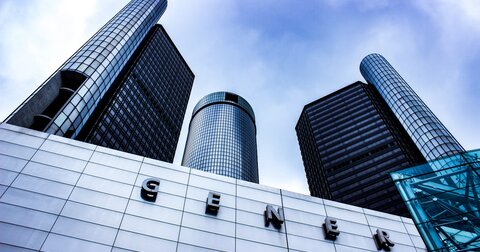
It’s hard to underestimate how much motor vehicle manufacturing formed Michigan’s economy and how ingrained it is in the state culture. But its economic importance has diminished, and it’s easy to not appreciate the extent to which the state has diversified.
By Jack McHugh
State taxpayers are putting more money into the roads than ever before. In inflation-adjusted terms, the $3.6 billion being spent this year is the most in history, or at least since 1940 — as far back as state records allow for making comparisons.
In conducting this research, we wanted to look at just the resources that the state government uses for the roads. So we excluded money from federal, local and private funds, where possible. The state transfers some of its funds to local governments to spend on local roads, and those figures are counted here. But the resources that local governments generate to spend on their own roads from property tax millages are not included.
In today’s political climate, polarization is becoming the norm, and divisive debates have caused many people to forget the underlying issues. In this divided world, the nonprofit grassroots organization known as Policy Circle offers a way for women to discuss crucial topics without the influence of party politics.

The best way to measure the usefulness of energy sources is not by the number of jobs they create, but by the benefits they provide. Getting the biggest gain for the least resources should always be the goal, meaning we should measure energy by its output, not the size of its payroll. Current green energy literature shows us why.

By Ben DeGrow
Michigan’s State Board of Education recently voted to reject federal funding from a grant program aimed at helping low-income students through public charter schools.
On May 14, four of six Democratic members on the State Board of Education put a halt to $47 million in federal funds designed to help public charter schools open and grow. Michigan secured the five-year funding award with the highest-scoring application of any state, but now that money might be off-limits.

Editor's Note: This article first appeared in The Hill on May 5, 2019.
When it comes to the educational choices families make, the nation’s largest teachers union can’t get its facts straight. Mythology propagated by the National Education Association (NEA), along with others, needs to be set straight.
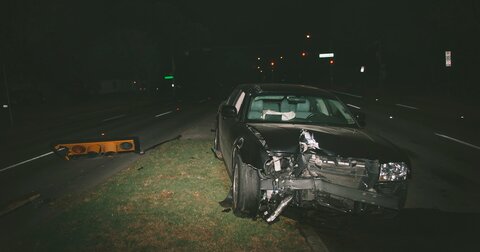
A recent piece from columnist Mitch Albom excoriates the recent changes to Michigan’s auto insurance laws. He writes that the changes are “ugly” and “shameful”; the promised savings are only a “handful of beans” and a “shell game”; and the new law is “ignoring the most vulnerable” and will lead to a “lousy future” where “people will die.” Albom tries to tell readers that this is not hyperbole … but it is. He can only arrive at these absurd conclusions by ignoring all the costs and negative ramifications of Michigan’s broken auto insurance system.

The head of Michigan’s Department of Transportation says the state can increase road spending by more than 50 percent without causing increases in the cost of materials and labor. But that’s unlikely, and state lawmakers should keep these costs in mind as they evaluate transportation spending.
Infrastructure tends to be paid by the people that use it. Water and sewer bills pay for water and sewer treatment and pipes. Electric bills pay for power plants, transmission and distribution of electricity. Phone user charges pay for telephone poles and cell towers.
By Jack McHugh
Note: Today's report includes votes from the unusual House and Senate sessions held the previous Friday, which occurred too late for last week's report, and included passage of landmark auto insurance reform. There were no votes to report this week, which was dominated by legislators' attendance at an annual Detroit Chamber of Commerce event on Mackinac Island.
By Ben DeGrow
Michigan lawmakers recently punted changes in educator evaluations to next year, with hopes that the state's education officials can iron out important details in the meantime. A new analysis shines a light on the challenges of adopting a truly effective policy.
Some Michigan legislators have introduced bills to try to get county road commissions to pay down their pension debt and prefund their retiree health insurance benefits. The bills would create a matching grant program and allow the commissions to levy property taxes to pay for employee benefits. Lawmakers shouldn’t have to encourage local road commissioners to do the right thing, however.
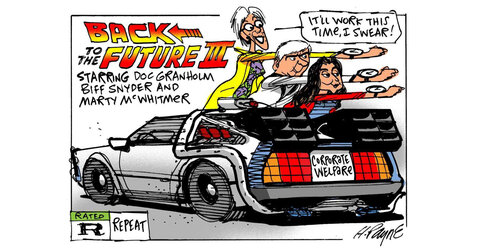
On May 21, the state approved a large set of corporate handouts for Fiat Chrysler Automobiles, which has said it would spend money on its manufacturing facilities in Michigan, creating, among other things, a new assembly plant. Such deals have been and remain unfair and unnecessary to Michigan’s well-being. The state should eliminate its corporate incentive programs in favor of a “fair field and no favors” approach to economic development.
Lansing politicians are trying to work out a deal on auto insurance reforms. No one has to convince lawmakers of this need — they hear it regularly from their constituents. While a lot of what’s being proposed is good policy and will provide relief for drivers — PIP choice, medical fee schedules, more intense anti-fraud efforts and greater transparency — one related issue is more problematic: restricting how insurers can price out the premiums they sell.
Editor's Note: This article was updated with corrections on October 23, 2019.
Each year the Mackinac Center for Public Policy and the Tax Foundation of Washington, D.C. work in concert to highlight key impacts of state cigarette excise taxes on tax evasion and avoidance (what we call “smuggling”).
Update: On May 24 the Michigan Legislature passed a no fault auto insurance reform compromise bill, by a vote of 94-15 in the House and 34-4 in the Senate. Gov. Gretchen is expected to sign the bipartisan compromise.
After criticizing the auto insurance reform plans introduced over the last couple weeks, Michigan House Democrats on Thursday released their proposed alternative, which they call D.R.I.V.E. It’s encouraging to see forward movement on this important problem: Michiganders, especially low-income families and Detroiters, need the Legislature to fix auto insurance so premiums are no longer unaffordable. Unfortunately, this plan is wholly unworkable and cannot deliver the savings it purports to.
Gov. Gretchen Whitmer has criticized the people who oppose her plan to raise fuel taxes for not coming up with an alternative. But lawmakers are required to pass annual budgets, so she won’t have to wait long.
The governor’s plan for the upcoming budget calls for $1.3 billion in new taxes for $800 million in additional road spending. No legislation has yet been introduced to do this.
 By Jason Hayes
There is a constant tension between consumers’ desires to buy green products and their willingness to pay for them. Electric vehicles typify this struggle because, even when a significant portion of their cost is covered by government subsidies or tax credits, they still demand a higher price than their internal combustion engine competitors.
For a long time, the costs to employ people to work for the state of Michigan increased even when the number of state employees was down. But it seems lawmakers and administrators may have finally changed the trends, and this can allow for more public servants at lower costs to taxpayers.

Several news articles and press releases from politicians have highlighted the fact that the proposed changes to Michigan’s auto insurance laws may result in increased costs for both Medicaid and private health insurance. There’s no denying this possibility — a key feature of these reforms is to allow drivers to limit or opt out of buying medical coverage through their auto insurance plan. While this is a valid concern, it is minor compared to both the savings motorists will realize and to the overall state spending on Medicaid.

By Ben DeGrow
Informed by the interests of business groups and the need to make a living, education policy is often discussed in terms of developing a skilled and productive workforce. But another value lies more closely to the heart of public education. That's the laudable but difficult goal of developing informed and responsible citizens who will one day govern our state and nation.



