From the 16th to the 18th century, the dominant economic theory in Western Europe was mercantilism. Its basic idea was that worldwide wealth was static and for a country to grow rich, it needed to control as much of this wealth as possible. Nation states subsequently hoarded the most valuable thing they could find — mostly gold and silver currencies.
Editor's Note: This op-ed was originally published in the Casper Star Tribune on December 2, 2017.
Cheyenne politicians have a problem getting enough revenue. They’re as addicted to it as some people are to tobacco. And in order to shore up state coffers with the first, it seems that legislators are willing to hike taxes on the second.
Public sector union members protested at the state capitol this week because lawmakers are considering reforms to post-employment health insurance benefits promised by local governments to their employees. Union officials loudly proclaim that these benefits should not be cut, and it’s not clear that the recently introduced package would cut them.
 By Jack McHugh
Senate Bill 478, Ban drivers license renewal if three unpaid parking tickets: Passed 26 to 12 in the Senate
To repeal the Jan. 1, 2018 sunset on a 2014 law that reduced from six to three the number of unpaid parking tickets a person can have before the Secretary of State will not renew a drivers license until the tickets are paid along with a $45 "clearance" fee. The bill would leave the more stringent regime in place permanently.
Laurence Reuben is a certified nurse in the state of New York who moved to Michigan. He tried to find work as a nurse in his new state, but Michigan’s licensing agency denied him the opportunity because of a low-level criminal conviction in his past. It did so even though a judge specifically endorsed him for gainful employment and he was legally employed as a nurse in his former state for years after that.
It’s a common refrain recently that Michigan is facing a teacher shortage. But is that really true?
Those who say it is typically point to two facts. First, the number of teaching certificates given out annually has fallen by nearly two-thirds in recent years, from 9,665 in 2004 to 3,696 in 2016. On a related note, the number of students enrolled in teacher preparation programs at Michigan colleges has fallen by about 40 percent.
The Mackinac Center for Public Policy today signed onto a letter of support for the Tax Cuts and Jobs Act, which is the latest federal tax reform effort in Washington. While the reform is far from perfect, it will simplify our Byzantine tax code, reduce compliance costs, cut taxes and spur economic growth.
Michigan has a number of programs that try to make housing affordable to people that don’t have a lot of income. But stranger, Michigan has a program that subsidizes high-income housing, as well.
The state transfers money from taxpayers to selected developers to build or renovate buildings in the state’s Community Revitalization Program. This program to deliver taxpayer money to projects that include high-dollar housing is in addition to a new subsidy program for developers enacted by state policymakers earlier this year.
The Michigan Legislature is debating how to regulate vacation rental properties in the state. For as long as the “cottage up north” has existed, property owners have allowed others to rent their property and websites like Homeaway, VRBO and Airbnb have made this process easier than ever. But local governments in some Michigan communities are starting to overregulate and even ban short-term rentals like these.
In 2012, the Michigan branch of the Service Employees International Union representing home health care workers was riding high. It had 55,000 members, brought in $22 million annually and was able to spend nearly $3.5 million on politics.
Then it all came crashing down. Five years later, the union is a shell of its former self. Membership plunged to under 10,000. Revenue is less than one-third what it was at its peak. Political spending bottomed out at less than 5 percent of what it once was. And the union is in an emergency trusteeship to investigate potential financial malpractice.
By Jack McHugh
The Legislature is on Thanksgiving break with no sessions scheduled until Nov. 28. Since there were no votes this week, this and next week’s report describe some of the 39 amendments to the state constitution that lawmakers have formally proposed this year. To become law these require a two-thirds vote in the House and Senate and approval by voters.

 By Ben DeGrow
One way to attack an education option that works for families is to be selective about data and your own standards.
In her Labor Voices column in The Detroit News, Paula Herbart, the new Michigan Education Association president, labels the state’s online charter schools a “spectacular failure” and calls for lawmakers to “end the experiment.”
In a previous blog post I reported details of the GOP federal tax reform plan — with some commentary — a few hours after Capitol Hill leaders announced the details. Much has happened since then, including a new analysis by the Washington, D.C.-based Tax Foundation. In addition, the big news from yesterday is that the Senate announced it would include a repeal of the Accordable Care Act (Obamacare) individual mandate in its version of the plan.
In 2015, Michigan legislators voted to wrap up the state’s film subsidy program – with the last dollar being paid out recently. This was nearly a decade after the program started and ultimately became the most generous in the nation, spending nearly half a billion dollars over time.
Gov. Rick Snyder’s support of legislation this year to provide taxpayer subsidies to a billionaire real estate developer (and others) and to large corporations has compelled me to ask “Why?” in a very public way.
Why the changed position? Why was buying “businesses into the state” — as the governor mentioned in a 2013 speech (below) — not good early in his administration, but perfectly OK and even encouraged by him later? The scholarly evidence on state and local economic development programs hasn’t changed since then — such programs still appear largely ineffective — so what happened?
By Jack McHugh
Senate Bill 584, Expand concealed pistol “no-carry zone” exemptions: Passed 25 to 12 in the Senate
To authorize an exemption from the “no-carry zone” restrictions in the law authorizing shall-issue concealed pistol licenses, if a licensee gets extra training. No-carry zones include schools, day care facilities, sports stadiums or arenas, bars, bar/restaurants, places of worship, college and university dorms and classrooms, hospitals, casinos, large entertainment facilities and courts. Under the bill private property owners, colleges and universities could still ban guns, schools could prohibit teachers and staff from carrying guns, and licensees could not openly carry a gun in a no-carry zone.
At 50,000 jobs, the Amazon second headquarters project is the largest proposed expansion I’ve ever seen. Whether it will deliver on its promises is an open question. But even this large project pales in comparison to the number of jobs the economy creates and loses on a regular basis, and this turnover happens without fanfare.
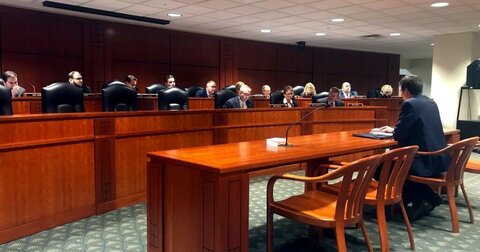
The Michigan Legislature is considering House Bill 5175 which would “expand the types of liquor license holders allowed to refill clearly labeled ‘growlers' (sealable containers of up to one gallon) with beer for consumption off-premises.” Policy Analyst Jarrett Skorup testified on the bill before the House Regulatory Reform Committee on Nov. 1, 2017. His testimony is reprinted below.
 By Kahryn Riley
A study released this month by University of Michigan scholar Jeffrey Morenoff suggests that overly strict criminal justice systems create a self-perpetuating prison population. That is, the practices used to supervise released ex-convicts could be responsible for many of them returning to prison.
By Ben DeGrow
The Michigan Department of Education has given experienced professionals one more reason not to consider a career switch to teaching: They would have to retake a college entrance examination. And that’s on top of other requirements from the state.
Genesee County teacher Jeff Piechowski recently learned that to convert his temporary teaching certificate to a permanent one, he must take the SAT. Once known as the Scholastic Aptitude Test, the SAT is given to all Michigan 11th-graders. Piechowski, who focuses on special education, didn’t enter the profession through a traditional college program. Instead, he left a broadcasting career for the classroom, gaining years of experience in Texas before moving to Michigan.
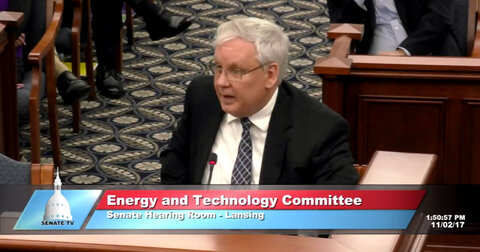
Dr. Theodore Bolema is an adjunct scholar with the Mackinac Center. He is also a senior fellow at the Free State Foundation, specializing in technology policy. His article, below, first appeared on that organization’s website. It is followed by his testimony to legislators in Michigan.
The Michigan Legislature is considering some bills that would make it easier for skilled trades workers to teach in the state by exempting them from certain mandates. But the association that represents school principals in the state is opposed, despite the opportunity to give their members more flexibility over who they can hire to meet their schools’ needs.
By Jack McHugh
House Bill 5013, Adopt auto insurance reforms and price controls: Failed 45 to 63 in the House
To allow vehicle owners to purchase auto insurance policies with personal injury protection (PIP) coverage below the currently mandated unlimited coverage; cap the amount that hospitals, doctors and long-term care providers could charge to treat people injured in crashes; and more. Among other things the bill would require insurance companies to lower rates if these provisions lowered the cost of treating crash victims, which reportedly are much higher in Michigan than any other state.
“Law and sausage,” German aristocrat Otto von Bismarck was reputed to say, “are two things you do not want to see being made.” Today’s sausage making in Washington, D.C., involves the final release of tax reform specifics that — if adopted — will mark the most comprehensive federal tax reform legislation since 1986.
A bill that would ban local governments in Michigan from subsidizing local internet service providers was introduced and then pulled back recently. It provides a good opportunity to discuss what cities can and should do to encourage broadband for their residents.