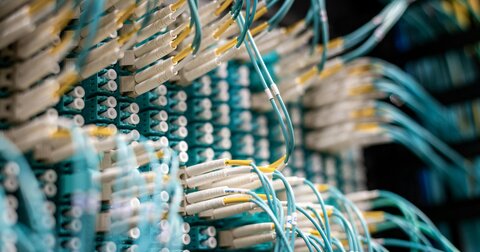
Michigan is finally inching toward putting its $1.6 billion share of federal Broadband Equity, Access and Deployment (BEAD) funds to work. Nearly five years after the federal bill was passed, the state of Michigan received approval from Washington for it’s final plan in order to access and deploy the funds. Things are moving at the speed of government.

This article originally appeared in USA Today February 19, 2026.
The past few years have been tough for criminal justice reform. While the 2010s saw a slew of smart state and federal policies, making communities safer and saving taxpayer money, concerns over crime in the 2020s put further progress on hold.

Jonah Goldberg has spent decades writing columns, authoring books, and appearing on television. But a few years ago, he decided the media landscape needed something different.
Goldberg joins The Overton Window Podcast to talk about where that led him: The Dispatch, a digital media company he co-founded with Steve Hayes that has quietly become one of the more interesting experiments in modern journalism.
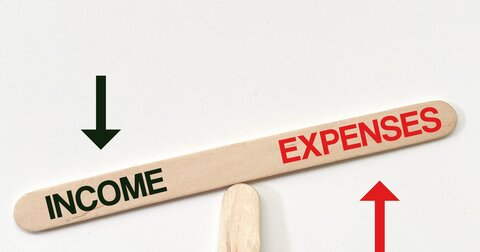
Gov. Gretchen Whitmer recommends a series of tax hikes in her executive budget, spending that would boost state outlays beyond sustainable levels. The governor recommends a 4% increase in the state budget, not counting federal transfers.
Michigan lawmakers do not need to tax people more.

Congress is considering a 10% cap on credit card interest rates and President Trump voiced his support for such legislation in his Jan. 21 speech at the World Economic Forum in Davos, Switzerland. Trump said that capping the interest rate on credit card debt at 10% would “help millions of Americans save for a home.”

According to 23&Me, I don’t have an ounce of Irish blood in me. But that has never stopped me from appreciating a holiday that celebrates a holy man through festivities, eating salted meat, wearing silly green mustaches, and most importantly, drinking rather fine stouts. Some years I even dust off my old Leprechaun movies starring Warwick David for some fantastic entertainment.

This article originally appeared in The Detroit News February 24, 2026.
Two-hundred and fifty years ago, America’s founders pledged their lives, fortunes and sacred honor to launch this great national experiment. They laid the foundation, but the country’s future depends on us.

This article originally appeared in the Washington Times February 23, 2026.
President Trump is trying to make homeownership more affordable for families. If he wants to make lasting progress, then he should take an example from my home state of Michigan, where lawmakers unveiled a bipartisan package this month to lower the costs of building and buying homes. The plan rests on the time-tested principle that government simply needs to get out of the way.

In many of the cities we all love, most of the housing was built before Michigan established zoning laws, under a regulatory structure far less strict than the one we see today. Cities used to be built organically, driven by market factors and demand from residents. As a result, Michigan was affordable even when it was a fast-growing state.

A few years ago, my family was going to walk down the street to the school playground a few blocks away. We live in a quiet, safe neighborhood where all of our children walk to school.
Right before we left, our baby needed a diaper change. Our two older kids left to go to the park and, unbeknownst to us initially, our three-year-old started following them. We finished with the baby and walked to catch up – but when we turned the corner, she was with a police officer.

For several years, the punitive anti-innovation approach of California dominated state-level debates on Artificial Intelligence policy. Last year the tide started turning, with “Right to Compute” emerging as a more balanced alternative for preserving the benefits of AI innovation while protecting against the risks. Several states are considering Right to Compute laws in their 2026 legislative sessions. Michigan should do the same.

Michigan lawmakers operate a Field of Dreams economic development program. They spend millions buying land and preparing it for private businesses. But if the state builds it and companies don’t come, taxpayers are out the money and have no jobs to show for their trouble. It’s a bad structure that wastes taxpayer funds.

What if the biggest thief raiding U.S. government benefit programs wasn't a fraudster down the street, but a state-sponsored criminal organization operating from overseas? That's the reality Haywood Talcove has spent nearly two decades trying to get Washington to confront.

Washington is on the verge of making a mistake with proposed legislation that would raise Washington’s cigarette excise tax by $2 per pack to more than $5. This would result in a 23-percentage-point increase in cigarette tax evasion and avoidance, an unintended consequence the state should avoid.
Supporters of a new package of tech bills in the Michigan Senate claim the legislation will protect children from online predation.
“We introduced Senate Bills 757–760 to better protect Michigan kids from the well-documented dangers of unfettered social media and AI usage,” Michigan Senate Democrats say on their Kids Over Clicks website. “Crafted in tandem with industry experts, advocates, and parents, this bill package holds Big Tech accountable for unethical practices, empowers Michigan parents with more control and transparency, and addresses emerging risks associated with AI and social media use.”
This article originally appeared in The Detroit News February 17, 2026.
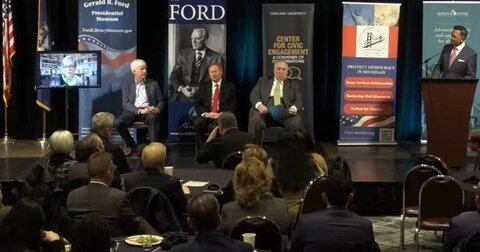
Four Michigan governors, Jim Blanchard, Jennifer Granholm, Rick Snyder and John Engler, gathered on Feb. 4 to talk about civility in American life. Their conversation explored what civility looks like and its importance in self-government.

Looking to get rich betting against the market? A vintage press release suggests you might want to go short on deals that involve select business subsidies from Lansing.
Gov. Gretchen Whitmer said in February 2023 that the Ford Motor Company would invest $3.5 billion to build batteries for electric vehicles and create 2,500 jobs in Marshall. The news release trumpeted five “other recent transformational electric vehicle and battery investments in Michigan.” Three years later, there is nothing to show for it.

Americans are understandably frustrated when they hear that drug costs in the United States are roughly three times higher than they are in Europe. But President Trump’s executive order requiring that drug companies set their U.S. prices at the lowest price available in other developed countries will damage the market while failing to bring down costs.

Gov. Gretchen Whitmer proposed a new budget Feb. 18 with $900 million in tax increases built in, including a 50% increase in Michigan’s excise tax on cigarettes. Her proposal, if adopted, would raise the tax from $2 per pack to $3 per pack. This tax hike, and others on nicotine users, would also raise Michiganders’ rate of tax evasion and avoidance, or what we call, “smuggling.”

This article originally appeared in The Detroit News February 3, 2026.
Football fans have enjoyed great games during the recent playoff season, at both the college and professional levels. Turn on any of those games and you were bombarded with prescription drug commercials.

It was great to see legislators refuse to pass any new business subsidies in 2025. But the state is still going to pay $533.1 million more to select companies this year based on deals made two decades ago. That’s not right, and that’s not how policy is supposed to work.
This article originally appeared in The Detroit News February 10, 2026.
Four former Michigan governors, two Democrats and two Republicans, appeared last week to discuss civility in American life. Jim Blanchard, John Engler and Rick Snyder spoke in person in Lansing, while Jennifer Granholm joined by video.

“If our population isn’t increasing, why does Michigan need more housing?”
That’s a question I frequently hear when I work on housing policy, and it's a very understandable one. Here’s the answer.
The price of housing changes for the same reason that the price of anything else changes: supply and demand. The demand for housing has increased faster than its supply, so prices have shot up.

Good policy is rarely accidental. It is usually the result of careful study, patient advocacy, and sustained engagement — a process Donald Bryson knows well.
Donald Bryson, president and CEO of the John Locke Foundation, a free market think tank in North Carolina, joins the Overton Window Podcast to pull back the curtain on how policy is really made.

This article originally appeared in The Detroit News January 27, 2026.
Michigan enters 2026 at a crossroads. This year will shape the state’s direction for the next decade or more.
This is Gov. Gretchen Whitmer’s last year in office, so her proposals and decisions will most likely be focused on unfinished business and legacy items.



