
Michigan set itself on a path toward unreliable and expensive electricity a few years ago, but a recent decision by a federal regulatory agency should bring some good news to the state.
Various laws, including Public Act 235 of 2023, require that least 60% of all electricity supplied to Michigan residents and businesses be met from solar or wind power by 2023. (Last year 13% came from those sources.) But wind and solar are unreliable, and the net-zero laws, enacted in the name of eliminating carbon-dioxide emissions from power plants, ignored nuclear power, which is emissions-free and reliable.

Michigan’s policymakers cannot do much to change the world price for petroleum, but they can take two steps to help lower gasoline prices. They could reduce the state gasoline tax, which is almost 40% higher than Ohio’s comparable tax. Doing this could save up to $650 million per year. A second step would be to work with federal officials to enact a federal law that could save Detroit-area residents $95 million per year by helping them avoid a mandate that requires a high-priced summer blend of gasoline.

The new state budget that takes effect Oct. 1 will likely be the final piece of fiscal policy Gov. Gretchen Whitmer authorizes before she leaves office. It’s a good time to review her policy accomplishments in office — specifically, in fiscal matters, dollars and cents. Her ability to veto legislation and line items in the budget makes her the chief policymaker, and a big part of the state’s business is determining how much to tax and where to spend. So how is state tax and spending policy different now compared to eight years ago, before the governor took office?

“Political risk,” a concept from international investing, could be coming to the United States, Richard Shinder warns, starting with the state that was once the national byword for sound and forward-looking government. As California and other states move toward policies favored by the Democratic Socialists of America, they risk falling into a category once reserved for foreign kleptocracies and failed states.

This article originally appeared in The Detroit News July 21, 2026.
The next major labor dispute in Michigan won’t be over safety or wages. It will be about whether state and local governments need union permission before using artificial intelligence.

Some Ann Arborites will tell you the city’s changed a lot, and that it’s a bad thing. Some longtime Detroiters long for the days when there were more people around to create a real neighborhood. And someone from my hometown, Monroe, might wax about how bad it is for a city to stagnate.

This article originally appeared in The Detroit News July 14, 2026.
America looks inevitable today, 250 years after the Declaration of Independence. But in the 15 years leading up to the Revolution, independence was anything but inevitable. In fact, our founders had worked hard to maintain a good relationship with the crown. The idea of a break with England developed quickly.

This article originally appeared in Real Clear Politics June 20, 2026.
President Trump has put states on the hook for waste, fraud, and abuse in the nation’s food stamps, known officially as Supplemental Nutrition Assistance Program (SNAP). Landmark legislation signed by the president last year requires the states to pay a share of the program’s costs if more than 6% of their food-stamp outlays are spent in error. States controlled by Democrats are, by and large, the worst offenders. For anyone who has followed the burgeoning and massive welfare fraud scandals in Minnesota and California, this trend is no surprise. And if my home state of Michigan is any indication, these deep blue states aren’t nearly as serious as they should be about rooting out fraud and protecting taxpayers.

This article originally appeared in the Lansing State Journal June 17, 2026.
A recent move by the Michigan Court of Claims could spell relief for Michigan taxpayers who have spent billions of dollars on constitutionally unsound pork projects. But the extent of the reform will depend on many factors.

There is good news and bad news for the people who think that Michigan’s path to prosperity is to attract and retain people with college degrees. The good news is that Michigan has the lowest outbound migration rate of adults with college degrees. Michigan retains its stock of people with degrees better than any other state. The bad news is that the Great Lakes State has the lowest inbound migration rate of adults with college degrees. That is, it’s the least attractive state for people who have earned college degrees. Taking these two measures together, we find Michigan in the middle of states.

This article originally appeared in The Detroit News July 7, 2026.
As we celebrate America’s 250 years, consider the story of William Quincy Atwood, who was born into slavery but died as one of Saginaw’s wealthiest businessmen.
Atwood was born in Alabama in 1839, the son of an enslaved mother and the plantation master. Atwood’s father died in 1851, and in his will he emancipated William, his mother and his siblings.

Michigan’s 2023 Clean and Renewable Energy and Energy Waste Reduction Act defines nuclear power as a “clean energy system,” but it does not include nuclear in its “renewable energy resource” category, leaving only solar and wind electricity generating projects eligible to meet the state’s ambitious 2040 clean energy goals.

A recent tax court ruling in Maryland pours cold water on a tax proposal championed in Michigan by Gov. Gretchen Whitmer. The Maryland Tax Court struck down that state’s first-in-the-nation digital advertising tax, ruling that it violated the federal Internet Tax Freedom Act, as well as the interstate commerce and due process clauses of the U.S. Constitution. Lawsuits have also been filed in Utah and Illinois, which adopted their own digital advertising taxes earlier this year.

America’s economic crisis is hitting hard in Minnesota, a one-time model of a progressive and well run state that has lately become a byword for cultural and fiscal dysfunction. John Phelan, an economist at the Center for the American Experiment, joins the Overton Window Podcast to explain what is going wrong with the dollar and how Gopher State leaders are making the problem worse.

This article originally appeared in The Detroit News June 11, 2026.
Michigan lawmakers are considering a spending hike for a program that subsidizes developers to build and tear down buildings. It’s an expansion of a program that began in 2017. As they consider the legislation, they should review whether the program has achieved what lawmakers said it would.

This article originally appeared in the Washington Examiner May 7, 2026.
It’s no secret that labor unions are struggling. Even though federal law tilts decidedly in their favor, unions have seen their share of the workforce steadily decline. Membership has been dropping, both in total numbers and as a percentage of the workforce, for many decades. Only 1 in 10 American workers is now unionized, and in the private sector, the unionization rate is less than 6%.

This article originally appeared in The Center Square June 23, 2026.
In 2018, the Supreme Court settled a fundamental question of constitutional law in Janus v. AFSCME. The Court held, with clarity and conviction, that public employees cannot be compelled to pay union dues as a condition of their employment. This ruling was a massive victory for the First Amendment, affirming that no public servant should be forced to subsidize a private organization’s political agenda against their own will.

This article originally appeared in The Detroit News June 30, 2026
“Do you think America 250 is worth celebrating?”
I and other attendees were asked that question two weeks ago while speaking at the National Civil Rights Conference, held this year in Detroit.

This article originally appeared in The Detroit News June 16, 2026.
It’s that time of year when friends, parents and grandparents say, “Now that you’re finished with college, what are your plans?”
For family members of the graduates, there is a deep concern embedded in that question. They wonder if their children or grandchild will move away.
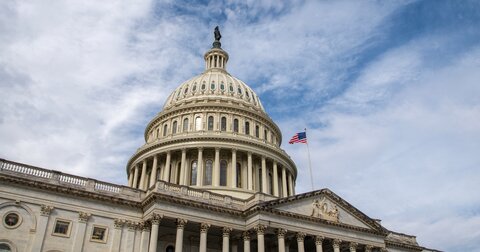
Sen. Gary Peters announced his retirement early this year and will leave the U.S. Senate when his term ends in January. After a hotly contested Democratic primary and an uncontested Republican primary, the race is on to choose his successor in November.
 By Adam Stacey
In the August 2026 primary election, voters across the state approved 842 of 900 millage, sinking fund and bond requests on the ballot in their local communities. Together, those approvals represented more than $1 billion in property taxes that local governments are now authorized to collect.

Data centers are on a lot of people’s minds, with concerns typically involving the amount of water, electricity and land they use. A related concern has to do with concerns about a technology data centers enable, notably, artificial intelligence.
A recent panel from the Mackinac Center looked at the trade-offs involved in data centers. People often underestimate the positives that data centers contribute to technologies in medicine, manufacturing and other economic sectors. It’s also easy to overlook the economic activity and revenue from the data centers themselves, as well as from the companies they support.
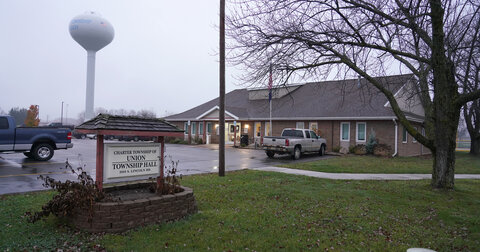
Officials in Union Township held their usual meetings in July and August and discussed economic development, but a new analysis of economic data shows that the township in Isabella County needs to recognize it’s not an attractive place to live or do business.

The first half of the 1770s saw a meteoric shift in public opinion on both sides of the Atlantic, from an unquestioned confidence in the status of Britain’s American colonies to a widespread acceptance that it was time for the United States to become an independent nation. What was politically unimaginable in 1770 had become politically inevitable by 1776.

Michigan law is plagued by catch-all clauses and broad statutes that make it hard for non-experts to understand what the law expects. These provisions, combined with vague statutory language, make it difficult for citizens to understand which conduct is prohibited. The Michigan Legislature should address these issues by refraining from putting catch-all phrases in new laws and ensuring new statutes are narrow and clear.



