

 Font size:
This article originally appeared in The Detroit News Feburary 15, 2026.
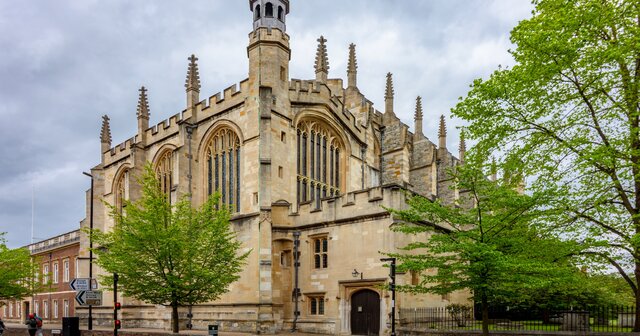
Prince Harry and Meghan Markle have returned to England. The Duke and Duchess of Sussex left the United States to enroll their children in British schools. Pay attention, policymakers. Even the royals want school choice.
I am not an Anglophile. I barely pay attention to royal family news. I did not listen to Meghan’s Spotify podcast, nor did I watch the couple’s Netflix show. I wasn’t even tempted to pull Harry’s autobiography from the bargain bin at Barnes & Noble.
Despite my apathy, their decision to leave the United States caught my eye. They no doubt have multiple reasons for the move. There is speculation that Meghan has some work lined up. Harry may want to be closer to family. But the stated reason is fascinating: They want Archie and Lilibet to experience a British education.
The desire to find the best school for your kids isn’t unique to the royal family. It’s true for nearly every parent.
For Michigan parents who want educational choices for their children, the state offers only a few options. Students can cross school district borders thanks to Schools of Choice. Public charter schools are an option for many families. Private schools and home education are also options, though families bear the cost of those choices.
Even with these limited options, many Michigan families take the nontraditional route to educate their kids.
Take Detroit. Of the city's 115,500 K-12 students, more attend charter schools than are enrolled in the Detroit Public Schools Community District. A 2025 report compiled by the school superintendent found that 39.2% of students attend DPSCD, while 42% attend a charter school. Another 10.6% of students attend a non-Detroit public school, and 8.2% attend private or home school.
These Detroit families have exercised their power of choice, just as Harry and Meghan are doing.
During COVID-19, families had to get creative when governors shut down public school buildings. Many states responded by expanding their school choice programs. Today, 19 states offer a universal school choice program, according to EdChoice, including education savings accounts, tax credit programs and scholarships.
But Michigan is falling behind other states in the educational choices it offers families. The primary reason is that the state constitution bans the direct or indirect use of state dollars for non-public education. That means that unless your child is in a public K-12 school, you pay the full cost. That’s not the case in other states.
As a result, families in Michigan with the means choose private education. But low-income families are often trapped in underperforming schools.
Here are two ideas to improve education choices in Michigan—one big and one more modest.
First, the Michigan Constitution should be amended to allow for more education options. The U.S. Supreme Court has repeatedly upheld state school choice programs, and Michigan is now an outlier, which will further erode our educational ranking. (Michigan’s fourth graders rank 44th nationwide for reading in the current National Assessment of Educational Progress.)
Second, Gov. Gretchen Whitmer could join 30 other states by opting Michigan into the federal education tax credit program. The program helps eligible families with education expenses, including private school tuition. Because the program is federal, it doesn’t face the same state constitutional restrictions as other programs.
Parents, even royal parents, want to send their children to the best school possible. Let’s give Michigan parents the ability to do it.
Get insightful commentary and the most reliable research on Michigan issues sent straight to your inbox.
The Mackinac Center for Public Policy is a nonprofit research and educational institute that advances the principles of free markets and limited government. Through our research and education programs, we challenge government overreach and advocate for a free-market approach to public policy that frees people to realize their potential and dreams.
Please consider contributing to our work to advance a freer and more prosperous state.


