

 Font size:
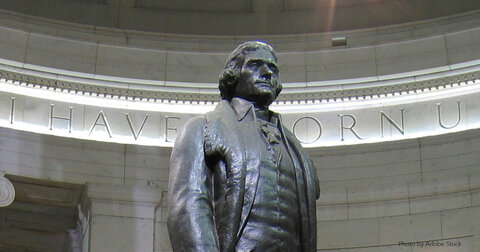
The 250th anniversary of America’s founding is a time to reflect on the nation’s guiding principles and the inspirational words of our founders. As Thomas Jefferson once said, “The public interest is best served not by what government gives to some, but what it refrains from taking from all.”
This principle applies to the Mackinac Center’s fiscal policy goals for 2026. We oppose selective subsidies, unsustainable spending and punitive tax policies.
For decades the Michigan Legislature authorized a new business subsidy program every year. That changed in 2025, when it did not create any. But the temptation to do so will arise again this year, and lawmakers should resist. These programs fail to create jobs, and they waste resources by transferring money from all taxpayers to serve a few corporate interests.
The state’s corporate handout agency, the Michigan Economic Development Corporation, has a decades-long reputation for lack of transparency and accountability. It has been sued by the Mackinac Center and others for its secrecy. Last year Michigan Attorney General Dana Nessel criticized the corporation’s stonewalling tactics. Some lawmakers recently introduced legislation to create greater transparency at this organization, and we’ll be working to see those bills receive the attention they need.
But transparency alone is not enough. Some spending can be transparently irresponsible. That is why the Mackinac Center announces its Sustainable Michigan Budget targets each year. We ask lawmakers to practice restraint and increase the budget by no more than the rates of population growth and inflation combined. The approach recognizes the simple truth that the government should not grow faster than the people who pay its bills.
Restraint would show that a tax hike is unnecessary. A large tax hike proposal that may appear on the November ballot would end Michigan’s flat tax and levy the nation’s seventh-highest rate on high earners. This burden would fall on small business owners who provide jobs, and the effects would hit more than those subject to the hike. If this proposal makes the ballot, expect to see the Mackinac Center discuss it far and wide.
Jefferson’s insight remains as relevant today as it was 250 years ago. Michigan’s path to prosperity does not run through selective subsidies, opaque agencies, excessive government spending, or punitive tax policy. It runs through transparency, restraint and policies that allow people to keep more of what they earn.