

 Font size:
This article originally appeared in The Detroit News April 28 2026.
“There is no such thing as a free lunch,” said Nobel-prize-winning economist Milton Friedman, but Michigan policymakers sure are trying to prove him wrong.
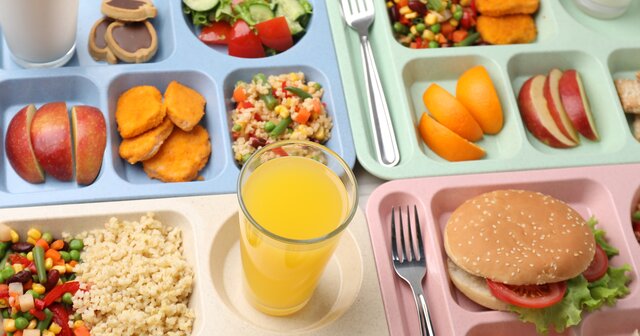
Michigan's 2026 school aid budget allocates $248.1 million to provide breakfast and lunch to all of the public school students, regardless of family income. Students from needy families already qualify for the federal free and reduced meal program, so the state’s program feeds kids from well-off families. Private school students are also eligible for free school meals, as long as their school participates in the federal program.
Whitmer framed the meals program as a legacy issue in her February state of the state address.
“Years from now, when people write about this session, they’ll remember that we were the ones who finally fixed our roads and fed our kids,” she said.
If Whitmer’s final State of the State address had a theme, it would be “free.” She used the word six times to describe various state programs. She called on lawmakers to make universal school meals permanent rather than an annual budgetary decision. She recommended free pre-K for every four-year-old in the state. She bragged that every high school graduate can attend community college tuition-free. And, through her Michigan Reconnect program, every Michiganian aged 25 and up is eligible for a tuition-free associate’s degree or certificate.
If you read Whitmer’s earlier annual addresses you’ll see a similar theme, with dozens of references to free programs, from child care to RxKids to small business grants.
Let’s be clear: These programs may be worthwhile. The motivation to help people, especially people who face urgent needs, is humane and understandable.
But marketing a government program as “free” is misleading. Every government program has a cost — free pre-K will cost $657 million this year — and Michigan taxpayers will pay the bill.
Why do policymakers inaccurately describe things as free?
The economist Thomas Sowell wrote, “The first lesson of economics is scarcity: There is never enough of anything to satisfy all those who want it. The first lesson of politics is to disregard the first lesson of economics.”
Scarcity requires that we think about opportunity costs and tradeoffs. Every taxpayer dollar spent on so-called free programs means that dollar cannot be used for a core government function. This year Michigan will spend more than $420 million on tuition-free higher education. Would that money be better spent hiring police officers or filling potholes? School districts could hire thousands of teachers for what the state is spending on free meals for students who are not in poverty. Or, perhaps the state could cut taxes and allow taxpayers to use their own money as they see fit.
Another problem with free programs is the lack of accountability. Michigan is spending hundreds of millions of dollars on freebies. But what are the success metrics, other than merely spending the money? There’s little discussion on connecting the spending to desirable outcomes.
The lack of accountability can also be seen in the state’s misguided economic development program, which gives billions of dollars to selected companies. These programs are wasteful and inefficient, and they rarely meet job creation targets. But that doesn’t stop politicians from bragging about investing in “shovel-ready” projects.
The next time a policymaker brags about offering a free program, remember: It’s not free. You’re paying for it.
Get insightful commentary and the most reliable research on Michigan issues sent straight to your inbox.

The Mackinac Center for Public Policy is a nonprofit research and educational institute that advances the principles of free markets and limited government. Through our research and education programs, we challenge government overreach and advocate for a free-market approach to public policy that frees people to realize their potential and dreams.
Please consider contributing to our work to advance a freer and more prosperous state.