

 Font size:
The Mackinac Center took the Michigan Department of Labor and Economic Opportunity to court last month in a lawsuit challenging $2.5 million in unconstitutional grants to two local baseball stadiums — one in Lansing, the other in Utica.
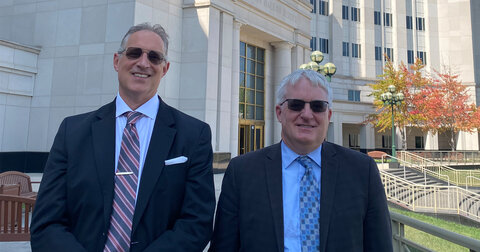
The case is being led by the Mackinac Center Legal Foundation’s vice president of legal affairs, Patrick Wright, assisted by Senior Attorney Derk Wilcox.
In the Michigan Court of Claims, Wright argued that these grants violate Article IV, Section 30 of the Michigan Constitution, which prohibits public funds from being used for private or local purposes unless approved by a two-thirds vote in both chambers of the Legislature. The spending bill that included these stadium earmarks passed with a simple majority, and the funds were hidden in vague, last-minute language.
These aren’t major league arenas; they’re hometown parks backed by private investors, and yet taxpayer dollars were quietly funneled to them under the guise of public spending.
At the hearing, Judge Brock Swartzle expressed skepticism toward the state’s defense, particularly its claim that the stadiums serve a broad public purpose. “If this is just for the people of Utica or the people of Lansing,” he said, “I don’t see how this survives.”
We couldn’t agree more.
The defense argued that non-local residents visit and enjoy the ballparks, therefore giving them a broader benefit to the Michigan community at large. Mackinac Center attorney Wright called this the “one-tourist test” and brought up comparable hypotheticals that exposed the hilarity of the rule. Should the entire state be taxed for a youth soccer field in Saginaw? What about a pond in a Muskegon park?
This case isn’t just about two baseball fields. It’s about restoring the principle that tax dollars should serve the public, not confer political favors.
Over the past three years, Michigan lawmakers have handed out more than $1 billion a year in earmarked projects. These backroom deals are frequently justified as “economic development,” but too often they are little >more than political giveaways with questionable return.
We filed this case to push back and remind Lansing that following the constitution is not optional.
A ruling on our motion to pause the stadium funding is expected by the end of the year. No matter the outcome, we’ll continue using every tool we have to hold government accountable and protect Michigan taxpayers.