


 Font size:
This article originally appeared in The Detroit News January 20, 2026.
The Michigan Legislature enacted only 74 public acts in 2025. Is that a problem?
Many pundits and politicians say it is.
“This is staggering,” political commentator and former lawmaker Bill Ballenger told MIRS. “We have a lot of problems in this state and the fact the Legislature can’t get together to help solve these problems is pathetic.”
Throughout the year, reporters questioned lawmakers about their output, and critics piled on. Much finger-pointing has been directed at House Speaker Matt Hall, R-Richland Township.
“I think it’s really strange that he’s so proud of not doing his job,” Senate Majority Leader Winnie Brinks, D-Grand Rapids, said.
The number of laws adopted is a trivial metric, and obsessing over it distracts from what actually matters in lawmaking. Speaker Hall proudly made this point recently. “The purpose of the Legislature is not just to pass laws,” he said.
Hall pointed to the House’s other activities such as conducting oversight hearings, scrutinizing waste in the budget and cutting costly programs.
“Nobody looks to see if any of these laws are working,” he said.
Hall is right. The purpose of a Legislature is not to maximize output. It’s to govern well. There may be a good reason to pass more bills, but it isn’t the reason people are complaining about.
Many states have policies that limit the number of laws they adopt. Legislatures in four states — Montana, Nevada, North Dakota and Texas — only meet every other year. Other states limit how many bills each lawmaker is allowed to introduce; California lawmakers are limited to 35 bills each.
When we evaluate a legislative body, we should ask qualitative rather than quantitative questions: Did lawmakers focus on the right things? Did they waste time on inconsequential bills? Did they improve policy or merely add pages to the law books? More laws usually lead to more government.
Using this standard, we might ask not why our Legislature passed a historically low number of bills in 2025, but why it passed so many in other years. According to The Detroit News, the Michigan Legislature, which meets year-round, averages about 383 new laws each year, and the previous low in the last 60 years was 168 new laws.
Even with just 74 laws signed, Michigan lawmakers tackled big issues in 2025. They reformed paid sick leave and tipped wage laws, ended a major business subsidy program in favor of road funding, and improved earmark transparency.
There is, as I mentioned, one good and principled reason to pass more bills. Legislation should be narrowly focused on specific issues. Massive omnibus bills that are crammed with dozens of provisions and features are problematic, which is why the Michigan Constitution’s single-subject rule prohibits logrolling, the legislative practice of trading support for projects that wouldn’t pass on their own. If lawmakers write bills in a narrow, limited fashion, you’ll get more of them. But the standard should always be whether the laws are well-conceived and function well with laws already on the books.
There were certainly good bills in 2025 that ought to have been passed. Looking to 2026, we can hope the Legislature will remove housing restrictions to enable more building, reform occupational rules to get people working and require public officials to provide more records to the public. But bemoaning the low output of new laws is a distraction.
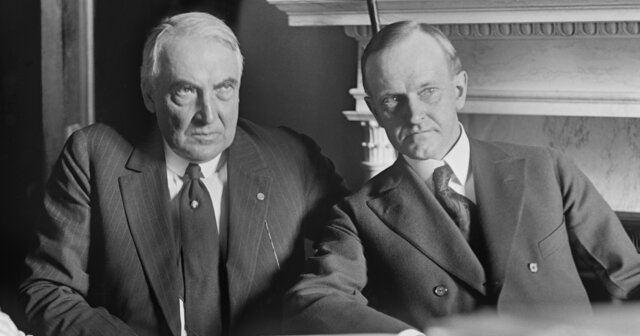
“It is much more important to kill bad bills than to pass good ones,” Calvin Coolidge once wrote.
Michigan could use more of that restraint. Even better, let’s measure how many failing programs the state shuts down.
Get insightful commentary and the most reliable research on Michigan issues sent straight to your inbox.

The Mackinac Center for Public Policy is a nonprofit research and educational institute that advances the principles of free markets and limited government. Through our research and education programs, we challenge government overreach and advocate for a free-market approach to public policy that frees people to realize their potential and dreams.
Please consider contributing to our work to advance a freer and more prosperous state.