

 Font size:
South Carolina is moving to reduce personal income tax rates and possibly to eliminate its income tax over time. Palmetto Promise, a Columbia-based policy institute, took a leading role in this movement, and Senior Fellow Oran P. Smith joins the Overton Window Podcast to discuss how it all happened.
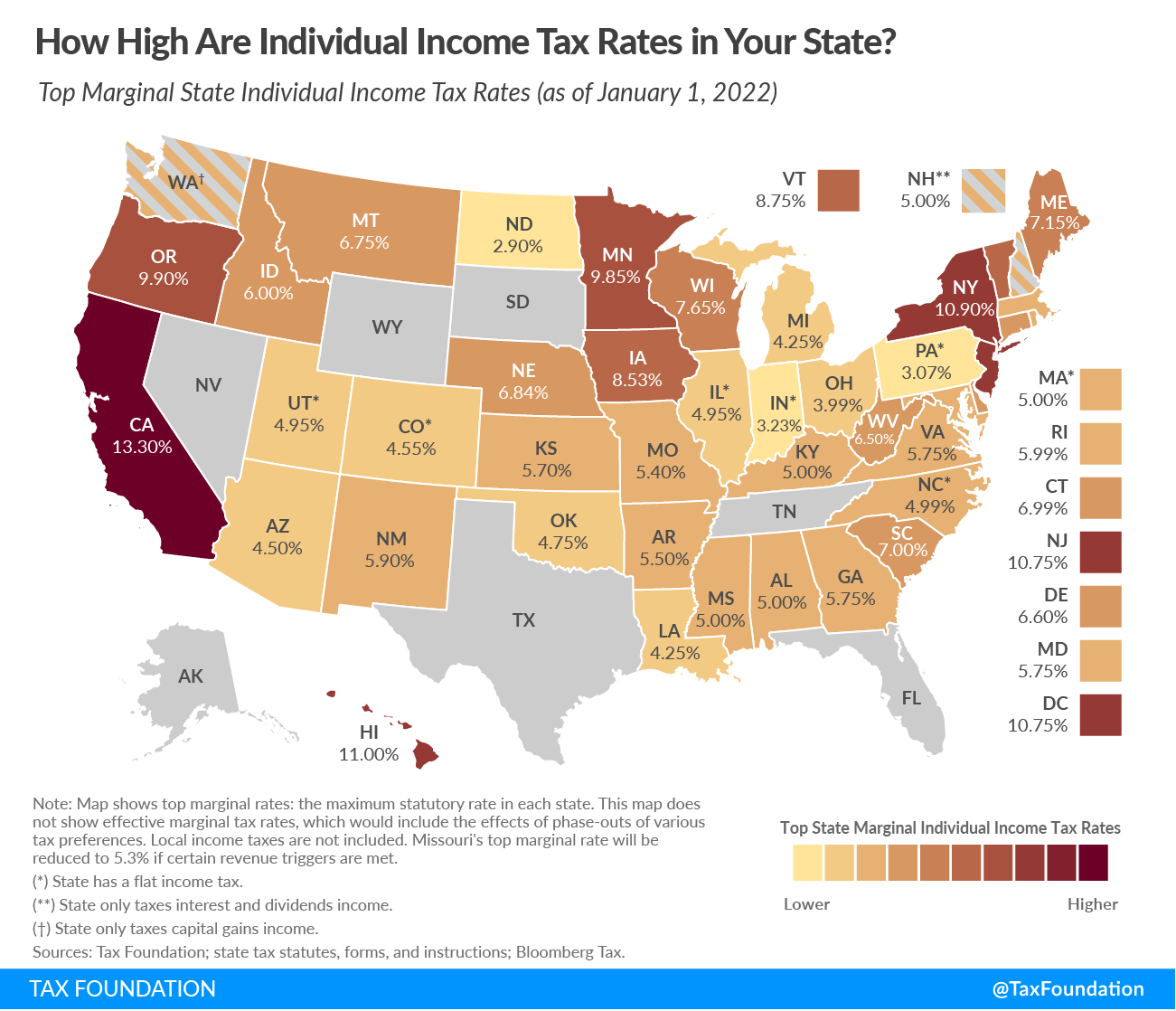
“A couple of problems came together that affected the state negatively,” says Smith. “Our individual income tax was the highest in the South and one of the highest in the country at 7%. To make it more complicated, we were using a different basis for calculation of taxes than most of the rest of the country, so honestly, our effective rate was about the same as our neighbors in North Carolina and South Carolina.
“But our governor was frustrated because every time he tried to work an economic development deal, he would hear from the potential employer about what he referred to as the Big Old Seven. And the Big Old Seven was the Tax Foundation map that showed South Carolina with a big seven percent. That loomed over everything else, and he could not get past that in his conversations.”
Palmetto Promise discovered many challenges when it looked for a solution, including complexities in the state’s tax code, constitutional provisions, and piecemeal changes to the tax structure that had been made over time. In the past, the state has had as many as five tax brackets.
“But we knew we had to pick the worst,” he says. “The worst thing about the tax code was that Big Old Seven.”
Smith credits the 2024 elections for delivering legislative numbers that made it possible to enact a tax reform law that reduced the number of tax brackets to two, with those brackets pegged at 5.21% and 1.99%.
“That was pretty significant,” says Smith. “At first it doesn’t sound like that, but there are a lot of other things that were being cleaned up in the background that made that possible. And the goal, the immediate goal, is to get everyone to 1.99.”
He notes that the Palmetto State’s booming economy made it possible to reduce the tax rate without significant revenue losses.
“At this point we’re the number one move-in state, according to the Tax Foundation and the National Taxpayers Union,” he says. “So it’s not like we’ve got a problem attracting folks. But we might as well juice it further and attract as many new residents and new taxpayers as we can, because if we broaden that base we can get to that 1.99% for everybody more quickly.”
Smith looks ahead to when the statewide boom slows.
“A number of states, when they adjusted their individual income tax rates, did something else as a revenue enhancement,” he says. “If they were taxing goods but not services, they did some tinkering with the sales tax in order to make the income tax reduction possible. We didn’t do that. We just cut cut the income tax. For the most part, we were able to go from 7% to 6.5% and then down to 6% based almost solely on new revenues. Our economy is growing so much that we can rely on additional state revenue to pay for these things.
“But you know that can’t go on forever. We can’t grow forever. I don’t think we can grow ourselves completely to 1.99%. So at Palmetto Promise Institute we’ve been looking more and more at state government funding and spending. What does the spending look like in terms of population growth, inflation? What will the growth of the state do to infrastructure? What will that do to education? So the the hard part is beginning. If we really want to get to 1.99% for everyone, then we’re really going to have to look at the growth of state spending and try to get it down as much as possible. And that’s where it’s going to get kind of tricky.”
Smith discusses how the think tank community has moved from detailed policy papers into a new media environment of podcasts, infographics and short videos.
“We can just keep these ideas in front of legislators and the general public and people who go to political meetings, so that we have a little bit more control of the narrative,” he says. “I think this is what makes organizations like Mackinac and Palmetto Promise Institute still very relevant. You can’t just Google the answers. You can’t just use AI to provide answers to these complicated problems. And you have to have the relationships in order for the people who make these decisions to hear you. If they respect what you’ve been saying, if they know that you provide numbers they can rely on, then you have a foot in the door to get some reforms done.”
Listen to the full conversation on the Overton Window Podcast.
Get insightful commentary and the most reliable research on Michigan issues sent straight to your inbox.

The Mackinac Center for Public Policy is a nonprofit research and educational institute that advances the principles of free markets and limited government. Through our research and education programs, we challenge government overreach and advocate for a free-market approach to public policy that frees people to realize their potential and dreams.
Please consider contributing to our work to advance a freer and more prosperous state.