

 Font size:
“Political risk,” a concept from international investing, could be coming to the United States, Richard Shinder warns, starting with the state that was once the national byword for sound and forward-looking government. As California and other states move toward policies favored by the Democratic Socialists of America, they risk falling into a category once reserved for foreign kleptocracies and failed states.
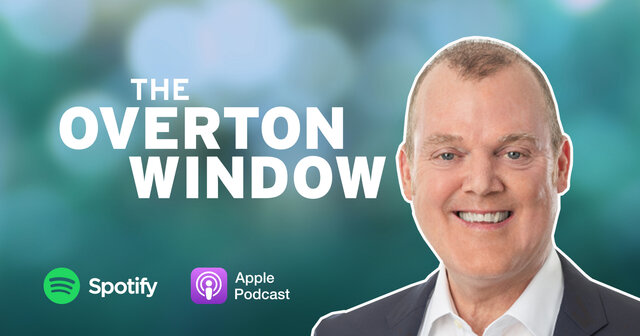
Shinder, co-founder and co-CEO of the investment bank Ensis Partners, joins the Overton Window Podcast to explain how extreme-left politics could create such high uncertainty that potential investors will demand far greater returns or choose not to invest at all.
“We seem to be witnessing a wave of progressive policy proposals that go well beyond moving the dial between slightly higher tax rates or slightly lower tax rates or choosing to regulate this or deregulate that,” says Shinder. “This is moving toward much more dramatic policy shifts that have a very meaningful impact for decision makers as to whether or not to site a business or expand operations, or at the individual level, whether to take a job or start a family in a jurisdiction that may subsequently implement radical and capricious public policies.”
Political risk describes the additional return on an investment that is required to account for the possibility that a sovereign jurisdiction may seize an asset or diminish its value. Shinder sees ambitious efforts such as slavery reparation task forces, New York City’s pied-à-terre tax, and California’s “billionaire tax” initiative laying the groundwork for polities that actively drive out business and investment.
“Taking of assets is not unprecedented when doing business in developing jurisdictions or in war-torn polities,” Shinder says. “There are precedents and models for the risk of having assets seized by a hostile government or having their values effectively regulated away. But typically investors and decision makers have thought of those as things you worry about, say, in sub-Saharan Africa or Central America or other less developed jurisdictions. It is new to see that in the United States, and the kinds of policies that I focused on in a Wall Street Journal piece are things like wealth taxes, like the recently approved pied-à-terre tax in New York, like some of the consent decrees that various state and municipal jurisdictions have entered into at the behest of regulators, where the accumulated value created in the private sector is effectively made subject to a regulatory taking or expropriation by a state or local government.”
Shinder sees additional risk in the broad and programmatic scale of policies that are largely unprecedented and unpredictable. Both residents and investors could be driven away through volatile public policy decisions.
“I can calculate in some reasonable cost/benefit manner the pros and cons of living in California versus Florida versus New York,” says Shinder. “What I can’t do is underwrite the political risk if I move to jurisdiction X — say California — and they decide that they’re going to implement a reparations regime that takes money from certain parties and gives it to other parties. It’s not even a question of whether I think reparations are a good or bad idea. It’s that I don’t have any visibility into who benefits, who suffers, how much is the financial burden, how long will it go for? These things are so novel and and nascent that it’s next to impossible, if not outright totally impossible, to assess the financial implications of making a decision to invest or live in that jurisdiction.”
Michigan, Shinder notes, is not immune to this trend.
“I wouldn’t put Michigan’s situation on the same sort of level as some of the things we are talking about, but business decision makers and investors thrive on predictability and stability,” says Shinder. “Money can be made and fortunes can be created in higher-risk jurisdictions, by which I mean those with less business-friendly labor policies or environmental policies, provided that the rules of the road are clear. Think of playing sports or playing a board game where the rules change in the middle of the game. It’s really hard to have confidence in what moves you should make.
“And it’s the same for business. States that have more continuity, where there’s relative stability in the legislative and regulatory environment even if there’s a change of party or of control in the state legislatures, are in a much more positive position. And I think whipsawing — as it sounds like Michigan has done, and as we see in places like Virginia — tends to inhibit capital formation and discourage investors from wanting to commit more resources to those jurisdictions.”
Listen to the full conversation on the Overton Window Podcast.
Get insightful commentary and the most reliable research on Michigan issues sent straight to your inbox.
The Mackinac Center for Public Policy is a nonprofit research and educational institute that advances the principles of free markets and limited government. Through our research and education programs, we challenge government overreach and advocate for a free-market approach to public policy that frees people to realize their potential and dreams.
Please consider contributing to our work to advance a freer and more prosperous state.