


 Font size:
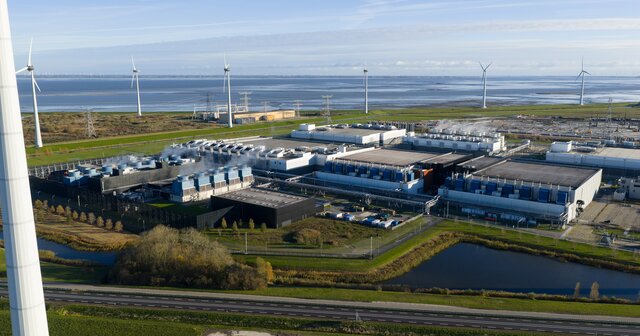
Data centers are on a lot of people’s minds, with concerns typically involving the amount of water, electricity and land they use. A related concern has to do with concerns about a technology data centers enable, notably, artificial intelligence.
A recent panel from the Mackinac Center looked at the trade-offs involved in data centers. People often underestimate the positives that data centers contribute to technologies in medicine, manufacturing and other economic sectors. It’s also easy to overlook the economic activity and revenue from the data centers themselves, as well as from the companies they support.
Many concerns are overblown. A typical data center uses less water than a golf course, and new designs allow much of that to be recycled. Michigan has a lot of water, and strong laws ensure its use is sustainable.
Data centers use a lot of energy, but not as much as big companies in Michigan that few people would dream of shutting down.
And electricity is not a zero-sum game, where one business or person using it means less for everyone else. Adding new companies to the electricity grid can be good for everyone when it spreads fixed costs over a wider customer base.
Though all this is true, many voters are skeptical of data centers, and lawmakers respond to their constituents. Some legislative proposals would shut down or severely hinder this new technology and the economic growth, jobs and revenue it could bring. Others would treat data centers differently than businesses that have similar patterns for using water or electricity. And a few bills would regulate data center construction to favor labor unions.
These are bad ideas. Michigan lawmakers should regulate all companies the same when it comes to how they use land, water and energy. The state should not push unionized labor or use the tax code to pick favorites. Citizens and legislators should make Michigan a welcoming state for industry and flatten the playing field as much as possible.
---------------------------------------
Members of the Michigan Legislature have created various proposals to regulate data centers. Here they are, as summarized by Michigan Votes.
Senate Bill 1018 imposes a temporary moratorium on the approval and operation of data centers in Michigan until April 1, 2027.
Senate Bill 1019 amends Michigan's zoning laws to include the Data Center Regulation Act, reinforces limits on local regulation of resource extraction and energy projects, and protects certain renewable energy projects from retroactive zoning changes.
Senate Bill 1020 temporarily prohibits the Michigan Public Service Commission from approving any electric utility agreements with data centers until April 1, 2027.
House Bill 5777 establishes a regulatory framework for large-scale data centers in Michigan, requiring registration, financial security, environmental and operational reporting, prevailing wage for construction, and creating a fund to reimburse local governments for costs related to data center impacts.
House Bill 5786 sets labor hiring priorities, apprenticeship requirements, and compliance documentation standards for enterprise data center construction contracts in Michigan, with enforcement mechanisms and tax incentive implications.
House Bill 5787 amends Michigan's sales tax law to expand and regulate tax exemptions for data center equipment, tying eligibility to job creation, green building, clean energy use, and compliance with labor standards, while establishing new certification, reporting, and accountability requirements for enterprise data centers.
House Bill 5882 creates a structured process for Michigan local governments to temporarily pause and evaluate large-scale data center and cryptocurrency mining projects, requiring public input, impact studies, and transparency, while preserving existing legal and labor protections.
House Bill 5881 amends Michigan's zoning law to require local ordinances to comply with the Data Center Planning and Responsibility Act, and clarifies limits on local regulation of resource extraction and renewable energy projects.
House Bill 5882 creates a structured process for Michigan local governments to temporarily pause and evaluate large-scale data center and cryptocurrency mining projects, requiring public input, impact studies, and transparency, while preserving existing legal and labor protections.
House Bill 5982 requires contested case review and final approval by the Michigan Public Service Commission for any utility agreements offering preferential rates to large-load data centers, enhancing procedural oversight without altering substantive ratemaking standards.
Get insightful commentary and the most reliable research on Michigan issues sent straight to your inbox.

The Mackinac Center for Public Policy is a nonprofit research and educational institute that advances the principles of free markets and limited government. Through our research and education programs, we challenge government overreach and advocate for a free-market approach to public policy that frees people to realize their potential and dreams.
Please consider contributing to our work to advance a freer and more prosperous state.