

 Font size:
This article originally appeared in The Detroit News June 24, 2025.
Michigan sports fans pay close attention to the rankings for college football and basketball, looking to see how the University of Michigan and Michigan State compare to other schools.
Policymakers, business leaders and voters can do the same by looking at various rankings that tell us how Michigan’s economy is doing compared to other states.
The American Legislative Exchange Council this month released a new report that provides warning signs for Michigan’s future and economy. The 50-state report, “States that Work: A Labor Policy Roadmap Across America,” puts Michigan in the bottom half of the class at 35th place.
The report opens by explaining why this matters.
“The freedom to work is integral to Americans’ right to pursue happiness,” the authors wrote. “Good labor policy focuses less on restrictions and instead on protecting Americans’ right to work in a way that allows them to most effectively, efficiently, and enjoyably achieve their goals.”
Gov. Gretchen Whitmer has highlighted the importance of population growth, and she’s right to do so. When companies move to Michigan, they create jobs. This brings more people into the state, especially young, innovative wage earners.
But people and companies don’t go to a state just because a governor asks politely (or offers taxpayer-funded subsidies). The state’s public policy environment matters.
ALEC analyzes employment trends and ranks states on 10 pro-growth, pro-worker policies. Does the state have a right-to-work law? Does the state protect the flexibility of independent contractors and gig workers? Does the state restrict work through occupational licenses and, if so, does it offer reciprocity for out-of-state licenses?
Michigan ranks 35th because it has failed to adopt (or has repealed) policies ALEC says will drive growth.
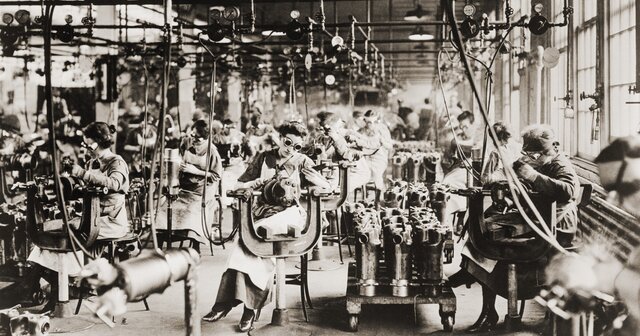
ALEC chastises Michigan policymakers for repealing right-to-work in 2023, considering the strong employment growth the state enjoyed with the policy in place. Michigan “experienced an increase in employment rates from 2013-2018 that was 1.9% higher” than states without a right-to-work law. In manufacturing, Michigan enjoyed a 6.4% increase in employment, while states without a right-to-work law “saw an average decrease in employment in this sector of 1.1%.”
When Michigan Democrats won a political trifecta in November 2022, the governor and lawmakers were forthright about their intent to favor organized labor. Sen. Dayna Polehanki, D-Livonia, tweeted, “We got ALL the gavels. Get ready for some cha-cha-cha-changes here in Michigan.” She then recited a litany of organized labor’s priorities. Early in 2023, Whitmer told Michigan Education Association members she’d “never forget” their political support. A month later she pledged to be a “phenomenal partner” to UAW.
We now see how those policy favors affect the state’s competitiveness.
ALEC’s new report reinforces what other 50-state rankings tell us: Michigan’s economic performance is hampered by poor policy decisions. The Commonwealth Foundation gave Michigan a “D” grade last year for its public-sector labor laws. In another ranking, ALEC placed Michigan 35th for its economic performance, which considered factors like migration and employment growth. U.S. News & World Report ranked Michigan 43rd overall in its “Best States” ranking, and 33rd for its economy.
So, what should policymakers do? “Michigan can improve its ranking by focusing on pro-worker policies,” said Alan Jernigan, one of the authors of the report.
ALEC recommends restoring Michigan’s right-to-work law, which means workers could not be fired for declining to pay a union. Also: Allow out-of-state workers who move to Michigan to forego costly licensing requirements if they’re already licensed elsewhere.
When our favorite Michigan sports teams are doing poorly, they pivot until they find what works. The state should do the same. We should adopt common-sense, pro-growth strategies to get back on track.
Get insightful commentary and the most reliable research on Michigan issues sent straight to your inbox.

The Mackinac Center for Public Policy is a nonprofit research and educational institute that advances the principles of free markets and limited government. Through our research and education programs, we challenge government overreach and advocate for a free-market approach to public policy that frees people to realize their potential and dreams.
Please consider contributing to our work to advance a freer and more prosperous state.