

 Font size:
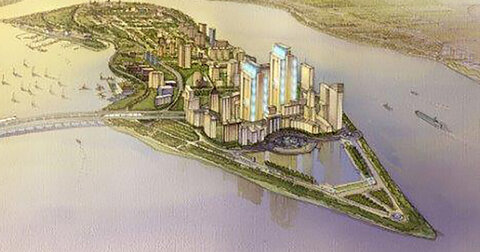
In his novel of ideas “Belle Isle: Detroit’s Game Changer,” Mackinac Center Board Chairman Rod Lockwood envisions the transformation of Detroit’s 982-acre island park into a self-governing American free city and special economic zone. Set 29 years in the future, the book tells the story of a Belle Isle Free City with low taxation, principled organization, a capped population, free trade, an Old-World aesthetic, and sound rules for design and architecture.
Outside of his novel, Lockwood makes the case for the proposal in public appearances. He was interviewed on WJR’s “The Great Voice” in April and presented the idea in September at a Council for Economic Growth event titled “Freedom Cities: Could Belle Isle Become an Economic Empowerment Zone?” The event invited business and civic leaders to consider whether a different regulatory approach could encourage investment, entrepreneurship and housing in Detroit.
Under the plan described, investors would pay Detroit $1 billion for development rights, privately finance the project and establish a city with its own tax code, governance and public services. The concept envisions as many as 50,000 residents, with workers and businesses also drawing on the surrounding city.
Whether the idea can move from an imaginative blueprint to a workable policy will depend on its legal feasibility, the willingness of elected officials to pursue it and the public’s response to the trade-offs involved. For now, Lockwood is making the case that Belle Isle could offer Detroit an opportunity to test a fundamentally different model of urban growth.
This excerpt from Lockwood’s novel shows one portion of that revival, detailing the free city’s specific benefits to greater Detroit:
Joe reflected, “Before I left, I recall the downtown area of Detroit had made quite a turnaround, but the other areas seemed to have been left behind. But now the way you describe it, there is a coalescence that solves the problem of population density, or I guess lack of it. But doesn’t the core of Detroit make it happen?”
“Absolutely. We need Detroit. Detroit’s the cultural anchor for the area, including Belle Isle. It’s one of the few cities on the continent that has a major league team in every sport — baseball, football, basketball, and hockey. Plus a world-class art museum, opera house, symphony, and theaters.
“But Detroit needs Belle Isle too. First of all, our residents comprise a major donor base to these institutions. But more importantly Belle Isle’s reputation, which is now worldwide, has attracted tremendous investment to the area. High-tech manufacturing has added thousands of jobs on the Detroit side of the river. There are businesses headquartered on Belle Isle, but they manufacture in Detroit...
“Also, Detroiters have largely built Belle Isle. We’ve created thousands upon thousands of new jobs, particularly for the construction industry, as we built the new hotels, restaurants, schools, churches, homes, the monorail — you name it. Everything from scratch. During the construction heyday, our national tree was the construction crane! And now we have all kinds of permanent jobs, many of which are filled by Detroiters.”