


 Font size:
Summer is over, and the kids are back in school. What will they learn this year? If state test scores released in September are any indication, not enough. Most Michigan students again failed to demonstrate proficiency. The status quo in public schools is not acceptable; Michigan’s future requires giving schools strong incentives to improve.
The latest results from the annual Michigan Student Test of Educational Progress are sobering. Each grade level tested — third through seventh — did worse in English Language Arts than last year. Just two of every five students are proficient in the subject. Third graders recorded the lowest reading scores in the test’s 12-year history. Math scores were flat as well.
Gov. Gretchen Whitmer’s education legacy is disappointing. Student performance has not improved during her term, even though taxpayers devote more money to public schools than ever before. The COVID-19 pandemic is no excuse. All states went through it, but Michigan trails most states in achievement growth since the lockdowns.
It’s true public schools can only do so much. Student attendance is down. Kids spend too much time on devices rather than on healthy habits like socializing, reading, playing, creating, and solving problems. Students from low-income households, as always, struggle the most. But every state has these problems, and most still outperform Michigan.
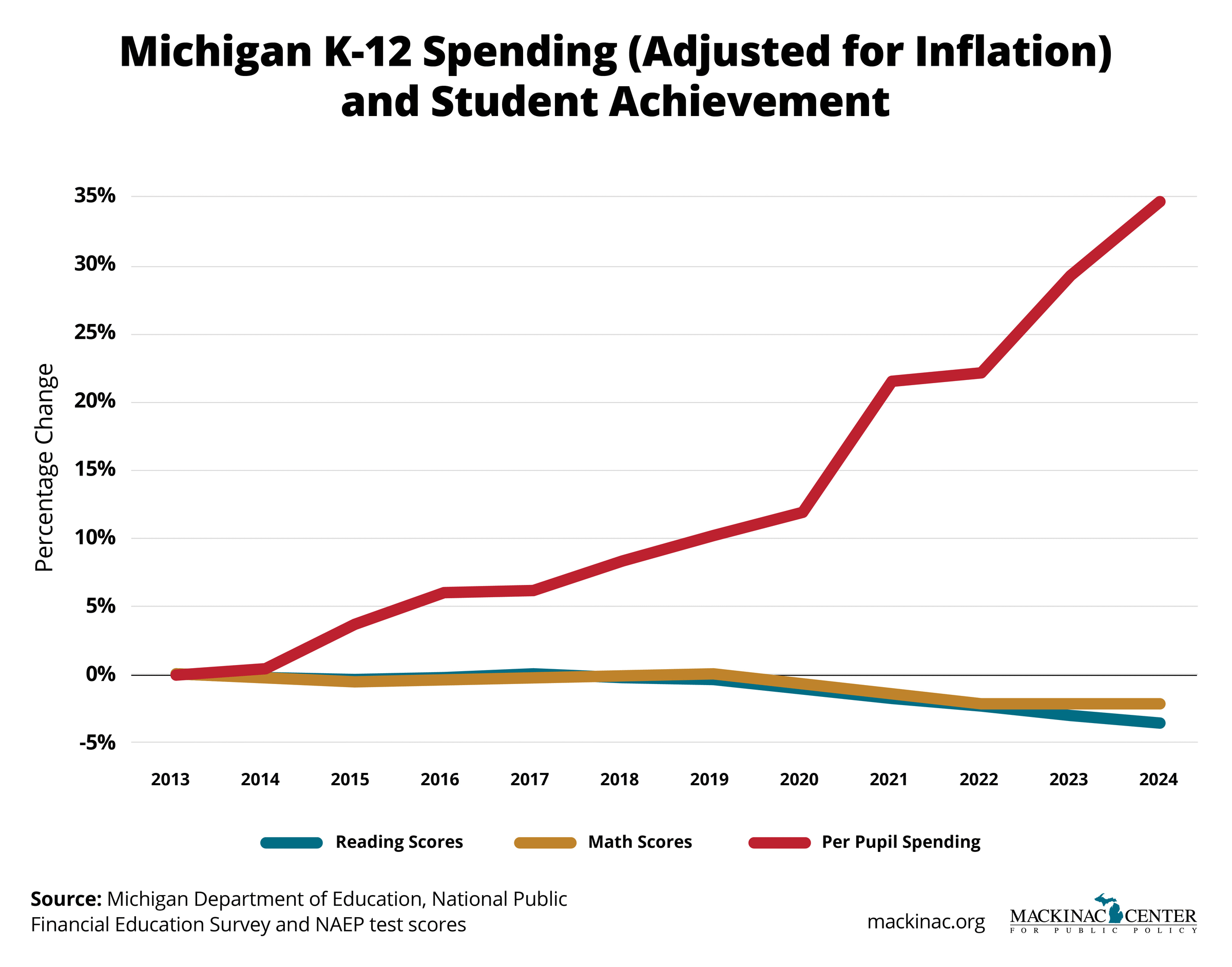
Lawmakers boost spending on schools each year, funding new programs but demanding little accountability for performance. The state rarely intervenes in school districts despite consistently poor academic results. Michigan has tried many reforms, but few that create meaningful incentives for schools to improve.
School performance cannot depend solely on the goodwill of teachers, state officials and local bureaucrats. Government-run schools operate as regional monopolies, mostly insulated from the competitive pressures that push private sector businesses and organizations to improve and evolve. Michigan cannot create a free market in education overnight, but policymakers can give schools stronger incentives to serve students well.
Michigan cannot afford another year of increased spending that yields the same disappointing results. The Mackinac Center will continue to make the case for reforms that put students first, expand educational options and hold schools accountable for results. We will keep this issue before policymakers and help move Michigan toward an education system that creates incentives for schools to improve.