

 Font size:
This article originally appeared in The Detroit News March 5, 2026.
What can you say about a representational public body that silences dissent and conceals information from the public? That question lurks in the background of two lawsuits against public school boards in Michigan.
Sandra Hernden, a police officer and mother to a special needs student, has been struggling with Chippewa Valley Schools since the district retaliated against her for speaking up during the 2020 COVID shutdowns. The terrible impact “remote” and “hybrid” education models were having on her son’s academic and social performance led Hernden to begin speaking at board meetings and emailing board members.
Hernden’s viewpoints did not sit well with the district. Initially, the secretary of the school system tried snitching to Hernden’s supervisor, claiming her participation at board meetings amounted to conduct unbecoming a police officer. The police department investigated, found Hernden had not violated any rules, and declined to discipline her. But the following year, the president of the Chippewa Valley Schools grandly announced that he had referred Hernden to the U.S. Department of Justice under the Biden administration.
Hernden took the Chippewa Valley Board of Schools to court in 2023. Though the school district has used various means to dismiss the suit (including a claim that the board is not responsible for the public actions of board members), the case remains active.
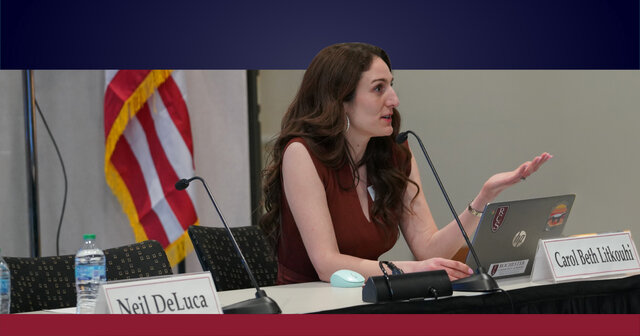
Another mother of a Michigan public school student found that even getting elected to the school board is no protection against retaliation for voicing contrary opinions. Carol Beth Litkouhi ran for and won a seat on the board of Rochester Community Schools after the district stonewalled her efforts to obtain course materials for a high school gender studies class.
But the board remains committed to keeping the public in the dark. When Oakland County began quietly considering a new millage last year, Rochester Community Schools’ superintendent and school board leaders encouraged trustees to support the millage and to keep their discussions about it from the public. After Litkouhi wrote about the tax proposal in an op-ed for The Detroit News, the school board accused her of sharing confidential information, voted to censure her, and stripped her of all committee assignments. If you still stumble over the meaning and spelling of “censor” and “censure,” Rochester Community Schools is providing a fine example of both.
The Mackinac Center Legal Foundation is representing Hernden and Litkouhi in their legal actions, and both suits are now pending in federal court. But these two cases have deeper similarities. They highlight an ominous trend toward secrecy and intolerance for opposition – a trend coming from the very institutions that are charged with representing the public fully, honestly, and openly.
The First Amendment, and the larger American tradition of free speech, are only incidentally useful for protecting off-color songs and formally daring modern novels. Their primary purpose, in letter and in spirit, is to ensure the rights of the citizens to speak up about public affairs and political issues. These rights apply at open-air demonstrations and online, but they are far more important in public forums where actual decisions get made. And the obligation goes from the top down: The public institution must err on the side of openness and give extra deference to the voice of the citizen.
Hernden was speaking out about a vital issue in public education. Litkouhi was informing her constituents about a proposed tax that would make a big difference to their financial lives. (Notably, millage votes are usually scheduled for odd times off the general election cycle, when turnout is expected to be low, so public awareness is especially important.)
Had Litkouhi and Hernden been punished for speaking about trivialities, that would still be bad. But it is much worse that they are paying the price for things that matter. The First Amendment’s highest function is to protect core political speech that seeks to bring about change in public policy.
The most disturbing part of Litkouhi and Hernden’s stories is that the resistance is coming from institutions founded on public input and free discussion. There is something deeply wrong with a public board that does not take seriously its duty to the public.
Get insightful commentary and the most reliable research on Michigan issues sent straight to your inbox.

The Mackinac Center for Public Policy is a nonprofit research and educational institute that advances the principles of free markets and limited government. Through our research and education programs, we challenge government overreach and advocate for a free-market approach to public policy that frees people to realize their potential and dreams.
Please consider contributing to our work to advance a freer and more prosperous state.


