

 Font size:
This article originally appeared in the Wall Street Journal July 31, 2026.
The next battle between socialists and conventional Democrats will be fought in Michigan on Aug. 4, in a primary election for the U.S. Senate. Many Michiganders will vote that same day on tax hikes and other critical local questions—all in off-cycle elections in which low turnout makes them likelier to pass. This isn’t unique to the Great Lakes State and deserves more attention nationwide.
Dozens of Michigan counties have tax-and-spend measures on the August ballot. The largest proposal, in the Detroit suburbs of Oakland County, is a $750 million property-tax hike. In Wayne County, which includes Detroit, residents will vote for a “transit millage” costing taxpayers $500 million over a decade. In Ingham County, which includes the state capital, Lansing, voters will consider a $30 million tax to fund the local zoo. In the counties that include the struggling towns of Saginaw and Flint, voters will be asked whether to fund institutions like museums and libraries.
These requests might seem humdrum, but one factor makes them calculated and hazardous for taxpayers: the date.
Aug. 4 is a seemingly random time to ask voters to fork over more money. So is May 5, when Michigan voters were asked to approve $2 billion in local tax and spending plans, according to the Michigan Information & Research Service. But these dates are no accident. Local politicians, school-board officials and special-interest groups such as teachers unions deliberately choose little-known dates to push their demands.
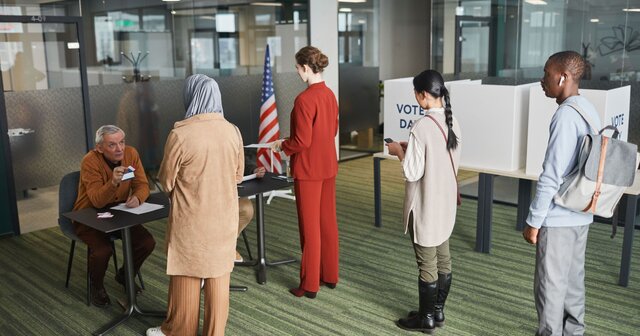
Off-cycle elections have dramatically lower turnout than the typical November Election Day. It isn’t uncommon for off-cycle elections to see a third, a quarter or even less than a fifth as many people show up to vote. This August election coincides with the Senate primary, but turnout will still be lower than on the traditional November date.
For local politicos with big spending plans, this provides an opportunity to tilt the playing field. When comparatively few people are voting, politicians and interest groups can rally their bases to secure easy victories. Local officials can use taxpayer money to grease the skids. While it’s illegal in Michigan to electioneer with public money, officials at school boards can publish guides and materials that “inform” voters about how tax-hike revenue will be spent. So long as they don’t say “vote yes,” they are fine. The combination of these “educational materials” and low turnout can get the votes to pass such ballot measures.
The political class almost always wins. I’ve analyzed the past 10 years of available state data and found that on average 87% of local off-cycle tax proposals passed at the ballot box. It isn’t uncommon for more than 90% of ballot proposals to succeed in these off-cycle elections. By contrast, 82% of ballot-measure tax proposals over the past decade passed during traditional November elections.
The good news is that public opposition to tax hikes has grown in recent years. Voters in several Michigan school districts rejected bonds in low-turnout elections on May 5. In Saginaw County, voters have shot down three significant school bonds since 2023. I know people who ran these Saginaw County opposition campaigns, and if they hadn’t stepped up to get out the vote against the measures, politicians’ tax-and-spend dreams almost certainly would have become reality.
Turnout matters in every election, but proponents of low taxes and sane spending shouldn’t have to fight harder to get people to the ballot box. Off-cycle elections heavily advantage politicians and special interest groups to the detriment of taxpayers. The solution is simple: Move meaningful local ballot questions to Election Day in November.
States could implement this reform with a simple law that applies to every county and locality within their borders. Local officials and interest groups would complain, but they have dominated the system for too long. They also have no reasonable defense for keeping the status quo. It is one thing for primaries to be held off-cycle, so a smaller number of voters can decide each party’s candidate before the big day in November. It is another matter entirely for a relatively tiny slice of the electorate to foist tax hikes and spending decisions on everyone else.
State governments should encourage the largest number of people possible to make their voices heard on important ballot questions. Aug. 4 may or may not be a win for socialists in Michigan. But hopefully this is the last August when Michiganders, or voters anywhere in America, are asked to fork over money with little awareness or fanfare.
Get insightful commentary and the most reliable research on Michigan issues sent straight to your inbox.

The Mackinac Center for Public Policy is a nonprofit research and educational institute that advances the principles of free markets and limited government. Through our research and education programs, we challenge government overreach and advocate for a free-market approach to public policy that frees people to realize their potential and dreams.
Please consider contributing to our work to advance a freer and more prosperous state.


