

 Font size:
Michigan law mandates ever-increasing use of solar photovoltaic cells to replace reliable, affordable, coal, natural gas and nuclear power. Consider that after decades of mandates, tax breaks, and subsidies that add to your taxes and electricity bills, solar is only generating a bit over 2% of Michigan’s electric demand.
Requiring more solar is the wrong plan for so many reasons:
The threat of blackouts is highest in the winter, when the sun is not up and nights and early mornings are cold.
A state agency estimates Michigan’s solar mandate will require 209,000 acres of farmland.
Large solar projects often run into justified local opposition to permitting decisions (state law allows a state agency to override local decisions).
Having a northern climate and surrounded by water, Michigan is a relatively cloudy state with poor solar resources.
Solar project costs are rising dramatically from inflation, supply chain problems and lost federal subsidies.
Solar panels last only one-third to one-half as long as other generating sources, presenting reconstruction and massive waste-disposal issues.
The state’s 2030 emission goals can be met without solar.
Read on for the details.
The North American Electric Reliability Corporation says Michigan’s regional grid has a high risk of power shortages, starting in 2028. Reliable coal power plants are being closed prematurely and replaced too slowly by weather-dependent wind and solar.
Solar projects often face resistance from local governments. The Michigan Farm Bureau also objects, as the Department of Natural Resources estimates that meeting solar and wind goals will require 209,000 acres of land. Recognizing local opposition, the Legislature gave the Michigan Public Service Commission authority to override local permit bans. Opponents to this law are attempting to repeal it through a ballot initiative.
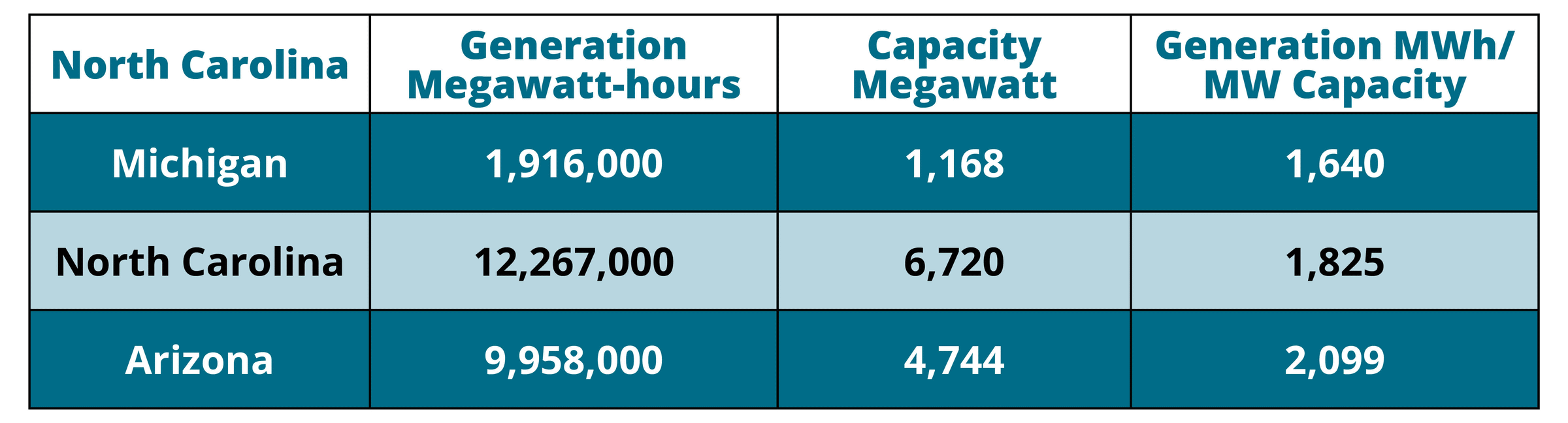
Michigan has lower solar resource potential than more southerly located states, as shown below. Michigan is about 10% less productive at generating electricity through solar than North Carolina and 21% less efficient than Arizona. This translates to Michigan having 28% higher costs to generate solar electricity than Arizona. In 2024, Michigan’s solar projects generated 71% less electricity in December than in June (62 megawatt-hours/ megawatt vs. 212).
Construction costs are increasing. Solar panel prices rose about 9% in the first quarter of 2025, mainly because of higher tariffs. Another factor is that projects placed in service after 2027 will not receive 30% investment tax credits under federal law. Also, wind and solar projects are often placed far from existing transmission lines, requiring expensive infrastructure upgrades. Because of these factors, the price of solar projects could rise 40% or more, with those extra costs passed on to ratepayers in their electricity bills.
Michigan’s electric demand was 98.8 million megawatt-hours in 2024. Solar generation only totaled 2.3 million, or about 2% of that. The state’s goal of generating 52% of demand, or 52 million megawatt-hours, from zero-emission sources by 2030 could be achieved by adding a new small modular reactor at the Palisades nuclear plant and restarting the main plant.
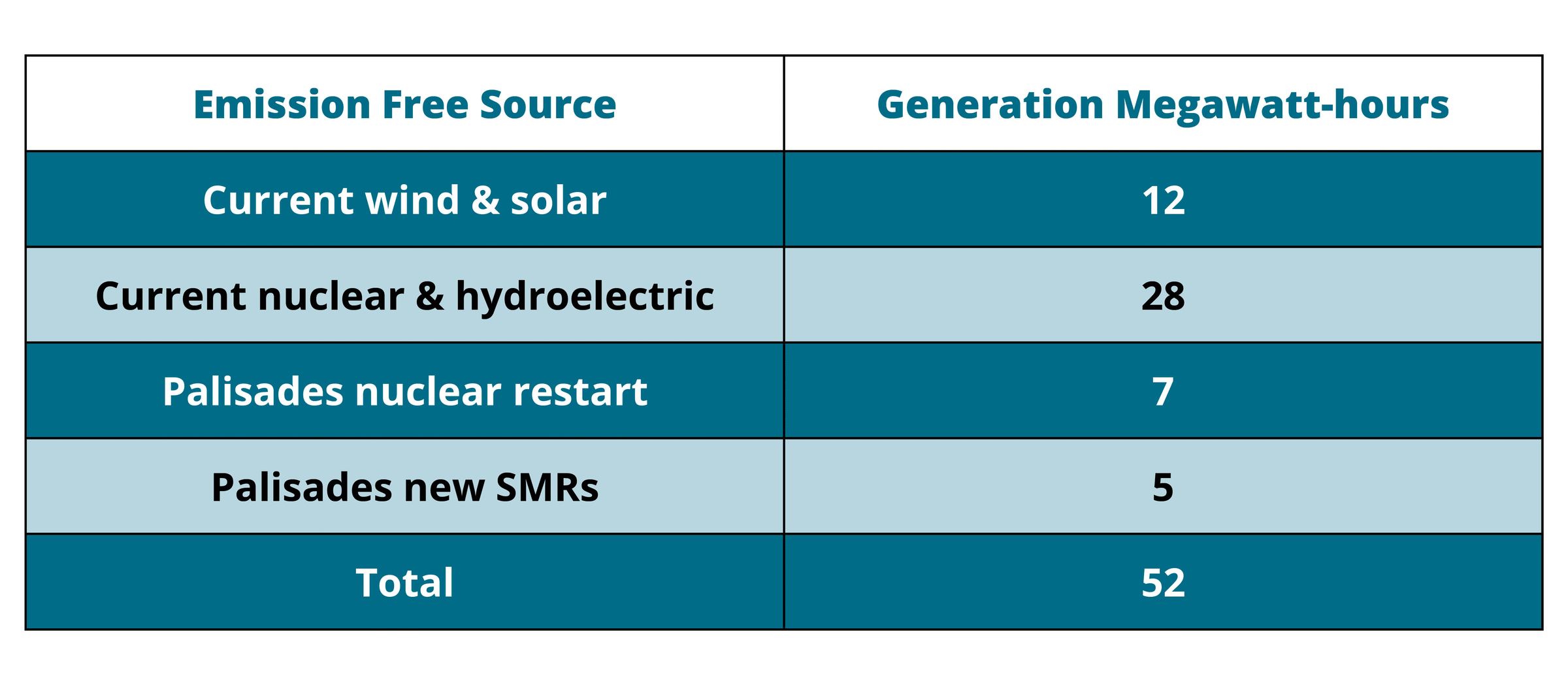
The future of electric generation is clearly nuclear, not solar, and state legislation needs to change in recognition of this reality.
Get insightful commentary and the most reliable research on Michigan issues sent straight to your inbox.

The Mackinac Center for Public Policy is a nonprofit research and educational institute that advances the principles of free markets and limited government. Through our research and education programs, we challenge government overreach and advocate for a free-market approach to public policy that frees people to realize their potential and dreams.
Please consider contributing to our work to advance a freer and more prosperous state.