

 Font size:
This article originally appeared in The Detroit News November 17, 2025.
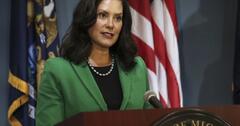
A recent admission by Gov. Gretchen Whitmer casts doubt on her aggressive COVID-19 lockdown decisions. Appearing on Financial Audit, a popular podcast with 2.65 million YouTube subscribers, the governor talked primarily about Michigan’s finances. During the interview, host Caleb Hammer pressed Whitmer on her “weird” lockdown policies.
“I was a little annoyed when I came home for Christmas two years in a row,” he said. (Hammer is from Michigan but lives in Texas.) “Like, we had to eat outside, but we were in inside pods outside.”
Whitmer briefly defended the outdoor dining pods but then brushed the topic aside: “Listen, Caleb, none of us wants to go back and relive that. We were doing the best we could with very little or very bad information.”
This is the first time, in my recollection, that Whitmer has said her pandemic decisions were based on bad information. “Very little or very bad information” stands in stark contrast to how Whitmer described her decision-making at the time.
Let’s review. Whitmer declared a state of emergency on March 10, 2020. She began managing the economic, social and educational activities of the 10 million people in Michigan. Over several months, Whitmer issued nearly 200 executive orders and 1,000 explanatory FAQs. These orders dictated in tedious detail how people must live, shop, work, travel and socialize.
Whitmer’s lockdown regime forced businesses to conduct temperature scans and collect personal data. She ordered grocery stores to set up one-way aisles. She imposed mask mandates. Her orders transferred COVID-19 positive patients to nursing homes. She closed schools, sporting events, universities, “non-essential” medical centers and family businesses. Many of those businesses never reopened.
These confusing, inconsistent emergency orders allowed the government to prosecute people like barber Karl Manke in Owosso, who endured years of legal battles, and restaurateur Marlena Pavlos-Hackney in Holland, who was jailed for keeping her restaurant open.
Whitmer fought other branches of government during the pandemic. She urged lawmakers not to meet and ignored their refusal to extend her powers. She slammed the Michigan Supreme Court for nullifying her orders, saying the virus “does not care about a court order.”
Whitmer projected confidence and certainty throughout the lockdowns, telling us her decisions were supported by experts and science. “Each action has been informed by the best science and epidemiology counsel there is,” she wrote in April 2020 for The New York Times.
She claimed that her multi-disciplinary, data-driven approach “saved lives and protected families.”
In another New York Times op-ed in July 2020, Whitmer touted her “aggressive measures” and urged President Donald Trump to impose a national mask mandate, insisting “the data shows it is the best way to protect ourselves.”
Whitmer imposed some of the most draconian restrictions in the country on families and businesses — bragging about it at the time. The consequences were severe. The lockdowns disrupted education for hundreds of thousands of kids, permanently shuttered businesses and exacerbated the mental health challenges that people face.
Over and over Whitmer justified her lockdown rules by citing experts and science. Even more, Whitmer said her efforts enjoyed moral authority. Fighting coronavirus, she said, was “a matter of civil rights.”
But now, years later, the governor admits the decisions were based on “very bad information.”
When did Whitmer discover that the “best science” was actually bad information? Which information was flawed? What decisions relied on this bad information? And who advised the governor — was it the Centers for Disease Control and Prevention, Dr. Anthony Fauci or the University of Michigan?
The governor’s about-face calls for an explanation.
Get insightful commentary and the most reliable research on Michigan issues sent straight to your inbox.

The Mackinac Center for Public Policy is a nonprofit research and educational institute that advances the principles of free markets and limited government. Through our research and education programs, we challenge government overreach and advocate for a free-market approach to public policy that frees people to realize their potential and dreams.
Please consider contributing to our work to advance a freer and more prosperous state.