In the 250th year since the Declaration of Independence, the Mackinac Center will host a timely conversation about the importance of America in world history. Has the American experiment made the world better off?
An expert panel will examine the global legacy of a nation founded on natural rights, self-government, constitutional limits, and the idea that human beings are entitled to live in freedom. For all of America’s flaws and contradictions, its founding principles have shaped debates over liberty, equality, trade, citizenship and human dignity far beyond its own borders. This event will explore whether the United States has, on balance, been a force for progress — and what its record can teach us at the 250th anniversary of the nation’s founding.
This discussion brings together three distinguished voices with different focuses. Dr. Phillip Magness is an economic historian and senior fellow at the Independent Institute. His work focuses on American political economy, slavery and race relations, and the history of economic thought. Professor Khalil Habib is an associate professor of politics at Hillsdale College who teaches political philosophy and American political thought. Dr. Carol Swain is an award-winning political scientist, former professor at Princeton and Vanderbilt, and a distinguished senior fellow for constitutional studies at the Texas Public Policy Foundation.
In the Mackinac Center’s tradition of serious, idea-driven discussion, this conversation will move beyond slogans and nostalgia. It will ask what America has meant to its own citizens, to the cause of liberty abroad and to the future of the principles proclaimed in 1776.
Tuesday, May 26, 2026
Reception: 6:00pm - 7:00pm
Program: 7:00pm - 8:30pm
The Acton Institute (Auditorium)
98 Fulton St E
Grand Rapids, MI 49503


Call our Events office at
Event is free, but RSVP is necessary by May 25.
Register online
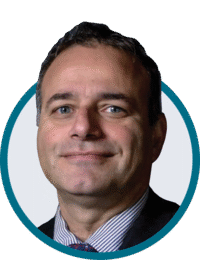
Khalil Habib is associate professor and the Allison and Dorothy Rouse Chair in Politics at Hillsdale College, where he teaches political philosophy, the U.S. Constitution and American political thought. Habib has co-edited The Soul of Statesmanship: Shakespeare on Nature, Virtue, and Political Wisdom and Cosmopolitanism in the Age of Globalization: Citizens Without States. His research and teaching have included political philosophy, natural rights, statesmanship, enlightenment thought, and the relationship between politics and religion. He earned a Ph.D. in political philosophy from Boston University and has become a widely recognized teacher and commentator on the American political tradition.
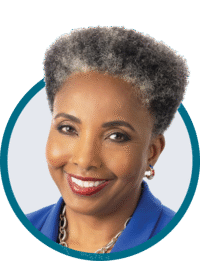
Carol M. Swain is a political scientist, legal scholar, author, and public commentator. Born in rural southwest Virginia, she rose from poverty and, after leaving high school early, went on to earn five degrees, including a Ph.D. from the University of North Carolina at Chapel Hill and an M.S.L. from Yale. Swain received early tenure at Princeton University and later became a professor of political science and professor of law at Vanderbilt University. She is the author or editor of 14 books, has been cited by the U.S. Supreme Court, and remains a prominent speaker and media contributor on American politics, law, and culture.
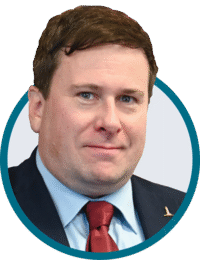
Phillip W. Magness is an economic historian and public policy scholar. He holds the David J. Theroux Chair in Political Economy at the Independent Institute. He previously served as senior research fellow at the American Institute for Economic Research, academic program director at the Institute for Humane Studies, and an adjunct professor of public policy at George Mason University. Magness earned his Ph.D. from George Mason University’s School of Public Policy. His work focuses on economic history, political economy, and the history of American ideas, and he is a frequent writer and speaker on public policy and historical debates.
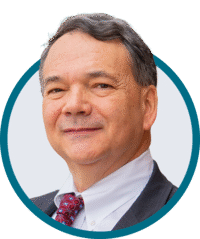
Joseph G. Lehman is president of the Mackinac Center for Public Policy, an independent, nonprofit research and educational institute in Michigan. Lehman first joined the Mackinac Center in 1995. He later became vice president for communications at the Cato Institute in Washington, D.C., before returning to the Mackinac Center as its executive vice president and became president in 2008. He is vice chair of the National Taxpayers Union, a director of the Institute for the American Worker, and belongs to the Atlas Network's Global Council of CEOs.
Prior to his public policy career, Lehman was an engineer and project manager for nine years at The Dow Chemical Co. He graduated from the University of Illinois College of Engineering and is a registered professional engineer.