


 Font size:
Gov. Gretchen Whitmer recommends a series of tax hikes in her executive budget, spending that would boost state outlays beyond sustainable levels. The governor recommends a 4% increase in the state budget, not counting federal transfers.
Michigan lawmakers do not need to tax people more.
Taxpayers can afford the growth of the state government if it stays under the rate of inflation and the rate of population growth. Unfortunately, lawmakers have been spending above that threshold since 2019. Had the budget grown only at the rate of inflation, taxpayers would have kept $4.8 billion for themselves. Lawmakers could have cut the state income tax by 30%.
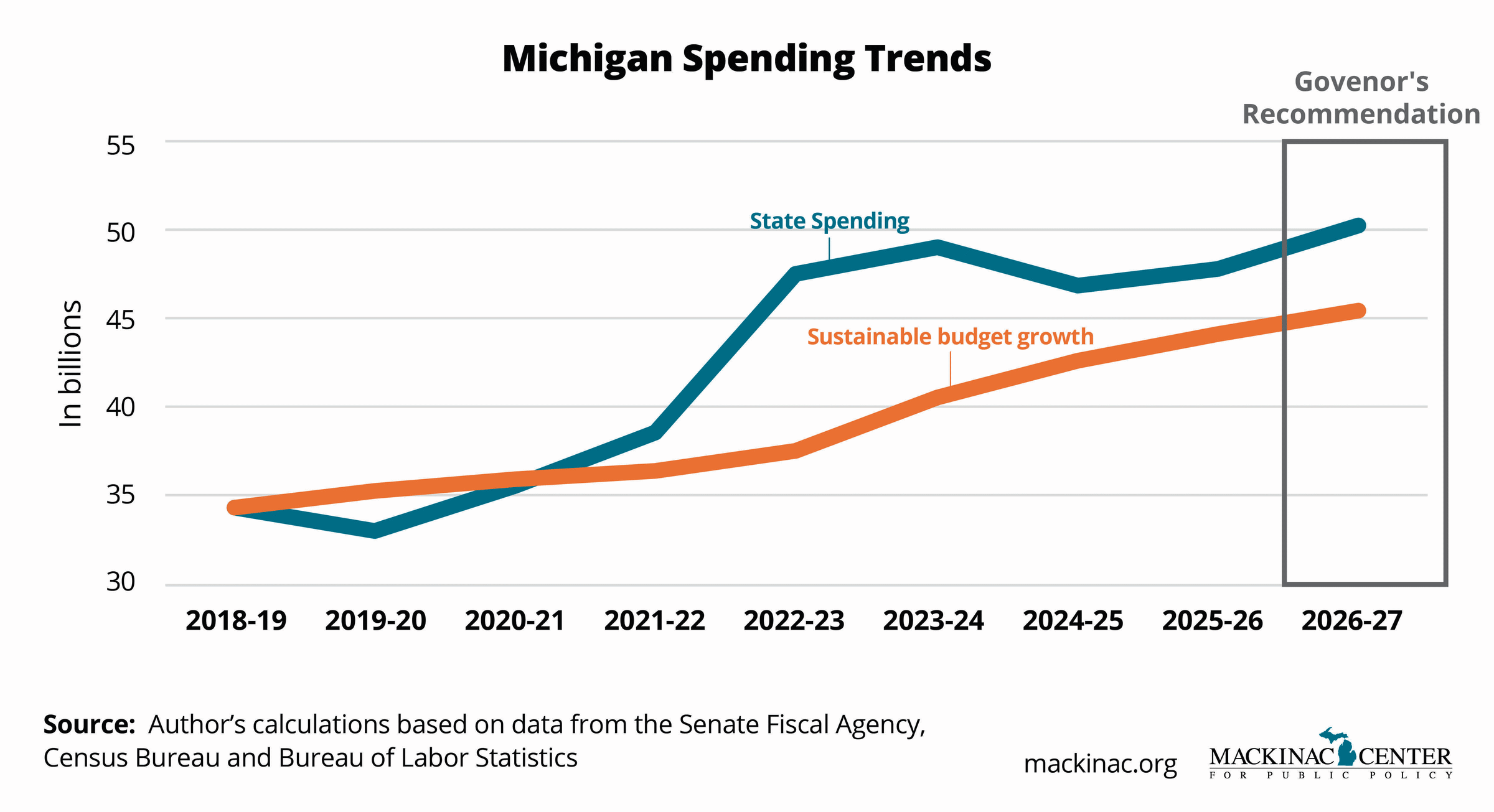
The overspending calculation counts only money from state taxes. The executive budget also includes $36 billion transferred from the federal government. Money from Washington is a growing part of the state budget. It is up 14.5% since 2019, adjusted for inflation. The growing transfers from the federal government, especially to pay for Medicaid, is an issue that ought to concern state lawmakers.
While restraint in accepting federal grants can save the federal taxpayer some money, it would not allow state lawmakers to reduce state taxes. Yes, state taxpayers are also federal taxpayers. But if Michigan lawmakers want to lower the burdens on taxpayers, they have to save money in the budget paid for by state taxpayers.
Part of the $4.8 billion increase in spending above sustainable levels is because lawmakers have spent more on their top priorities. They increased state education spending from $13.1 billion in 2019 to $18.9 billion this year, a 20% increase in inflation-adjusted per-student funding. Total federal, state and local funding of school districts now amounts to $23,665 per student. That extra spending has not increased education quality: Michigan’s education rankings relative to other states have fallen. It’s a good indicator that lawmakers can’t buy their way into a better-quality education system. There are better ways to spend this money.
Other areas of increased spending deserve scrutiny from lawmakers.
Michigan lawmakers spend $42 million on community college scholarships to people over 25, roughly what the state spends on wildlife management. The program is intended to help people get better jobs, but the state doesn’t bother to check whether participants improve their wages.
Michigan lawmakers have authorized $6.9 billion in selective business subsidies since 2019, despite poor results in turning subsidies into jobs. But there was good news in 2025. They didn’t authorize any new subsidies last year, and they ought to continue this positive trend.
Unfortunately, the governor recommended spending $150 million on a poorly designed site preparation program, and the state will spend another $500 million for payouts on existing deals — deals that continue to violate basic good government principles. In other words, plenty of profligacy remains in this arena. The governor’s proposal is more than what the state spends on highway maintenance.
Legislators ought to approve budgets that practice restraint. They’ve tried some things that didn’t work and should learn their lessons. The House legislators’ denial of work projects, the consent needed to extend a spending item beyond the year of a budget, shows that lawmakers are familiar with restraint. Some $159 million, about what it costs to operate four of the state’s prisons, went to ineffective business subsidies.
If lawmakers find that they can’t agree on budgets that save $4.8 billion, they should ensure that the inflated budget doesn’t keep growing beyond sustainable levels. This means spending just 3% more next year, not 5% as the governor recommended.
The state operates with a balanced budget, so a penny saved in the budget process is a penny earned for tax cuts, emergency priorities, or extra debt payments. There is a lot of good lawmakers can accomplish if they practice restraint.
Get insightful commentary and the most reliable research on Michigan issues sent straight to your inbox.
The Mackinac Center for Public Policy is a nonprofit research and educational institute that advances the principles of free markets and limited government. Through our research and education programs, we challenge government overreach and advocate for a free-market approach to public policy that frees people to realize their potential and dreams.
Please consider contributing to our work to advance a freer and more prosperous state.


