Font size:
"Faith-based" charities received national attention in the last presidential campaign when then-candidate George Bush proposed a federal partnership with religious organizations to provide social services to the poor and disadvantaged. But smaller units of government have been successfully contracting with such groups for years.
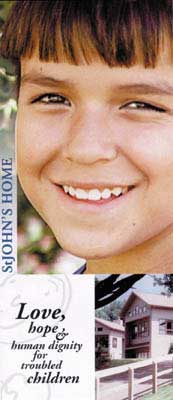
One such success story is the partnership between Kent County in western Michigan and St. John's Home, a private, nonprofit children's agency. In 1998, the government-run Kent County Child Haven closed its doors after 38 years of housing Grand Rapids-area children who had been removed from homes due to suspected abuse or neglect. The county then turned over the job of finding a place for these children to St. John's Home.
St. John's, which opened its doors in 1889 as an orphanage but has since expanded its mission and services, responded with "Kids First." Kids First is an emergency-shelter-care program tailored to meet the needs of Kent County children who are unable to remain in their own homes due to mistreatment or extreme domestic disturbance. Requests for placement at Kids First come from Children's Protective Services (CPS)-a part of the Kent County Family Independence Agency-or from local police agencies in consultation with CPS.
In fact, many of the approximately 600 children handled annually by Kids First are brought to St. John's by local law enforcement agents, according to Michelle Hoexum, development director for the home. "Police officers have a high level of confidence bringing children here because they know St. John's is a safe place for kids and will take good care of them," she says.
Police aren't the only public officials who have a high level of confidence in St. John's. According to Robert Jamo, a member of the Kent County Family Independence Agency board, the Kids First program has been a real success story.
"It's been a good fit," he says. "I've been very pleased with their performance."
According to Jamo, the contract with St. John's Home comes up for renewal every year, with St. John's officials giving annual face-to-face reports to county officials. Under the terms of the contract, which is worth approximately $1 million annually, St. John's must be prepared to accept any child under 17 referred to them for placement.
The decision to choose St. John's for the contract was simple, says Jamo. "We put the contract out for bid, and St. John's came in lowest, and their bid also included services from two other agencies," he says. "It was easy to pick them."
The original two agencies St. John's subcontracted with are D.A. Blodgett Services for Children and Families, which provides foster-care settings for some youths, and Wedgwood Christian Youth and Family Services, which offers secure environments for youths considered dangerous to themselves or others. But as the Kids First program has expanded, so has its stable of subcontracting agencies.
"We consider ourselves the gateway to the child welfare system in Kent County," says Marvin McKenzie, program director for St. John's Home.
Has the Kent County-St. John's Home partnership saved money?
"I don't believe the county has necessarily saved any money," says Jamo. "But that was never the point."
Neither Jamo nor McKenzie had exact figures when contacted by MPR, but McKenzie does believe St. John's Home's relationship with the county has resulted in a net savings.
"The county was operating Child Haven for about $1 million in 1998; we took it over for $874,000 a year at that point," he says.
McKenzie also believes his organization has made a difference in a more fundamental way. "Recidivism [among troubled youths] is considerably less than it was at Child Haven, where it was 27 percent in 1996 and 32 percent in 1997," he says. "Now it's down to about 5 percent." He adds that the problem of "runaways"-kids who are admitted to St. John's Home but who quickly sneak away the moment they find an opportunity-has decreased significantly in recent years.
Another improvement has been St. John's Home's ability to approach children's problems in a flexible way, treating youths according to their different needs.
"Our old 1960s building [county-run Child Haven] didn't allow us to segregate children according to their problems," says Jamo. "So we had older kids, younger kids, with different problems all in the same place."
"Ours is not a one-size-fits-all approach," says McKenzie. "One of the focuses of Kids First is ameliorating the crisis situation. We want to make sure kids' needs are met for the short time we have them."
The partnership with St. John's Home hasn't been without snags, however. "[At Child Haven] we were getting older youngsters staying longer than 30 days," says Jamo. "We hoped with this contract to reduce the length of time these youngsters had to wait to get placed into foster-care settings. Unfortunately, it hasn't worked out as well as we would have liked."
Privatization, like most things in life, isn't always perfect. But it certainly can be a useful tool to help public officials improve the quality of services to citizens-and even to get troubled and mistreated children back on the right path.
David Bardallis is editor of Michigan Privatization Report.