Font size:
From the Oval Office to state legislatures, politicians are talking up "renewable" energy as the cure for America’s "addiction to oil"[1] and the best hope for independence from OPEC.
Gov. Jennifer Granholm suggests we can reverse Michigan’s moribund economy by making the state the "epicenter" of alternative fuel research and development, while U.S. Rep. Joe Knollenberg, R-Bloomfield Hills, recently informed voters in a campaign letter that he stands for "Innovative Renewable Solutions."
Time will tell whether energy derived from sunlight, wind and corn can fulfill these ambitious objectives. But as in all matters related to natural resources, a basic foundation of scientific knowledge is necessary to craft intelligent policy.
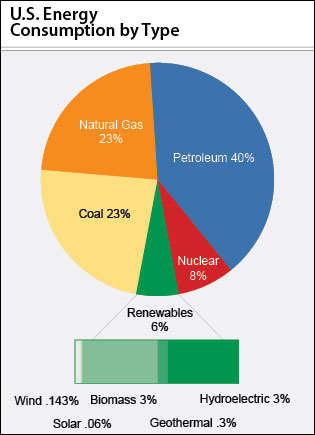
Energy derived from so-called renewable sources now comprises about 6 percent of the more than 100 quadrillion Btu[2] that Americans use annually.[3] As the chart illustrates, the largest shares of renewable energy currently consumed are hydroelectric[4] and biomass.[5]
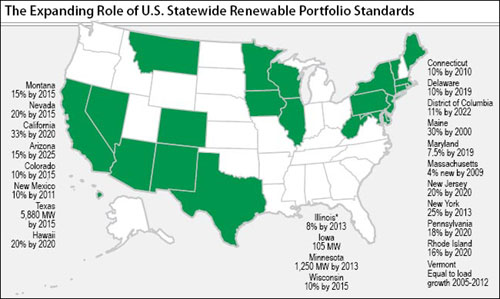
Should present trends continue, the share of energy generated from renewable sources is projected to grow slightly in the next two decades.[6] Congress and state legislatures, however, are considering enactment of "renewable portfolio standards" that would require power companies to generate a quota of electricity from renewable sources.
Such standards are in effect in 20 states and the District of Columbia, and at least two bills to establish a similar standard in Michigan are pending in the Legislature. House Bill 4608 would require electricity suppliers to generate or acquire from renewable sources not less than 4 percent of the electricity sold to retail customers, with at least 1 percent of the required renewable energy being solar. The renewable energy quota would increase to 7 percent of the power sold by 2013. Similarly, House Bill 4154 would require that no less than 7 percent of retail electricity be generated from renewable sources, with the standard increasing to 15 percent by 2015. The bill also mandates that at least 5 percent of the required renewable energy be solar. In both measures, utilities would be permitted to increase retail rates to offset the higher costs of renewable energy.
Also pending is House Bill 4584, which would authorize a sales tax break of up to $60 on the purchase of equipment that uses renewable energy sources to heat, cool or supply electricity to residential and commercial buildings. Earlier this year, the Legislature approved creation of 10 "renaissance zones" in which tax breaks will be offered to lure renewable energy facilities.
In 2004, the most recent year for which total energy production data are available, Michigan ranked 12th nationwide in the amount of electricity generated annually — more than 118.5 million megawatt-hours.[7] Coal was the most common fuel source, generating 58 percent of the electricity in the state, followed by nuclear power (26 percent) and natural gas (13 percent).[8]
In 2003, the most recent year for which detailed renewable energy data are available, hydroelectric power was the single biggest source of renewable energy in Michigan, with a net generation[9] of about 1.31 million MWh.[10] Ranking second as a net generator of renewable energy is a combination of wood and wood products, at about 1.02 million MWh. Ranking third, fourth and fifth respectively are a combination of landfill gas and municipal solid waste, at 658,861 MWh; other biomass, such as agricultural byproducts, at about 124,751 MWh; and wind, at about 2,660 MWh.[11]
Whether government should drive further development of alternative energy is a policy issue, not a scientific one. Secretary of Energy Samuel Bodman has named former Exxon-Mobil Chief Executive Officer Lee Raymond to head a federally funded study charged with issuing recommendations for U.S. energy policy through 2025. In Michigan Gov. Granholm has requested an energy plan by year’s end from Peter Lark, chairman of the state Public Service Commission. Likewise, state Sen. Bruce Patterson, R-Canton, chair of the Energy and Technology Committee, has assembled a bipartisan working group to develop a long-range energy plan for the state.
Opinions vary widely about the reliability of oil imports, the environmental impacts of fossil fuels and the economics of energy subsidies[12] and regulatory mandates. But even if consensus were achieved tomorrow, a host of scientific and technological challenges would still need to be overcome before renewable energy could replace fossil fuels to any measurable degree.
This is not to say that conventional sources of energy haven’t presented problems — noxious emissions and black lung disease among them. But the political focus at present is firmly fixed on renewables, and our expectations will be realistic xe "only"only if we acknowledge the trade-offs among various energy alternatives.
The section that follows provides an overview of these issues.
Solar Power
Light from the sun can be converted directly to electricity by means of a "photovoltaic cell." Most PV cells are made from wafers of silicon. When sunlight strikes a PV cell, electrons flow between the silicon layers. This current of electrons is then channeled through metal contacts attached to the cell.
At present, solar power is among the least efficient methods of generating electricity; PV cells absorb, at most, xe "only"only about 25 percent of the available energy; much is lost through heat. Thus, any large-scale generation of solar power would require enormous areas of land to hold the multiple arrays of PV cells. Heating just a typical house would require a "collector area" of 200 square feet.
Solar energy produces a direct current, which must be converted to an alternating current for residential or commercial uses. This conversion consumes up to 10 percent of the electricity produced by a solar panel, further reducing the panel’s low energy output.
The cost of silicon has escalated in recent years, as demand for semiconductors has increased. In response, manufacturers are attempting to produce thinner PV cells. Unfortunately, the metal strips used to connect the PV cells have a greater rate of heat expansion than silicon, and the thinner silicon wafers are more likely to break from the tension created by the cooling of the metal. The problem is intensified when the size of the metal contacts is increased to produce more power.
Also problematic is the inescapable fact that sunlight is variable, dependent on location and weather. This renders solar power somewhat unreliable. The use of rechargeable batteries can help, but many such batteries contain metals and other potential toxins, including lithium-ion (Ni), sodium-sulphur, nickel-cadmium, nickel-metal hydride, lead-acid, polysulphide-bromide, vanadium redox and zinc-bromine.[13]
Wind Power
Windmills have been a feature of rural America since the early 1900s.[14] A wind energy system transforms the kinetic energy of wind into mechanical or electrical energy.[15] In the production of electricity, the wind turns turbine blades that power a generator, and that power is then channeled to a transformer, which converts the electricity to the proper voltage for distribution along the power grid.
The power available from the wind is a function of the cube of the wind speed.[16] To operate cost-effectively, larger turbines require wind speeds of about 13 mph. The availability of sites with adequate winds has limited the widespread development of wind farms, according to Cornell University Prof. David Pimentel, who estimates that 13 percent of the land area in the contiguous United States would be serviceable.
Like solar power, wind is intermittent. It may change direction and speed by the hour. There also are nuisances to contend with. Wind power is noisy; the whirring of turbine blades can be heard more than half a mile away. A 2004 report in the London Daily Telegraph cited numerous studies linking wind turbine noise with a variety of ailments suffered by nearby residents, including headaches, migraines, dizziness, palpitations and tinnitus, as well as sleep disturbance, stress, anxiety and depression.[17] "These symptoms had a knock-on effect in their daily lives, causing poor concentration, irritability, and an inability to cope," said researcher Amanda Harry.[18]
Wind farms also require large plots of open land — an estimated 2.5 acres per turbine, on average.[19] Transmission lines must be built to connect remote windfarms to the power grid. Constructing a wind farm also requires the manufacture of hundreds of tons of cement and steel.
Particularly troubling to environmentalists is the number of birds, including some endangered species, that are routinely killed by rotating blades (dubbed by the Sierra Club as "Cuisinarts of the Air").[20] For example, the sprawling wind farm at California’s Altamont Pass, which features some 7,000 turbines,[21] kills thousands of birds each year, including golden eagles, red-tailed hawks and burrowing owls.
Geothermal Energy
Geothermal power harnesses steam from geysers and reservoirs to power electricity generators.
The inaccessibility of most geothermal sources is considered a major drawback. Only four states currently generate geothermal electricity: California, Nevada, Utah and Hawaii. Development of a geothermal system elsewhere would likely require deep drilling at a prohibitive cost.
Geothermal power is not environmentally benign. Most geothermal sources are located in remote wilderness areas, and building a geothermal plant requires the construction of roads, the installation of power lines and other industrial infrastructure.
Geothermal power also requires large amounts of water, the uptake of which can impact aquatic ecosystems and wildlife habitat. The release of wastewater from geothermal plants has the potential to contaminate surface water and groundwater. And depending on the amount of water and steam diverted, individual geothermal sites may be exhausted faster than they are naturally reheated.[22]
Biomass Energy
"Biomass" refers to organic matter, including wood, crops, animal wastes and even some household trash. Energy can be produced in a variety of ways, such as burning the biomass to create steam to run turbines or generate heat; producing alcohols from crops for combustion; and capturing gases to produce heat, steam or electricity. In most instances, generating energy from biomass entails either land-intensive agriculture or emissions-producing combustion.
The burning of biomass produces more emissions than the combustion of natural gas, but less than the burning of coal.[23] Burning most biomass can produce dioxins and furans. The combustion of solid biomass also produces both bottom ash and fly ash that presents disposal challenges.
Ethanol is a common form of biomass energy, and it is also the most subsidized. The majority of ethanol in the United States is made by distilling and fermenting corn, but ethanol can also be produced from wheat, grain sorghum, barley, potatoes and other starch or sugar crops.[24] There exists considerable debate about the utility of ethanol, with some researchers contending that twice as much energy is burned in the production of ethanol as is produced by ethanol. Critics also note that ethanol combustion in automobiles releases nitrogen oxides, formaldehydes and other air pollutants.[25]
Ethanol subsidies already drive intensive corn production, and increased production would impact the landscape. The Union of Concerned Scientists estimates that "to replace one-third of gasoline demand with ethanol even by 2050 … would require three times the land currently used for crops and doubling both the efficiency of making ethanol and its fuel economy."[26]
Intensive corn production may cause serious soil erosion and require the further drawdown of groundwater resources, according to Prof. Pimentel, who also notes that the fermentation process produces about 13 liters of sewage effluent for each liter of ethanol.
Hydroelectric Power
Hydroelectric power is produced by the force of falling water. This water spins turbine blades, which in turn drive electricity generators. A century ago, hydroelectric plants supplied nearly one-half of the nation’s power
The environmental impacts of hydroelectric power have led some critics to challenge the conventional characterization of hydroelectricity as a renewable energy. For example, dams along the Atlantic and Pacific coasts have reduced salmon populations by preventing access to spawning grounds upstream. Turbines also are known to kill juvenile salmon on their migration to the sea.[27]
Hydroelectric dams also pose risks to humans, as they are frequently located upstream from major population centers. Major dam breaks have resulted in hundreds of fatalities. Finally, the water discharged from turbines is relatively free of suspended sediments. When released, it can "scour" downstream riverbeds and erode riverbanks.[28] Moreover, hydroelectric reservoirs in tropical regions produce substantial amounts of methane and carbon dioxide, as plant material beneath newly flooded and reflooded areas decays.
Conclusion
There’s no shortage of human ingenuity to solve the myriad challenges posed by a transition to renewable energy. But policymakers and the public should not take political rhetoric at face value and assume the inherent superiority of nonfossil fuels. All forms of energy impose environmental costs. Sound policy can be crafted xe "only"only by acknowledging the trade-offs inherent in the production of every type of power.
[1] President George W. Bush, State of the Union, Jan. 31, 2006. Available on the World Wide Web at http://www.whitehouse.gov/stateoftheunion/2006/
[2] A British thermal unit is a measurement of energy content. One Btu is equal to the amount of heat required to raise the temperature of one pound of water by 1 degree Fahrenheit at water’s maximum density, which occurs at a temperature of 39.1 degrees Fahrenheit.
[3] Energy Information Administration, U.S. Department of Energy, "Renewable Energy Trends 2004." Available on the World Wide Web at http://www.eia.doe.gov
[4] Electricity produced by turbines that are driven by falling water.
[5] Electricity produced by processing plant and animal waste — for example, burning wood to create steam for turbines, capturing methane from landfills or producing combustible alcohols from crops.
[6] Energy Information Administration, U.S. Department of Energy, op. cit.
[7] One megawatt-hour (abbreviated as "1 MWh") is equivalent to 1 million watt-hours. The average household uses about 10.7 MWh of electricity per year, according to the U.S. Environmental Protection Agency.
[8] Energy Information Administration, U.S. Department of Energy, "State Electricity Profiles 2004: Michigan." Available on the World Wide Web at http://www.eia.doe.gov
[9] The figures provided for renewable energy sources in this paragraph involve net production, not gross production, and therefore should not be compared to the figures in the preceding paragraph.
[10] Although hydroelectric power traditionally has been characterized as a renewable energy source, some environmentalists object to that characterization because dams and reservoirs can harm fish and waterways.
[11] "Energy Information Administration, U.S. Department of Energy, "Renewable Energy Trends 2004." Available on the World Wide Web at http://www.eia.doe.gov/cneaf/solar.renewables/page/trends/table18.pdf. According to the Energy Information Administration, the state of Michigan did not provide data for commercial generation of power from solar or geothermal energy sources.
[12] Government support of renewable energy exceeds $1 billion annually, according to estimates by the U.S. Department of Energy.
[13] Carl Johan Rydh, "Environmental Assessment of Battery Systems: Critical Issues for Established and Emerging Technologies," 2003. Available on the World Wide Web at http://homepage.te.hik.se
[14] David Pimentel et al., "Renewable Energy: Economic and Environmental Issues," BioScience, Vol. 44, No. 8, September 1994. Available on the World Wide Web at http://dieoff.org
[15] American Wind Energy Association. Available on the World Wide Web at www.awea.org/faq/cost.html
[16] Ibid.
[17] James M. Taylor, "Enviro Group Sues Wind Farm to Stop Bird Deaths," Environment News, The Heartland Institute, March 1, 2004. Available on the World Wide Web at http://www.heartland.org/Article.cfm?artId=14562.
[18] Ibid. It is unknown whether these studies have been peer reviewed.
[19] Ibid.
[20] Robert L. Bradley Jr., "Renewable Energy: Not Cheap, Not "Green." Cato Institute Policy Analysis No. 280, August 1997.
[21] Ibid.
[22] "Geothermal Energy Resources: Principals and Recommendations," Defenders of Wildlife. Available on the World Wide Web at http://www.defenders.org
[23] David Pimentel et al., "Renewable Energy: Economic and Environmental Issues," BioScience, Vol. 44, No. 8, September 1994. Available on the World Wide Web at http://dieoff.org/page84.htm.
[24] Ethanol.org. Available on the World Wide Web at http://www.ethanol.org
[25] David Pimentel et al., "Renewable Energy: Economic and Environmental Issues," BioScience, Vol. 44, No. 8, September 1994. Available on the World Wide Web at http://dieoff.org
[26] Consumer Reports, "The Ethanol Myth," October 2006. Available on the World Wide Web at www.ConsumerReports.org. Although critics consider the Union of Concerned Scientists unreliable, there can be little doubt that increased ethanol production would have an environmental impact.
[27] "Hydroelectricity," Wikipedia, Oct. 27, 2006. Available on the World Wide Web: https://en.wikipedia.org
[28] Ibid.