


 Font size:
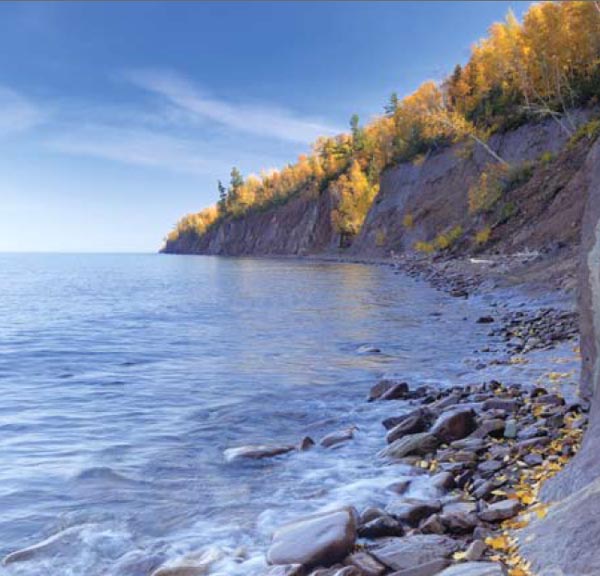
Michiganians are justifiably proud of their natural surroundings. They prize the recreational opportunities available throughout the Great Lakes, and many residents depend on the state’s unique geography and abundant resources for their livelihoods. Not surprisingly, concerns about pollution, non-native species and land use run strong.
Despite these concerns, however, there is plenty of good news about Michigan’s environment. Consider the following summary of findings from the Michigan Department of Natural Resources’ third biennial report on the state of Michigan’s air, water and forests.[1]

Forests
Conventional wisdom holds that forestland is disappearing fast. In fact, stands of maple, birch and beech trees increased by 1 million acres between 1980 and 1993, and overall, the state netted 538,000 acres of forest (on nonfederal lands) between 1982 and 1997. Moreover, the volume of standing timber increased from 18 million to 30 million cubic feet between 1980 and 2003.
According to the report, "(M)ore growth has been continuously added to the forest than what has been removed or died through natural causes. Annual growth has steadily increased over the past 50 years."
Birds
The bald eagle population is soaring in Michigan. In 1961, when the Department of Natural Resources launched its annual census of eagles, the number of nests was just 50. In 2004, the figure reached 427. During the same period, the number of bald eagle fledglings per nest increased 50 percent, from 0.42 to 0.63. Also noteworthy is the dramatic decline in levels of polychlorinated biphenyl — PCB — in eagles’ blood during the past decade.
Forest maturation and the alteration of habitat have contributed to a decline in the numbers of grassland bird species, including the eastern meadowlark, bobolink and vesper sparrow. But population increases have occurred among "generalist" species, such as the house finch, northern cardinal, house wren and eastern bluebird.
Fish
Mercury and PCB levels in Michigan fish have declined significantly, according to extensive tissue testing by the Michigan Department of Environmental Quality.[2] PCB levels peaked at nearly 24 parts per million in 1975, but declined to just 1 part per million in 2000. Mercury levels also have plummeted, from a high of 0.45 parts per million in 1993 to less than 0.25 parts per million in 2000.
The number of walleye in Michigan has fluctuated during the past three decades. The walleye population was small in the 1970s and early 1980s; peaked in 1989; declined between 2000 and 2003; and rebounded in 2004 to its highest level in a decade.
The number of lake trout in Michigan has increased dramatically. Restrictions on commercial fishing, stocking from trout hatcheries and efforts to control sea lampreys have helped the population rebound. According to the report, "By the mid-1990s, wild lake trout abundance increased to a point where stocking of hatchery-produced fish was discontinued in all areas of Michigan’s waters of Lake Superior, except in Keweenaw Bay and Whitefish Bay."[3]
Brook trout and brown trout populations in the Au Sable River also have expanded significantly since the early 1990s, signaling habitat improvements.
Other Wildlife
Wolves, bears and deer are plentiful in Michigan, according to the report. In particular, the steady increase in the number of gray wolves indicates that declines in wildlife populations are reversible, despite alarmist claims to the contrary.
Air
The state routinely monitors six pollutants designated as hazardous to human health under the federal Clean Air Act: carbon monoxide, lead, nitrogen dioxide, ozone, sulfur dioxide and particulate matter. As the findings below suggest, state monitoring indicates that Michigan’s air quality has improved steadily in the past three decades.
Carbon Monoxide
Carbon monoxide levels in Michigan register far below the concentrations deemed unsafe by the U.S. Environmental Protection Agency — two-thirds less, in fact. Carbon monoxide levels in the state have fallen by 20 percent since 1990.
Lead
All metropolitan areas in Michigan have met the air quality standard for lead since 1985. According to the report, current levels of lead throughout Michigan are "50 times less" than the level deemed unsafe by the U.S. Environmental Protection Agency. Much of this reduction is attributed to the removal of alkylated lead from gasoline.
Nitrogen Dioxide
Nitrogen dioxide levels in Michigan hover near 0.01 and 0.02 parts per million, which is less than half of the amount deemed unsafe by the federal government.
Ozone
All Michigan counties were in attainment for the federal ozone[4] standard. In July 2005, the EPA designated 25 Michigan counties as in "nonattainment" for a new, more stringent 8-hour ozone standard.[5] However, in 2006, all but one of the state’s 27 monitoring sites were meeting this more restrictive standard. When data for Michigan’s ozone monitoring sites is averaged for the period from 2003 to 2005, 24 of the state’s 27 sites met the newly imposed more restrictive federal standard.
Sulfur Dioxide
According to the report, sulfur dioxide levels in Michigan have decreased to less than one-fourth of the maximum amount deemed unsafe by the federal government.
Particulate Matter
Particulate matter is comprised of solid particles, fine liquid droplets or condensed liquids absorbed into solid particles. Across Michigan, levels of particulate matter less than 10 micrometers in diameter have remained well below the maximum amount permitted by the federal government. State data also indicate that xe "only"only Wayne County is not meeting federal standards for particulate matter measuring 2.5 micrometers or less.
In summary, the data suggests a significant and widespread rebound in Michigan’s environmental quality since the 1950s and 1960s. Even as Michigan confronts ongoing environmental challenges, state residents can know that the natural surroundings in which they take pride are not just beautiful, but much cleaner, too.
[1] Harrison, K.G. (ed.). 2006. "State of Michigan’s Environment 2005, Third Biennial Report," January 20006. Prepared by KGH Environmental PLC for the Michigan Departments of Environmental Quality and Natural Resources, Lansing, 100p. The full report can be found at http://www.deq.state.mi.us/documents/deq-osep-ftp-deqdnrei05.pdf.
[2] The DEQ has collected and analyzed more than 17,000 fish tissue samples from more than 800 locations since 1980.
[3] Most lake trout in Whitefish Bay originated from hatcheries, according to the DEQ.
[4] Ozone is formed when nitrogen oxides react in the presence of sunlight with volatile organic compounds, such as paint solvents, vehicle exhaust and degreasing agents.
[5] The original standard was based on concentrations exceeding 0.12 parts per million in the course of one hour; the stricter standard is based on concentrations exceeding 0.08 ppm over eight hours.




