

 Font size:
This essay is an edited version of a speech originally given by Lawrence W. Reed, president emeritus of the Mackinac Center, at the inaugural conference of The Center for Vision & Values at Grove City College in April 2005.
by Lee S. Wishing, III
Administrative Director
The Center for Vision & Values
Grove City College
The paper by Larry Reed reprinted here was originally commissioned for the inaugural conference of The Center for Vision & Values at Grove City College in April 2005. The conference was titled "The Road From Poverty to Freedom: A Look Backward and Forward at the War on Poverty," and it was natural to include Larry, a 1975 graduate of the college who majored in economics and studied under the renowned Austrian economist Hans Sennholz.
We are grateful for the guidance Larry gave us as we developed the poverty conference, but we are also grateful for this paper, which had a significant impact on our students. One student said, "Reed's paper was excellent, giving tremendous insight into a correct view of government aid according to respected men of history." Another commented, "Reed's piece provided a historical comparison I had never seen made before." In addition to being published as the document you are holding, this valuable paper is a permanent contribution to the collection of distinguished resources that we will use to teach students and interested readers about poverty.
Following the conference, we asked Larry to become a charter member of our new advisory board. We are thankful that he accepted another assignment from his alma mater. We are thankful, too, for the significant impact on the cause of liberty that he and the Mackinac Center have had in Michigan and around the world.
— Lee S. Wishing
Grove City, Penn.

I can hardly give a speech about presidents without citing a witty remark from an old friend of mine from Tennessee, humorist Tom Anderson. He once said, back in the 1970s, "Franklin Roosevelt proved a man could be president a lifetime; Harry Truman proved any man could be president; Dwight Eisenhower proved we really didn't need one; and every president since proved that it was dangerous to have one." Funny, but there's a kernel of truth there!
Here's a quotation from an American president. Who do you think it was?
"The lessons of history, confirmed by the evidence immediately before me, show conclusively that continued dependence upon relief induces a spiritual and moral disintegration fundamentally destructive to the national fiber. To dole out relief in this way is to administer a narcotic, a subtle destroyer of the human spirit. It is inimical to the dictates of sound policy. It is in violation of the traditions of America."
Those were not the words of a 19th century president. They came from the lips of our 32nd chief executive, Franklin Delano Roosevelt, in his State of the Union Address on Jan. 4, 1935. A moment later, he declared, "The Federal Government must and shall quit this business of relief."
We all know that it didn't. Indeed, 30 years later Lyndon Johnson would take "this business of relief" to new and expensive heights in an official "War on Poverty." Another 30 years and more than $5 trillion in federal welfare later, a Democratic president in 1996 would sign a bill into law that ended the federal entitlement to welfare. As Ronald Reagan, a far wiser man, observed long before it dawned on Bill Clinton, "We fought a war on poverty, and poverty won."
What Reagan instinctively knew, Bill Clinton finally admitted and FDR preached but didn't practice was that government poverty programs are themselves poverty-stricken. We have paid an awful price in lives and treasure to learn some things that the vast majority of Americans of the 19th century — and the chief executives they elected — could have plainly told us: Government welfare or "relief" programs encouraged idleness, broke up families, produced intergenerational dependency and hopelessness, cost taxpayers a fortune and yielded harmful cultural pathologies that may take generations to cure.
The failure of the dole was so complete that one journalist a decade ago posed a question to which just about everybody knows the answer and the lesson it implies. "Ask yourself," wrote John Fund of The Wall Street Journal, "If you had a financial windfall and wanted to help the poor, would you even think about giving time or a check to the government?"
The pre-eminent beneficiaries of the whole 20th century experiment in federal poverty-fighting were not those whom the programs ostensibly were intended to help. Rather, those beneficiaries were primarily two other groups:
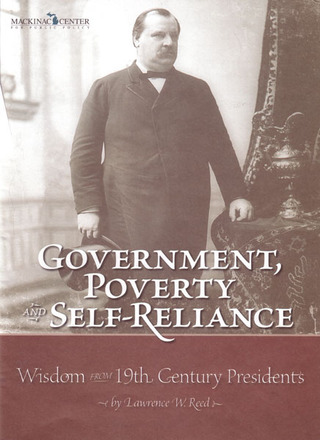
An unabashed, unrepentant welfare statist would probably survey the men who held the highest office in the land during the 19th century and dismiss them as heartless, uncaring and hopelessly medieval. Even during the severe depressions of the 1830s and the 1890s, Presidents Martin Van Buren and Grover Cleveland never proposed that Washington, D.C., extend its reach to the relief of private distress broadly speaking, and they opposed even the smallest suggestions of that kind.
Welfare statists make a crucial error, however, when they imply that it was left to presidents of a more enlightened 20th century to finally care enough to help the poor. The fact is, our leaders in the 1800s did mount a war on poverty — the most comprehensive and effective ever mounted by any central government in world history. It just didn't have a gimmicky name like "Great Society," nor did it have a public relations office and elitist poverty conferences at expensive seaside resorts. If you could have pressed them then for a name for it, most if not all of those early chief executives might well have said their anti-poverty program was, in a word, liberty. This word meant things like self-reliance, hard work, entrepreneurship, the institutions of civil society, a strong and free economy, and government confined to its constitutional role as protector of liberty by keeping the peace.
In hindsight, it's a little amazing that the last great president of the 19th century, Grover Cleveland, was just about as faithful to that legacy of liberty as the first great one of that century, Thomas Jefferson. When Cleveland left office in March 1897, the federal government was still many years away from any sort of national program for public payments to the indigent.
To be sure, the Washington, D.C., establishment was bigger than Jefferson had left it in many other respects — alarmingly so, in most cases. But it was not yet even remotely a welfare state. Regardless of political party, the presidents of that period did not read into the Constitution any of the modern-day welfare-state assumptions. They understood these essential verities: Government has nothing to give anybody except what it first takes from somebody, and a government big enough to give the people everything they want is big enough to take away everything they've got. These chief executives had other things going for them, too — notably, a humbling faith in Divine Providence, and a healthy confidence in what a free and compassionate people could do without federal help.
And what a poverty program liberty proved to be! In spite of a horrendous civil war, half a dozen economic downturns and wave after wave of impoverished immigrants, America progressed from near-universal poverty at the start of the century to within reach of the world's highest per-capita income at the end of the century. The poverty that remained stood out like the proverbial sore thumb because it was now the exception, no longer the rule. In the absence of stultifying government welfare programs, our free and self-reliant citizenry spawned so many private, distress-relieving initiatives that American generosity became one of the marvels of the world. This essentially spontaneous, non-centrally-planned "war on poverty" stands in stark contrast to Lyndon Johnson's "Great Society" because it actually worked.
My assistant in preparing this paper, a Grove City College senior named Christopher Haberman, expressed in an e-mail to me a little frustration at what he was not finding as he researched the papers of Thomas Jefferson and James Madison. He wrote: "I was disappointed to find that there were not many direct references to poverty. It seems that (they) were more concerned with Barbary pirates. They had no concept of (direct) government aid to the impoverished."
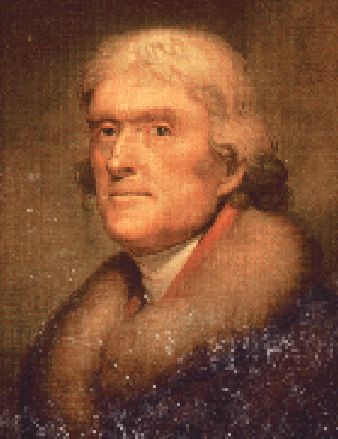
Haberman was right. Consider Jefferson — the author of the Declaration of Independence, America's third president, and someone who exerted enormous intellectual influence during this country's formative years. His were the first two presidential terms of America's first full century as a nation. His election in 1800 marked a turning point from 12 years of Federalist Party rule and set the tone for decades to follow. In his first Inaugural Address in 1801, Jefferson gave us a splendid summation of what government should do. It did not describe welfare programs, but rather, "A wise and frugal government, which shall restrain men from injuring one another, shall leave them otherwise free to regulate their own pursuits of industry and improvement, and shall not take from the mouth of labor the bread it has earned. This is the sum of good government."
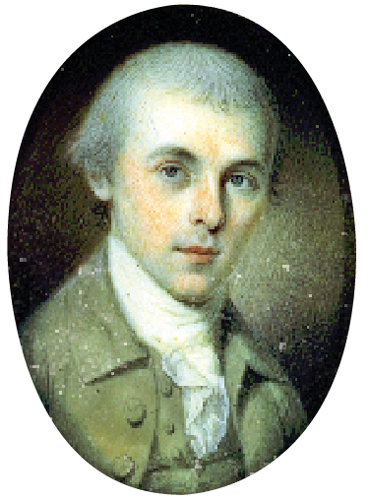
A similar view was held by James Madison, a key figure in the construction of the Constitution, a prime defender of it in "The Federalist Papers" and our fourth president. Madison vetoed bills for so-called "internal improvements," such as roads, at federal expense, so it would have been inconceivable to Madison that it was constitutional to use the power of government to take from some people and give to others because the others were poor and needed it. While there might be a reasonable, even constitutional, case for certain federal road-building projects for national defense purposes (or at least the benefit of everyone), for Madison and Jefferson there was no constitutional case to be made for assistance to individuals in poverty.
In a speech in the U.S. House of Representatives years before he became president, Madison declared: "The government of the United States is a definite government, confined to specified objects. It is not like state governments, whose powers are more general. Charity is no part of the legislative duty of the government."
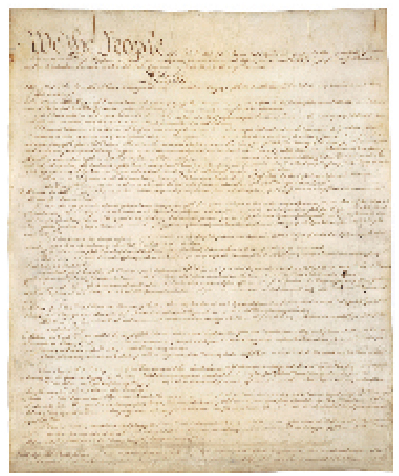
Why didn't Jefferson, Madison and other American presidents of the 19th century simply stretch the Constitution until it included poverty assistance to individuals? Why does it seem to have hardly ever occurred to them? Many factors and reasons explain this, but this one was paramount: Such power was not to be found in the rule book.
Let me elaborate. Imagine playing a game — baseball, gin rummy, Monopoly or whatever — in which there is only one rule: anything goes.
What kind of a game would this be? Chaotic, frustrating, unpredictable, impossible. Eventually, the whole thing would degenerate into a free-for-all. And while simple games would be intolerable if played this way, the consequences for the many deadly serious things humans engage in — from driving on the highways to waging war — would be almost too frightful to imagine.
The most profound political and philosophical trend of our time is a serious erosion of any consensus about what government is supposed to do and what it is not supposed to do. But this was not so in Jefferson and Madison's day. The "instruction books" at that time were America's founding documents, namely the Declaration of Independence and the Constitution, including the Bill of Rights. In the spirit of those great works, most Americans shared a common view of "the sum of good government" — the protection of life and property.
Today, far too many people think that government exists to do anything for anybody at any time they ask for it, from children's day care to handouts for artists. Texas congressman Ron Paul is noted for blowing the whistle whenever a bill is proposed that violates the spirit or the letter of the Constitution, but quite often he does so all by himself. How are his appeals received by the great majority of other members of Congress? "Like water off a duck's back," he once told me.
I once gave a series of lectures to high school seniors, and I asked the students what they thought the responsibilities of government were. I heard "provide jobs" or "take care of the poor" far more often than I heard anything like "safeguard our freedoms." (In fact, I think the only time I heard the latter was when I said it myself.)
A while back, an organization called the Communitarian Network made news when it called for the federal government to make organ donations mandatory, so that each citizen's body after death could be "harvested" for the benefit of sick people. Like ending poverty, helping sick people is a good cause, but is it really a duty of government to take your kidneys?
You can imagine how Jefferson and Madison might have answered such a question. In their day, Americans appreciated the concept of individual rights and entertained very little of this nonsense. But there is no consensus today even on what a right is, let alone which ones free citizens have.
Years ago when the Reagan administration proposed abolishing subsidies to Amtrak, the nationalized passenger rail service, I was struck by a dissenter who phrased her objection on national television this way: "I don't know how those people in Washington expect us to get around out here. We have a right to this service."
Once when Congress voted to stop funding the printing of Playboy magazine in Braille, the American Council of the Blind filed suit in federal court, charging that the congressional action constituted censorship and denial of a basic right.
The lofty notion that individuals possess certain rights — definable, inalienable and sacred — has been cheapened beyond anything our Founders and early presidents would recognize. When those gifted thinkers asserted rights to "freedom of speech," "freedom of the press" or "freedom of assembly," they did not mean to say that one has a right to be given a microphone, a printing press, a lecture hall or a Playboy magazine at someone else's expense.
Indeed, their concept of rights did not require the initiation of force against others, or the elevation of any "want" to a lawful lien on the life or property of any other citizen. Each individual was deemed a unique and sovereign being, who required only that other citizens deal with him honestly and voluntarily or not at all. It was this notion of rights that became an important theme of America's founding documents and early presidencies. It is the only notion of rights that does not produce an unruly mob in which each person has his hands in someone else's pocket.
This wisdom prompted early Americans to add a Bill of Rights to a Constitution that already contained a separation of government powers, checks and balances, and numerous "thou-shalt-nots" directed at government itself. They knew — unlike tens of millions of Americans today — that a government that lacks narrow rules and strict boundaries, that robs Peter to pay Paul, that confuses rights with wants, will yield financial ruin at best and political tyranny at worst.
Jefferson, Madison and almost all of the succeeding 20 presidents of the 19th century were constrained by this view of the federal government, and most of them were happy to comply with it. When doing so, they were faithful to their charge. They were true poverty fighters, because they knew that if liberty were not preserved, poverty would be the least of our troubles. They had read the rule book, and they knew the importance of following the rules.
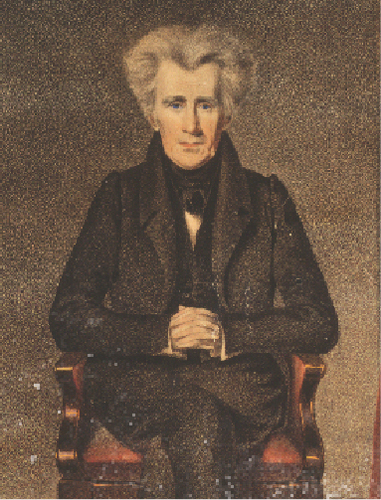
Andrew Jackson, whose tenure stretched from 1829 to 1837, was our seventh president and an exceedingly popular one. He, too, reminded Congress frequently in Jeffersonian terms what the federal role was. In his fourth annual message on Dec. 4, 1832, he wrote:
"Limited to a general superintending power to maintain peace at home and abroad, and to prescribe laws on a few subjects of general interest not calculated to restrict human liberty, but to enforce human rights, this government will find its strength and its glory in the faithful discharge of these plain and simple duties."
In his second Inaugural Address three months later, Jackson again underscored the federal government's limited mission. He said:
"(I)t will be my aim to inculcate by my official acts the necessity of exercising by the General Government those powers only that are clearly delegated; to encourage simplicity and economy in the expenditures of the Government; to raise no more money from the people than may be requisite for these objects, and in a manner that will best promote the interests of all classes of the community and of all portions of the Union."
As if to head off any misunderstandings about the role of the federal government, Jackson went on to say, "To suppose that because our Government has been instituted for the benefit of the people it must therefore have the power to do what ever may seem to conduce to the public good is an error into which even honest minds are too apt to fall."
Compared to giants like Jefferson, Madison and Jackson, Franklin Pierce of New Hampshire is often thought of as a mere cipher. But he was another in a long string of 19th century American presidents who had their heads on straight when it came to the matter of federal poverty assistance. Among his nine vetoes was one in 1854 that nixed a bill to help the mentally ill. Here's what Pierce said:
"It can not be questioned that if Congress has power to make provision for the indigent insane ... it has the same power to provide for the indigent who are not insane, and thus to transfer to the Federal Government the charge of all the poor in all the States. It has the same power to provide hospitals and other local establishments for the care and cure of every species of human infirmity, and thus to assume all that duty of either public philanthropy, or public necessity to the dependent, the orphan, the sick, or the needy which is now discharged by the States themselves or by corporate institutions or private endowments existing under the legislation of the States. The whole field of public beneficence is thrown open to the care and culture of the Federal Government. ... If Congress may and ought to provide for any one of these objects, it may and ought to provide for them all."
It is a testament to the lack of federal welfare-style programs during more than 60 years under our first 13 presidents that Pierce, our 14th, termed as "novel" the very idea of "providing for the care and support of all those among the people of the United States who by any form of calamity become fit objects of public philanthropy."
Meanwhile, the poor of virtually every other nation on the planet were poor because of what governments were doing to them, often in the name of doing something for them: taxing and regulating them into penury; seizing their property and businesses; persecuting them for their faith; torturing and killing them because they held views different from those in power; and squandering their resources on official luxury, mindless warfare and wasteful boondoggles. America was about government not doing such things to people — and that one fact was, all by itself, a powerfully effective anti-poverty program.

Americans of all colors pulled themselves out of poverty in the 19th century by creating wealth through invention and enterprise. As they did so, they generously gave much of their income — along with their time and personal attention — to the aid of their neighbors and communities. When the French social commentator Alexis de Tocqueville visited a young, bustling America during the Jackson administration in the 1830s, he cited the vibrancy of this "civil society" as one of our greatest assets.
De Tocqueville was amazed that Americans were constantly forming "associations" to advance the arts, build libraries and hospitals, and meet social needs of every kind. If something good needed to be done, it didn't occur to Andrew Jackson or his fellow citizens to expect politicians and bureaucrats, who were distant in both space and spirit, to do it for them. "Among the laws that rule human societies," wrote de Tocqueville in "Democracy in America," "there is one which seems to be more precise and clear than all others. If men are to remain civilized or to become so, the art of associating together must grow and improve. ..."
Indeed, this "art of associating together" in the 19th century produced the most remarkable flowering of private charitable assistance ever seen. This era saw the founding of many of America's most notable, lasting private associations — from the Salvation Army to the Red Cross.
For many reasons, such groups are far more effective in solving social problems — poverty, homelessness and illiteracy, for instance — than are government programs. They are more likely to get to the root of problems that stem from spiritual, attitudinal and behavioral deficiencies. They are also more inclined to demand accountability, which means they won't simply cut a check every two weeks without expecting the recipient to do something in return and change destructive patterns of behavior. Ultimately, private associations also tend to promote self-reliance, instead of dependency.
And if these groups don't produce results, they usually wither; the parishioners or others who voluntarily support them will put their money elsewhere. In contrast, when a government program fails to perform, its lobbyists make a case for more funding. Worse, they usually get it.
From start to finish, what private charities do represents a manifestation of free will. No one is compelled to provide assistance.No one is coerced to pay for it. No one is required to accept it. All parties come together of their own volition.
And therein lies the magic of it all! The link between the giver, the provider and the receiver is strong precisely because each knows he can walk away from it at the slightest hint of insincerity, broken promises or poor performance. Because each party gives his own time or resources voluntarily, he tends to focus on the mission and doesn't get bogged down in secondary agendas, like filling out the proper paperwork or currying favor with those in power.
Management expert Peter Drucker summed it up well when he said that private charities, both faith-based and secular, "spend far less for results than governments spend for failure."
Men and women of faith — whether Christian, Jewish, Moslem or something else — should be the first to argue that God doesn't need federal funds to do His work. When they get involved in charitable work, it's usually with the knowledge that a change of heart will often do more to conquer poverty than a welfare check. They focus on changing hearts, one heart at a time.?
That's the way most Americans thought and behaved in the 19th century. They would have thought it a cop-out of the first order to pass these responsibilities on to politicians. Instead, Americans became the most generous people on earth. Christians specifically viewed personal, charitable involvement as "servanthood" commanded of them by Christ.
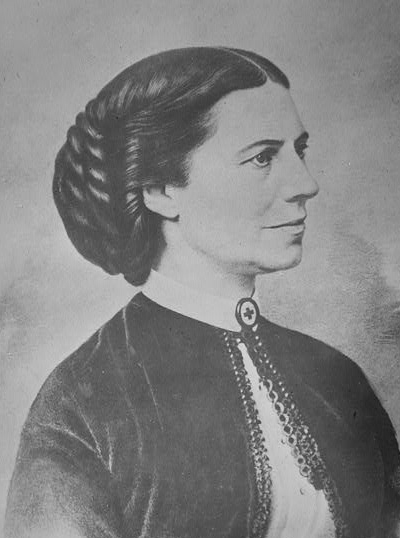
Consider a story that I first learned from the eminent Hillsdale College historian Burton Folsom, a good friend of mine.
In 1881, a raging fire swept through the state of Michigan's "Thumb" area, killing nearly 200 people and destroying more than 1 million acres of timberland. "The flames ran faster than a horse could gallop," said one survivor of the devastating blaze. Its hurricane-like fury uprooted trees, blew away buildings and destroyed millions of dollars of property across four counties.
This disaster produced an outpouring of generosity from Americans everywhere. In fact, the Michigan fire became the first disaster relief effort of Clara Barton and the newly formed American Red Cross. As the smoke billowed eastward across the nation, Barton's hometown of Dansville, N.Y., became a focal point of relief. According to the officers of the Dansville Red Cross, a call from Clara Barton "rallied us to our work."
"Instantly," they said, "we felt the help and strength of our organization (the Red Cross), young and untried as it was." Men, women and children throughout western New York brought food, clothing and other gifts. Before the Red Cross would send them to Michigan, a committee of ladies inspected each item and restitched garments or replaced food when necessary.
Speed was important, not only because many were hungry, but also because winter was approaching. Bedding and heavy clothing were in demand. Railroads provided the shipping. People left jobs and homes and trekked to Michigan to get personally involved in the rebuilding. Soon, the Red Cross in New York and the local relief committees in Michigan were working together to distribute supplies until "no more were needed," according to the final report from the Red Cross.
The Red Cross' assistance was much appreciated. And it made disaster relief faster, more efficient and national in scope.
But even if such help had not come, Michiganians were prepared to organize relief voluntarily within the state. During an 1871 fire that left nearly 3,000 Michigan families homeless, Gov. Henry Baldwin personally organized the relief efforts and gave about $150,000 out of his own pockets — a sum equivalent to more than $3 million today. Few, if any, thought it necessary to create a federal relief bureaucracy.
Baldwin and the Red Cross met the true definition of compassion. They suffered with the fire victims and worked personally to reduce their pain. Baldwin, the Red Cross and the fire victims themselves might even have felt that aid from Washington, D.C., might dampen the enthusiasm of the volunteers who gave their energy and resources out of a sense of duty and brotherly love. And this was in a year when the federal budget had a $100 million surplus, not the $400 billion deficit of today!
Government relief is in fact pre-emptive. There is little reason to believe that politicians are more compassionate or caring than the population that elects them. There is little reason to believe that politicians who are not on the scenes of either poverty or disaster and don't know the families affected will be more knowledgeable about how best to help them than those who are present and personally know the victims. There is even less reason to believe that politicians spend other people's money more effectively than those people to whom it belongs in the first place. Instead, when government gets involved, there is good reason to believe that much of its effort simply displaces what private people and groups would do better and more cost-effectively if government stayed home.
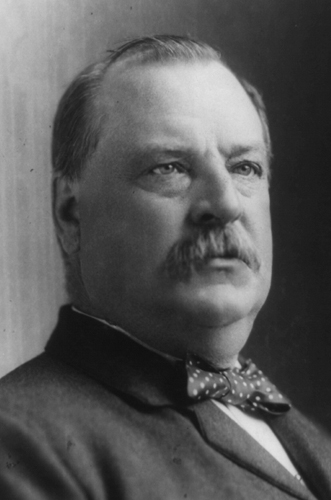
All of which leads me to a few words about a president who happens to be among my personal favorites: Grover Cleveland — our 22nd and 24th president (the only one to serve two nonconsecutive terms), and the humble son of a Presbyterian minister.
Cleveland said what he meant and meant what he said. He did not lust for political office, and he never felt he had to cut corners, equivocate or connive in order to get elected. He was so forthright and plain-spoken that he makes Harry Truman seem indecisive by comparison.
This strong streak of honesty led him to the right policy conclusion again and again. H.L. Mencken, who was known for cutting politicians down to size, even wrote a nice little essay on Cleveland titled "A Good Man in a Bad Trade."
Cleveland thought it was an act of fundamental dishonesty for some to use government for their own benefit at everyone else's expense. Accordingly, he took a firm stand against some early stirrings of an American welfare state.
In "The American Leadership Tradition: Moral Vision from Washington to Clinton," Marvin Olasky noted that when Cleveland was mayor of Buffalo, N.Y., in the early 1880s, his "willingness to resist demands for government handouts made his name known throughout New York State," catapulting him to the governorship in 1882 and the presidency in 1884.
Indeed, frequent warnings against using the government to redistribute income were characteristic of Cleveland's tenure. He regarded as a "serious danger" the notion that government should dispense favors and advantages to individuals or their businesses. This conviction led him to veto a wagonload of bills - 414 in his first term and 170 in his second - far more than all the previous 21 presidents combined. "I ought to have a monument over me when I die," he once said, "not for anything I have ever done, but for the foolishness I have put a stop to."
In vetoing a bill in 1887 that would have appropriated $10,000 in aid for Texas farmers struggling through a drought, Cleveland wrote:
"I can find no warrant for such an appropriation in the Constitution; and I do not believe that the power and duty of the General Government ought to be extended to the relief of individual suffering which is in no manner properly related to the public service or benefit. A prevalent tendency to disregard the limited mission of this power and duty should, I think, be steadfastly resisted, to the end that the lesson should be constantly enforced that, though the people support the Government, the Government should not support the people."
Cleveland went on to point out, "The friendliness and charity of our countrymen can always be relied upon to relieve their fellow-citizens in misfortune." Americans proved him right. Those Texas farmers eventually received in private aid more than 10 times what the vetoed bill would have provided.
As a devoted Christian, Cleveland saw the notion of taking from some to give to others as a violation of the Eighth and Tenth Commandments, which warn against theft and envy. He noticed what 20th century welfare statists did not, namely, that there was a period after the word "steal" in the Eighth, with no added qualifications. It does not say, "Thou shalt not steal unless the other guy has more than you do, or unless a government representative does it for you, or unless you can't find anyone who will give it to you freely, or unless you're totally convinced you can spend it better than the guy to whom it belongs."
Cleveland had been faithful to the Founders and to what he believed were God's commandments, common sense and historical experience. I can't say the same for certain of his successors who, in more recent times, cast wisdom to the winds and set America on a very different course.
For the first 150 years of American history, government at all levels played little role in social welfare. In a 1995 Heritage Foundation document titled "America's Failed $5.4 Trillion War on Poverty," Robert Rector and William Lauber point out, "As late as 1929, before the onset of the Great Depression, federal, state, and local welfare expenditures were only $90 million." In inflation-adjusted dollars, that would be under $1 billion today. By 1939, welfare spending was almost 50 times that amount, but at least the politicians of the day thought of it as a temporary bridge for its recipients. Welfare spending then fell and wouldn't return to the 1939 levels until Lyndon Johnson's "War on Poverty" in the mid-1960s.
And now we know, after $5.4 trillion and a series of catastrophic fiscal and social consequences, those old-fashioned virtues and principles generally embraced by America's 19th century presidents were right on the mark.
More than 100 years ago, the great intellectual and crusader for liberty Auberon Herbert offered a cogent observation from his native Britain. His remarks neatly summarize the views of the men I've discussed here:
"No amount of state education will make a really intelligent nation; no amount of Poor Laws will place a nation above want; no amount of Factory Acts will make us better parents. ... To have our wants supplied from without by a huge state machinery, to be regulated and inspected by great armies of officials, who are themselves slaves of the system which they administer, will in the long run teach us nothing, (and) will profit us nothing."
In March 2005, an international commission called on wealthy countries like the United States to dramatically increase their foreign aid. Many of the governments of Europe are in full support.
But what would American presidents of the 19th century have had to say about that? I can imagine Cleveland, Johnson, Pierce, Van Buren, Jackson, Madison or Jefferson reacting in disbelief at the very suggestion. Cleveland might have said, "Aid to foreign countries? We don't even dispense aid to Americans." And he would have had a century of unprecedented progress against poverty to point to as his example.
For the benefit of welfare statists here and abroad, I think Cleveland and the others I've spoken of today would be very comfortable echoing the sentiments of the 19th century French economist and statesman Frederic Bastiat:
"And now that the legislators and do-gooders have so futilely inflicted so many systems upon society, may they finally end where they should have begun: May they reject all systems, and try liberty; for liberty is an acknowledgment of faith in God and His works."
#####
Lawrence W. Reed is president of the Foundation for Economic Education, one of the oldest free-market organizations in the United States. He is also president emeritus of the Mackinac Center for Public Policy, a nonprofit, nonpartisan research and educational institute headquartered in Midland, Mich. This essay was given as a speech by Mr. Reed at the inaugural conference of The Center for Vision & Values at Grove City College in April 2005.