


 Font size:
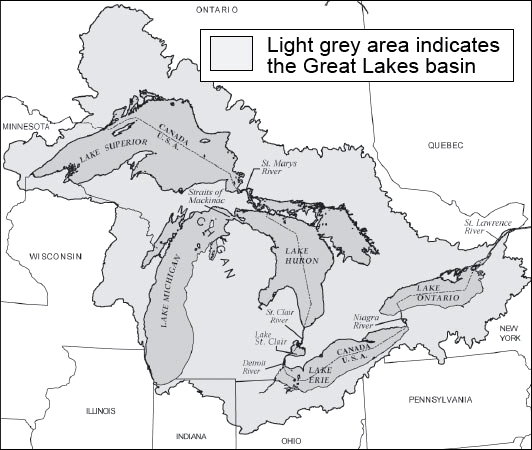
In 2001, the governors of states and premiers of Canadian provinces in the Great Lakes region reached an agreement on a charter for dealing with Great Lakes water issues. In order to be binding, it must be put into statute by each of the seven states and two provinces, as well as the federal government. To date, only Minnesota, Illinois, Ontario and Quebec have done so.
In Michigan, legislation to ratify these amendments has been introduced by Sen. Patty Birkholtz, R-Saugatuck Township. Ratification would be a serious mistake for Michigan for a number of reasons.
Under the federal Water Resource Development Act of 1986, the governor of any Great Lakes state has the authority to veto proposed water diversions out of the Great Lakes basin by any other state. Michigan governors of both parties — including Gov. Jim Blanchard and Gov. John Engler — took advantage of this veto power to deny proposed diversion projects.
This has caused tension with other Great Lakes states, which unlike Michigan are not entirely within the basin. For example, while the governors of Ohio or Indiana certainly would oppose diverting water to non-Great Lakes states, they may well support diversions to areas that are in their state but outside of the basin. These other states have claimed at times that Michigan is "hypocritical" for denying the use of water to out-of- basin communities in their states while allowing access to water by communities, utilities and businesses anywhere in Michigan.
In part due to this criticism, and also because of speculation that has been voiced by some that the Water Resource Development Act might not be legally enforceable under international water law, Michigan agreed to work with the other states in drafting an updated water agreement in the form of Annex 2001. Framers of this document sought to address the alleged legal shortcomings of WRDA by holding users of water within the Great Lakes basin to the same standards as potential users from outside the basin.
That would be bad news for Michigan. Specifically, Annex 2001 should not be ratified by Michigan because:
Michigan would give up its sovereignty regarding water-use decisions in the state. The governors and premiers of other Great Lakes states and provinces could halt particular water-using economic development projects in Michigan, even though this state lies entirely within the basin. Michigan would be turning over water use decisions to the governors of states with which we often compete for jobs.
Instead of our governor having an absolute veto over diversions to "straddling communities" (communities only partially within the basin), other governors could approve these diversions. These communities are the real threat of Great Lakes diversion — not the usual "bogeymen" of Arizona or California (aside from the inherent difficulty of transporting water such long distances, the idea that it would be possible to get permits for such a cross-country project is not plausible). On the other hand, a thirsty Columbus or Fort Wayne would become real and present dangers under the Annex.
It is not in the best interest of Michigan or the other Great Lakes states to have Congress open up WRDA to ratify the Annex. The migration of population to the southern and western regions of the country has diluted the political clout that Great Lakes states have in Washington. The strong protections in current federal statute could well be watered down if Congress were to debate the current law.
It would be bad for this state and bad for the Great Lakes were Michigan lawmakers to ratify Annex 2001 in order to placate the other Great Lakes states or because of speculation regarding the legal status of WRDA. The veto power our governor enjoys under current federal law has served this state well. To trade for a majority vote by other governors is clearly not in the best interest of Michigan.
In addition, it would be folly for a state in the midst of a severe and sustained economic downturn to give as a hostage to competitors one of the few comparative advantages Michigan still enjoys — an abundance of constantly replenished fresh water, which is vital to so many forms of commerce.
#####
Russ Harding is former director of the Michigan Department of Environmental Quality and currently director of the Property Rights Network at the Mackinac Center for Public Policy, a research and educational institute headquartered in Midland, Mich. Permission to reprint in whole or in part is hereby granted, provided that the author and the Center are properly cited.

The Mackinac Center for Public Policy is a nonprofit research and educational institute that advances the principles of free markets and limited government. Through our research and education programs, we challenge government overreach and advocate for a free-market approach to public policy that frees people to realize their potential and dreams.
Please consider contributing to our work to advance a freer and more prosperous state.


