


 Font size:
Popular literature is full of praises for “the common man,” but as these two essays by Ben Stafford illustrate, it’s usually the uncommon men and women who make big things happen. Virginia Walden Ford and Alberta C. Wilson are too modest and focused on others to tell you themselves, but Ben makes it clear that many inner-city children and parents have benefited from the uncommonness of these two women. They are courageous, forward-thinking, can-do citizens. They understand the value of a good education and a strong character, and they have been willing to stand up for those values at no small expense to themselves.
Popular literature is full of praises for "the common man," but as these two essays by Ben Stafford illustrate, it’s usually the uncommon men and women who make big things happen. Virginia Walden Ford and Alberta C. Wilson are too modest and focused on others to tell you themselves, but Ben makes it clear that many inner-city children and parents have benefited from the uncommonness of these two women. They are courageous, forward-thinking, can-do citizens. They understand the value of a good education and a strong character, and they have been willing to stand up for those values at no small expense to themselves.
Whether you support education tax credits, vouchers, other forms of school choice or even complete separation of school and state, you will appreciate these two ladies. They know what it’s like to promote change in the most difficult of environments, and they have the battle scars to prove it. I hope this brief monograph will encourage you to follow their lead in your community and to support their respective organizations. If there were Albertas and Virginias in every major city in America, this country would never be the same.
Someday, when the entrenched special interests in education are finally swept aside, parents will be seen as customers, not captives, in the matter of educating children. Schools that fail to meet parents’ needs will shape up or go out of business. No child will be left behind for the sake of keeping a bureaucracy well-paid. We will all look back in puzzlement at how we could have expected government monopolies, minions and mandates to produce a quality product in a modern, competitive world. Virginia and Alberta will be among the heroes we will thank for helping to pave the way past daunting barriers.
Now a word about the author, of whom I could not be more proud.
I conceived this project in early 2007 as a monograph I would write with help
from Ben, who was a summer intern at the Mackinac Center for Public Policy. He
and I flew to Philadelphia in July to conduct interviews.
I was to give a speech to the board of directors of Alberta’s organization, but
a mild cold I had contracted a few days before suddenly deteriorated and landed
me in a Philadelphia hospital. Ben, a college senior with limited public
speaking experience, was forced into the spotlight. He did all the work and even
gave the speech — to rave reviews, I might add. So I told him the project was
his, and here you have it.
At the Mackinac Center, we believe that investing in students — not systems that fail them — is key to America’s future. On our wish list of programs is one that would complement our successful high school debate events by providing free-enterprise educational materials and speakers to private school and home-school students. Ben is just the sort of young man who ought to run this program, and with sufficient funding, that could happen as early as 2008, when he graduates from Hillsdale College.
Thanks to Ben Stafford for telling these stories of Alberta C. Wilson and Virginia Walden Ford — and thanks to those two ladies for being the models of community leadership we all need to learn from!
— Lawrence W. Reed, Oct. 23, 2007, Midland, Mich.
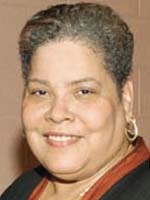
It was autumn 2004, and Virginia Walden Ford and her colleagues had prepared for another busy day. She and her group of ambitious volunteers had gathered up their supplies, jumped into their cars and headed for a poor and violent part of Washington, D.C. The danger had not deterred them. Washington was their city, and they were on a mission to empower parents and help children succeed.
Upon arriving at a community center, they had begun setting up for a day of assisting parents with the application process for a school voucher program that provided federal government scholarships to Washington primary and secondary school students. The room had soon bustled with activity. One woman explained the required paperwork to a mother seeking a voucher; at another table, parents were guided through a detailed application.
All was fine until one of the volunteers pointed out a man who was behaving strangely. Virginia knew instantly the man had had too much to drink. Hoping to avoid a scene, she decided to escort him quietly and gently outside.
Donning thick skin, Virginia approached the disheveled and foul-smelling man and gestured toward the exit. "What are ya’ doin’?" he blurted out. "I’m here to fill out an application for my son!" He paused and then finished his thought.
"I don’t want him to end up like me."
Virginia melted into a smile. She motioned him to a table, and they began the application process. His name was Joe, and like so many other parents, he would learn that beneath Virginia’s thick skin was a heart of gold. Joe and Virginia worked together until the paperwork was done and Joe’s son was qualified for a government-paid scholarship voucher — a scholarship that he ultimately received — to attend second grade at the private school of his choice.
Exactly one year later, Virginia was hard at work when one of her assistants told her an unfamiliar man had asked to see her. Virginia walked outside and saw a clean-cut gentleman dressed in khakis and a button-down shirt. For a moment, she had no clue who he was, but as he began to speak, she recognized him. It was Joe.
"I want to thank you for helping me," he said. "When I saw my Joseph succeed in school, it made me want to do better too." He informed her of his progress in an employment training program and his work toward a GED. He had joined a substance abuse rehabilitation program and had finally reconnected with a second son whom he had neglected. He was a changed man.
********
This is just one of hundreds of unpublicized stories of lives that have been changed by a citywide school voucher program that has given new opportunities to inner-city families in the nation’s capital. That program was passed by Congress and signed by the president, but it’s impossible to imagine Washington’s vouchers without Virginia Walden Ford, founder of an organization known as D.C. Parents for School Choice.
Virginia grew up in racially tense Little Rock, Ark., in the 1950s. Her father, William H. Fowler, was the first in his family to attend high school. He went on to earn a master’s degree in education administration and become the first black administrator in the Little Rock School District. Virginia’s mother, Marion V. Fowler Armstrong, was one of four black teachers integrated into formerly all-white schools.
So it was natural that Virginia entered her adult life valuing education. Having married in 1970, she moved with her husband in 1977 to Washington, D.C., where she worked for the next 16 years for a cultural exchange program (she and her husband divorced in 1985). In 1992, she and her twin sister, Harrietta Fowler, co-founded a day care center and operated it until 1996, when Virginia made a decision about her son’s education that would alter not only her own life, but the lives of others as well.
Virginia’s son William, the sixth of her eight children, had begun showing signs of a negative influence from his local public school when he was just 11. His grades had slipped, and he had started acting as if he didn’t care any more for his studies. After one of his friends was paralyzed in a beating by some bullies, William had begun imitating the thugs, using derogatory language, skipping school and hanging out with a bad crowd. By his freshman year of high school, he had had run-ins with the police and a dozen suspensions.
As Virginia had fretted over William’s future, a neighbor had stopped by and inquired about him. Hearing of William’s problems, the neighbor did something momentous: He offered to pay William’s tuition to a local private school where he knew William could succeed.
Some parents might have demurred when faced with this unexpected generosity; others might have doubted the value of the idea. Not Virginia. She knew what a good school would mean to William. She gladly accepted this offer from a neighbor she hardly knew.
Within a week of attending the new school, William’s behavior began to change. In the next two years, he excelled in both academics and athletics. He completed his senior year at a public charter school and graduated first in his class.
Seeing her son turn around so dramatically, Virginia resolved to try to create similar opportunities for other children trapped in Washington’s system of failing public schools. In 1997, while still wondering what she, just one person, could do to help other children in similar situations, Virginia decided to hold a meeting to tell other parents about legislation recently proposed in Congress to provide school vouchers for private schooling to District of Columbia parents. Very few parents attended this first meeting, but she was soon invited to testify on Capitol Hill and tell the success story of her own son William.
Returning to her neighborhood with a contagious confidence, she stepped up her efforts to encourage other parents frustrated with Washington’s public schools to work for change on behalf of their children. She began volunteering with the Center for Education Reform and the National Center for Neighborhood Enterprise to organize and inform parents about educational options. "I knew that legislation is complex business, but my own parents instilled in me a spirit of curiosity and taught me to always ask questions," she says. The idea that parents might be able to opt out of a bad school and shop for something better offered Washington’s children their first real hope for better educational opportunities in years.
********
When President Bill Clinton vetoed the voucher bill in May 1998, Virginia’s tireless spirit was not daunted. She began working with Friends of Choice in Urban Schools to inform parents about charter schools. A few months later, she opened a humble office in the basement of an apartment building, hired a small staff with private funds she had raised, and launched a new organization, D.C. Parents for School Choice. It was to be an information clearinghouse for Washington families interested in providing their children new education-al opportunities, such as after-school programs, tutoring programs or enrollment in the 18 new charter schools that had opened that fall.
D.C. Parents for School Choice gained national attention in 2002 when the constitutionality of the state of Ohio’s voucher program for Cleveland students was argued before the U.S. Supreme Court. School choice proponents in Cleveland asked Virginia to find supporters to rally outside the court, and when the day for the hearing arrived, she mustered 500 parents.
Virginia and her colleagues felt emboldened by this first major display of public support. Their sense of victory grew when the constitutionality of the Ohio plan was upheld in a landmark 5-4 ruling.
Then in 2003, Arizona Representative Jeff Flake decided to introduce new legislation providing school vouchers for needy children in Washington. He asked around for local support and heard about Virginia from people in the D.C. charter school community. He asked Virginia whether she could find a few parents willing to attend a press conference to announce the introduction of the bill. Called to action, Virginia, working with a coalition of organizations committed to improving education in the District of Columbia, led the drive to rally parents to the cause. On the day of the press conference, a hundred parents packed into the small press room to face skeptical reporters, and they made a powerful case.
As the voucher bill began its turbulent journey through the grinding legislative process, D.C. Parents for School Choice changed its strategy. No longer were parents to be educated on current options for their children; parents were now to educate legislators and the media on new options parents needed for their children. For 10 months, Virginia worked closely with parents and children as they politely but relentlessly lobbied Congress. Every single day that Congress was in session, there were 20 to 30 parents on Capitol Hill wearing "D.C. Parents for School Choice" T-shirts and talking to lawmakers and the media. Over the course of the effort, 2,000 volunteers were involved in photo shoots, press conferences, petition drives and rallies.
It was not an easy fight. Opposition to the bill was fierce and often underhanded. Virginia was misrepresented in the media and accused of trying to damage the public schools. Epithets and even death threats were leveled at her. The well-financed public school employee unions railed against her. Even D.C.’s congressional representative, Eleanor Holmes Norton, "would not listen to anything we had to say," Virginia recalls. "At times it seemed like almost everyone in a position of power opposed us, except the parents." Virginia relied on her family and close friends for support.
Slowly, the political dominoes fell. Parents’ undeniable support for the D.C. vouchers led to an endorsement of the bill from Kevin Chavous, the chair of the Education Committee for the Council for the District of Columbia. Then on March 28, 2003, Peggy Cafritz, president of the D.C. Board of Education, wrote a powerful commentary in The Washington Post:
"One of three children in the District lives in poverty. One of three adults in this city is functionally illiterate. Each was once a child whom we failed to educate, a child we delivered to a life of dependency and an overburdened social service system, a child we excluded from the workforce, a child that we excluded from democracy. If the past is prologue, this problem will not be solved by politicians or pundits."
Cafritz went on to vindicate the role of private schools. "Schools, be they public, private, religious or secular, Catholic, Protestant, Muslim or Jewish, make an indelible contribution to the fabric and character of a community," she wrote. "Through schools we pass on the values and mores of our society to our children. No community, including one bereft of self-government, should forsake or be denied its responsibility to educate its children."
When D.C.’s mayor, Anthony Williams, signed on, the momentum for choice was unstoppable. Congress simply could not ignore the pleas of desperate parents; nor could it ignore the evidence. Just 10 percent of the district’s fourth-graders were proficient in reading, and a whopping 76 percent performed below grade level in math, in spite of per-pupil spending nearly twice the national average for public schools. In early 2004, the D.C. voucher legislation was passed, and President George W. Bush signed it into law.
********
And suddenly, Virginia’s work had just begun. Vouchers under the program were awarded to qualifying applicants by lottery, and only those poor enough to qualify for the federal government’s school lunch program were eligible. But it wasn’t as if the parents who qualified for a voucher magically knew how to apply for one. There had been little time to educate the community, and opponents of the bill had gone around D.C. neighborhoods telling parents that vouchers were a trap and a deception. In the first year of the program, not all of the vouchers were claimed, allowing critics to attack the program as lacking real demand.
In response, D.C. Parents for School Choice held more than 100 meetings over a couple of months to tell parents about the voucher opportunities now available. By the second year of the program, there were twice as many applicants as there were slots allowed under the law.
The first group to testify to the success of the D.C. voucher program was the same group fighting for it all along: the parents. They found that in private schools, their children were safer and had access to programs with more opportunities.
"Kids are going to succeed if the world is opened up to them," says Virginia. She points to Breanna Walton, an 8-year-old third-grader, who wants to be a translator at the United Nations, and who has a head start on that dream thanks to courses in Arabic and Spanish at the private school she now attends. Virginia also mentions Jordan White, a 15-year-old 10th-grader who was finally able to refine her talent for art when she transferred to a private school with a strong art program. "I thank God for making all this possible," says Virginia, "and I hope Congress will listen to the people and let this program succeed and grow."
Today, D.C. Parents for School Choice has even more work to do. Around 1,800 children each year now receive the $7,500 voucher, which can be used to help pay for everything from private school tuition to uniforms and transportation costs to schools within the city. Virginia meets with 50 to 300 parents a month to help them with their children’s transition to private schools and to teach them how to be more personally involved with their children’s education and growth.
Virginia is also gearing up for another fight in Congress. Opponents of the voucher program are preparing to kill it when it expires at the end of 2008, leaving children without coverage after the 2008-2009 school year.
Regardless of the battles ahead, Virginia’s victory is one that nobody thought possible a decade ago. It is a story of students who were once failing now thriving, and of parents who were once discouraged now inspired — and all because Virginia Walden Ford turned the kindness she received from a neighbor into a program to help thousands of struggling D.C. parents who want their children to achieve a better life.
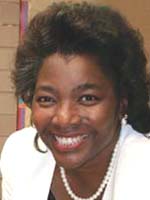
In 2006, Alberta C. Wilson, head of Faith First Educational Assistance Corporation in Philadelphia, was facing a tough choice. The dilemma involved Philadelphia resident Tonya Jones. Tonya’s husband had passed away several years before, leaving her with a family to raise alone on the proceeds of his small life insurance policy. She had good reason to fear for the future of her 10-year-old son, Raymond. By the time Raymond had reached fifth grade, Tonya’s money was running out, and she faced the prospect of having to remove him from the private school that had been a source of stability for him.
Philadelphia’s public school system was not an inviting alternative. Philadelphia is one of the most violent cities in the United States, and there was no guarantee that the "free" school to which the government assigned her son would be safe. Tonya was also aware that the public school system in Philadelphia was so deplorable that Pennsylvania’s state government had felt compelled to take it over. In Philadelphia in the 2005-2006 school year, only 33 percent of 11th-graders tested proficient on state tests in reading. For math, the figure was a dismal 27 percent.
Hoping for the best, Tonya had applied for a scholarship for Raymond from the newly formed nonprofit Faith First Educational Assistance Corporation, which helps provide privately financed scholarships to poor families determined to purchase a better primary and secondary school education for their children. But Tonya had ended up on the bottom of the list: Funds were very limited, and other applicants had had an even greater need.
When Tonya found out her son would not receive the money, she desperately pleaded her case to Alberta. Alberta was now in a difficult position. She knew she had made the right decision when she’d ranked the other families above Tonya’s — but this didn’t make Tonya’s predicament any less real. Raymond’s future hung in the balance.
Alberta was not one to give up easily. She was operating Faith First on a shoestring, long hours and lots of prayer. She saw herself, in her own words, as "allowing God to use me to ensure that children are given a chance at a quality Christian education."
So Alberta chose to give Tonya hope: She invited Tonya to tell her story at a Faith First scholarship reception, where children were awarded their scholarships in the presence of their peers and other parents.
The result was everything Tonya and Alberta could have asked for. Tonya spoke movingly as an engaged parent who was determined to pursue what was best for her child. Hearing Tonya describe her plight, a good Samaritan attending the reception decided to donate the funds to keep Raymond in his current private school. "It saved his education — and maybe his life too," says a grateful Tonya.
********
It wasn’t the first time that Alberta had made a difficult choice that had turned out for the best. Alberta’s long road to founding Faith First had involved not just drive and self-sacrifice, but also many tough choices — and some bad choices — that came out right in the end.
Alberta spent her childhood in the inner-city Philadelphia of the 1950s. She was showered with toys, but her father was aloof, and her mother was an alcoholic. Since she had little adult supervision, she would often play with other children at the home of one of her mother’s drinking buddies. The sadness of those years left an indelible mark on her memories.
At first, Alberta rose above the chaos in her life. In fourth grade, she was a straight-A student who seemed to win all the awards, but by the time she reached junior high, her life had begun spiraling downward. Her neighborhood was torn by racial riots, and "Barrett Junior High was like a gladiator’s arena," she recalls. Alberta joined a local gang and became a ringleader. At 16, she dropped out of high school, and at 17, she gave birth out of wedlock to a daughter, Kentina.
Alberta sank into a life of alcohol, sex, violence, drugs and government welfare, yet something inside her, she says, yearned for peace and order. In 1976, when she attended a church at the invitation of a friend, she rushed to the altar and became a "born-again" Christian. Although her earlier vices proved tough to shake and she later suffered the crushing pain of losing her daughter in a house fire, she slowly began to change her habits, constantly assuring herself that God could improve her life, because, she told herself, "God makes no mistakes."
On Christmas Eve in 1980, Alberta married Woody Wilson, whom she describes as "a kind, sensitive and loving man who looked beyond my past." His naval career took the couple to San Diego for a few years and then to Virginia Beach, where Alberta, a high school dropout, earned three postsecondary degrees, including a doctorate in religious education. As her life stabilized and her faith deepened, Alberta was transformed. By 1997, she and Woody were back in Philadelphia, and Alberta was looking for a position as a school administrator.
********
It was perfect timing. A friend who was a former middle school teacher and now a local pastor was in the early stages of starting a Christian day school. He wanted to provide character training and an educational refuge for parents seeking an escape from the decaying Philadelphia public schools. He offered Alberta the position of principal.
The new Beulah Baptist Christian Day School started with just five children in the fall of 1997, but by the time Alberta left five years later, the school boasted nearly a hundred students, many of them from broken homes. Parents who wanted discipline and focus for their children found it at this school, just as Alberta had found purpose in her personal life.
It was at the school that Alberta came face to face with a stream of parents dissatisfied with public education, yet unable to afford a private alternative. Wanting to tackle that problem head-on, she decided to get involved in the school choice movement by founding Faith First Educational Assistance Corporation in 2002. The organization’s mission was to aid parents in making decisions regarding their children’s education and to grant families scholarships so their children could afford the private school of their choice.
Alberta’s inspiration for Faith First came from an Old Testament proverb: "Train up a child in the way he should go and when he is old he will not depart from it." She saw no way parents could abide by that admonition without being free to choose the education best suited for their children.
After a brief flirtation with the idea of running for mayor on a
school voucher platform, Alberta decided to pursue her reform goals in the
private sector when a new Pennsylvania law passed granting corporate income tax
credits to businesses that contributed to education scholarship funds or
educational improvement organizations. The law allowed businesses to receive a
tax credit of as much as 90 percent of their contributions to such groups, up to
$200,000. These credits increased the business community’s willingness to
donate. The number of participating businesses has now risen to
more than 2,500, and they have contributed almost $300 million to organizations
in Penn-sylvania similar to Faith First.
That doesn’t mean that Faith First has had an easy road to success. Alberta, with husband Woody often at her side, spends much of her time raising the private contributions that allow the organization to fulfill its mission. Still, in 2006, Faith First awarded more than 100 school choice grants at an average of $500 each to low-income children in Pennsylvania and Virginia. The organization has provided more than 300 scholarships since its inception.
A $500 scholarship may not seem like enough to make a difference. But as a Faith First parent once explained, "Little becomes much!" Since tuition at a private school can be as little as $3,000 — still a steep price for a poor family — a scholarship from Faith First often tips the balance.
And there is more to Faith First than just scholarships: Alberta recognizes the importance of involving parents in the educational process, so they will have the skills to ensure that their children succeed. "If money is just given away without an engaged parent," she says, "nine times out of 10 the child will not succeed." Hence, Faith First holds "parent engagement meetings" twice a month in Philadelphia, once a month in Virginia and quarterly in Scranton, Pa. Sometimes as many as 100 parents come to these meetings to seek scholarship applications and advice.
********
In July 2007, I had the privilege of spending time in Philadelphia with Alberta and Faith First’s board of directors, along with some of the parents and children the organization has helped. It was a moving experience to meet the people whose lives have been transformed by Faith First and by the generosity of others they hardly know.
I met Nancy Rumer, a quiet but confident 13-year-old whose favorite class is English. Her brother Wesley is 10 and enjoys computers and science, as well as any sport involving a ball. Their parents tell me that the public school Nancy and Wesley once attended exhibited little interest in their development or in addressing Wesley’s learning disability. Thanks to Faith First, the Rumers say, Nancy and Wesley now have access to quality education and personal attention.
What most impressed me about Nancy and Wesley Rumer and Raymond Jones, Tonya’s son, was not what they told me, but how they told it. Friendly, polite and eager to talk, they smiled and looked me in the eye. It was apparent that they loved to learn. When saying goodbye, I saw all three cheerfully help clean up the office without being asked.
Clearly, Faith First doesn’t just dole out money to faceless names on an application. Alberta, Woody and the organization’s growing number of volunteers build strong personal relationships with the recipient families. Educating for character, not just for knowledge, stands out as a central feature of the Faith First program.
Alberta has expansion in mind. The organization’s headquarters remain in Philadelphia, with a second office in Virginia, but Faith First is also in the "data building stage" for an office in San Diego in 2008. Faith First may even assist people in Uganda who want to adopt the organization’s model there. The cause of school choice as a civil right of parents and children everywhere will be the theme of Faith First’s fifth anniversary banquet, scheduled for November 2007 in Philadelphia.
Though Alberta has set her sights high, she is a humble woman who lives frugally with her husband and seeks neither fame nor fortune. Instead, she is living the American Dream by helping the less fortunate make their dreams a reality. This success stems from difficult choices that Alberta made years ago — choices that changed her life, and that now change the lives of hundreds of others. Alberta is quick to give the credit to God, but as the success of Faith First shows, credit must also go to Alberta for possessing an uncommon courage both to change and to lead.
Benjamin D. Stafford is a senior majoring in economics at Hillsdale College. In 2006 and 2007, Stafford served as a summer research intern at the Mackinac Center for Public Policy. He is a native of Parma, Mich.



