


 Font size:
 Market Education: The Unknown History
By Andrew J. Coulson
Mackinac Center Senior Fellow in Education Policy
"In this unusually well written and thoroughly researched book, Andrew J. Coulson ranges from ancient Greece and Rome to modern America and Japan to document his conclusion that parental choice in a private educational market is a far more effective system for educating children than government-run schools. Encyclopedic in its coverage of the arguments for and against alternative modes of organizing schooling, readers will find this excellent book instructive whether they agree or disagree with his conclusion."
—Milton Friedman, Nobel Laureate in economics
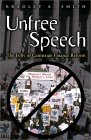 Unfree Speech: The Folly of Campaign Finance Reform
By Bradley Smith
Mackinac Center Board of Scholars member
At a time when campaign finance reform is widely viewed as synonymous with cleaning up Washington and promoting political equality, Bradley Smith, a nationally recognized expert on campaign finance reform, argues that all restriction on campaign giving should be eliminated. In Unfree Speech, he presents a bold, convincing argument for the repeal of laws that regulate political spending and contributions, contending that they violate the right to free speech and ultimately diminish citizens' power. Whatever one thinks about the impact of money on electoral politics, no one should take a final stand without reading Smith's controversial and important arguments.
—from Amazon.com
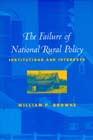 The Failure of National Rural Policy: Institutions and Interest
By William P. Browne
In The Failure of National Rural Policy, William P. Browne blends history, politics, and economics to show that the federal government emphasis on farm productivity has failed to meet broader rural needs and actually has increased rural poverty. The book will serve as a stimulating text for students of public policy, national affairs, rural sociology, and community development—as well as anyone concerned with the future of agrarian America.
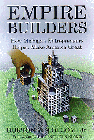 Empire Builders: How Michigan Entrepreneurs Helped Make America Great
By Burton W. Folsom
Former Mackinac Center Senior Fellow in Economic Education
Empire Builders is the remarkable story of how Michigan's early entrepreneurs led the United States to global prominence in cars, chemicals, and cornflakes. Henry Ford, Billy Durant, Herbert Dow, and Will Kellogg all failed before they succeeded—and sometimes even after they succeeded. Yet they shared a stubborn persistence to invent and market something that would make life simpler for millions of people. At a time when Americans seem confused about their past, Empire Builders provides readers with triumphant heroes, dramatic stories, and a useful heritage to study and learn.

The Mackinac Center for Public Policy is a nonprofit research and educational institute that advances the principles of free markets and limited government. Through our research and education programs, we challenge government overreach and advocate for a free-market approach to public policy that frees people to realize their potential and dreams.
Please consider contributing to our work to advance a freer and more prosperous state.


