


 Font size:
Michigan parents, citizens, and policy makers have begun an earnest discussion over the issues that affect the quality of children's education, but one issue that is rarely considered in discussions about education reform is public school union collective bargaining. This Mackinac Center for Public Policy study is the first ever to systematically analyze the hundreds of collective bargaining agreements for every school district in a state. It examines collective bargaining's impact on Michigan public education and makes recommendations that school boards should incorporate into their union contracts to improve their ability to direct maximum resources to the classroom and deliver quality education to students. The study also explains the historical and legal framework of public employee collective bargaining in Michigan, analyzes seven important court rulings that affect public collective bargaining issues, and advises districts on which subjects to negotiate or not negotiate into their labor contracts. Three appendices compare costs and benefits of various health care plans and present contract and financial data from the survey of Michigan's 583 school districts.
Parents, teachers, and administrators share widespread dissatisfaction with public school education. Many place the blame for poor education on a lack of parental involvement, insufficient funds, poor teacher preparation, and so on. Few have focused on a major contributing factor to this failure: unionized teachers and collective bargaining.
The collective bargaining process both at and away from the negotiating table has a great impact on the cost of education and the ability of school boards-the elected bodies responsible for each community's K-12 education-to educate and provide support services to students.
School board members have found themselves besieged by union demands, the consequences of which they often do not fully understand. This study will help them as well as parents, administrators, and other decision makers to improve the collective bargaining process that impacts Michigan's public schools.
From the 1964 inception of public sector collective bargaining to the present, local boards of education have often been ill-equipped to deal with this crucial process. Whether through a lack of understanding of finance, confusion over the nuances of contract language, or ignorance of the high-pressure strategies and tactics used by public employee unions, school board members have found themselves besieged by union demands, the consequences of which they often do not fully understand.
Teachers-except for those trained by the unions themselves-also have little understanding of the process and typically rely on union leadership for information during bargaining. Citizens who support the school system financially and whose children are educated there are often confused and, at times, misled by contract negotiation rhetoric.
As a result, local boards of education frequently agree to terms and conditions of employment that are not in the best interests of students in order to avoid criticism, achieve "labor peace," or simply "to get a contract" regardless of the long-term effect.
The potent effect of illegal teacher strikes, which school boards were unable to effectively counteract, finally compelled the legislature to enact Public Act 112 of 1994, which now assesses financial penalties for illegal strikes. There has not been a strike since.
But absence of strikes does not eliminate or even reduce the need for school boards and teachers to understand collective bargaining's effect on educational quality. This study will help them as well as parents, administrators, and other decision makers to understand and improve the collective bargaining process that impacts Michigan's public schools.
Nothing less than the education of our children is at stake.
Peter A. Patterson
Grand Rapids, Michigan
August 1998
Peter A. Patterson is an attorney with 25 years of direct collective bargaining experience with Michigan school districts.
The words "education reform" are frequently seen and heard on the editorial pages and airwaves of Michigan's news media. Mirroring a national discontent with student performance in the public school system, Michigan citizens have begun a discussion over the issues that affect the quality of their children's education. These issues are many and complex, but one issue that is rarely mentioned or even considered in any discussion about education reform is public employee union collective bargaining.
One issue that is rarely mentioned or even considered in any discussion about education reform is public employee union collective bargaining.
This Mackinac Center for Public Policy study is the first ever to systematically analyze the hundreds of collective bargaining agreements for every school district in a state. It examines collective bargaining's impact on Michigan public education and makes recommendations that school boards should incorporate into their union contracts to improve their ability to deliver quality education to students. The recommendations help school districts
loosen rigid work restrictions on employees so that administrators can put the right teacher with the right training in the right classroom at the right time;
free up scarce resources from counterproductive noneducational uses so that they can be redirected toward the primary goal of boosting student achievement;
protect the constitutional rights of all employees so that liability exposure can be limited and costly financial and legal penalties from employee lawsuits avoided; and
maintain the trust of parents and taxpayers in the local community by providing quality education while wisely managing public resources.
Part I of this study provides a background to collective bargaining in Michigan: its history, the laws that have shaped and are shaping it-especially Public Act 112 of 1994-and the challenges it presents to school board members, parents, taxpayers, teachers, and students. Recommendations to school boards on what to bargain and what not to bargain are also included.
Part II analyzes collective bargaining agreements-obtained using the Freedom of Information Act-from each of Michigan's 583 school districts, identifies eight key provisions that commonly hinder the educational process, and makes recommendations that school boards should adopt to improve their ability to provide the best education possible to their students. The eight provisions and recommendations are as follows:
Management rights clauses. Every collective bargaining agreement should specifically detail the rights and responsibilities that remain vested in the school board. These clauses should establish that school management is the school board's responsibility.
Exclusive bargaining representative clauses. Exclusive representation means that the school district must deal solely with the recognized or certified union regarding employee wages, hours, and terms and conditions of employment. School boards should not agree to any contract language that prohibits teachers from exploring opportunities with other professional organizations, or requires union permission for them to do so.
Union security clauses. Union security clauses subject school employees to mandatory union dues payments. School districts should not become union collection agents and enforcers by agreeing to the termination of employees who fail to pay dues money. Employees' constitutional right to limit dues payments should be protected. Unions should be required to earn the voluntary financial support of school employees.
"Just cause" discipline and discharge clauses. "Just cause" refers to standards of conduct that an employee must breach before being disciplined or discharged. Because "just cause" proceedings are subject to elaborate legal procedures, school boards should beware of language that expands the "just cause" concept too broadly to include probationary teachers, who are still being evaluated for their competency.
Teacher evaluation clauses. School officials must be able to evaluate the competency and performance of each teacher in order to judge how well he uses his skills to help students learn and achieve. School boards must ensure that teacher evaluation language serves the primary consideration of avoiding any potential harm to students from unqualified or otherwise unfit personnel remaining in the classroom.
Seniority-based salary schedules. Most Michigan public school teachers are paid according to their years of experience and level of education. School boards should replace seniority-based salary schedules with performance-based pay scales that reward outstanding teachers and encourage innovation.
Health care benefits. Teacher salaries and benefits take up an average of 82 percent of school district budgets. School boards should seek opportunities to competitively bid employee health benefits and channel the savings into the classroom.
Class size clauses. Proposals to reduce student-to-teacher ratios are costly, needlessly restrictive, and have not been proven to significantly improve student performance. School boards should decline to negotiate class size limits.
Part II also reviews seven court rulings on collective bargaining agreement issues and advises school districts how to avoid contract provisions that may expose them to costly legal and financial penalties resulting from employee lawsuits. Employees' workplace rights are explained so school districts can understand their role in protecting those rights.
The study's appendices compare costs and benefits of various health care plans, and present contract and financial data from the survey of Michigan's 583 school districts.
No one who follows education news can ignore the spate of surveys showing that students in the United States lag behind many of their international counterparts in their understanding of basic academic subjects. This trend has led to a general disenchantment with America's public school system. In Michigan as in other states, reform of this system has become a hot topic of discussion among parents, teachers, administrators, elected officials, and other concerned citizens. These discussions take into account many issues involved in the quality of public education services, but one issue frequently neglected is the critical role that collective bargaining plays in the delivery of those services. Every hour of every school day, collective bargaining makes a difference in a school's operations, its educational environment, and the ability of children to learn there.
Effective delivery of education services requires that school administrators be able to put the right person with the right training in the right place at the right time. A collective bargaining agreement which unreasonably restricts school administrators' ability to meet these obligations in a timely and effective manner impedes the delivery of quality education and handicaps not only administrators but also teachers themselves. Every hour of every school day, collective bargaining makes a difference in a school's operations, its educational environment, and the ability of children to learn there.
The discussion of education reform will be productive when Michigan citizens understand the impact of collective bargaining and are willing to participate as knowledgeable and informed consumers of public education services. What is negotiated at the bargaining table between representatives of school boards and teacher unions will powerfully influence the direction of public education for the foreseeable future.
Michigan law requires that all public employers, including local school boards, allow their employees to form labor unions. It further requires that public employers bargain in good faith with the unionized employees' representatives. Many view this situation as analogous to the bargaining that takes place between businesses and private sector unions, such as General Motors and the United Auto Workers. But there is a crucial difference between public sector (government) and private sector bargaining.
That difference is consumer choice. In the private sector, if a business such as a grocery store were to negotiate a union contract that specified costly and cumbersome wages and work rules that drove up the price of the store's goods, consumers could and would choose to shop at a different store with lower prices and better service. This competition forces the private sector labor unions to either be reasonable in their demands or risk bankrupting the business and losing employment for their members.
With government, or public sector, bargaining, there are no such competitive forces. If the state of Michigan negotiated a contract with state employees that established excessive wages and inefficient and bureaucratic work rules, Michigan taxpayers would have no alternative provider of state activities. Short of moving to another state, they could not choose to drive on lower cost roads, support a less expensive prison system, or otherwise seek options in other functions of state government. Citizens are, therefore, forced to pay the price through their taxes, or else spend their days lobbying public officials for change-an expensive and time-consuming process that is difficult for most hard-working citizens.
Unlike consumers in the private sector, taxpayers cannot easily "vote with their feet" to choose a better service provider. Public sector unions therefore experience little external pressure to moderate their demands. This is one reason why the salaries and benefits of government employees are often higher than those of employees performing comparable work in the private sector. 1
Public education is sure to undergo many changes in the next few years, given the present discontent with student performance. The collective bargaining process will have to change simultaneously if it is to continue to play an influential role in education. William G. Keane, a Michigan public school superintendent for 23 years, recently noted that
Collective bargaining for educators is almost certainly entering a very different era. The economic, political, and social contexts in which American public education will operate in the future are unlikely to be anything like the environment of the past 30 years. As an artifact of the present educational system, collective bargaining will have to change with the system itself or become a useless and irrelevant appendage.2
It is through understanding how collective bargaining works that participants in the process can ensure that the focus remains on what is best for individual teachers, administrators, and students. Recent changes in Michigan law now give school boards and teachers more opportunity to effectively direct school operations with student achievement as the priority.
The purpose of this study is to help parents, teachers, administrators, taxpayers, and school board members understand collective bargaining's role in Michigan public education, and to recommend teacher contract language that promotes better teacher performance, more effective management decision-making, and improved educational opportunities for students.
This study analyzes the K-12 public school collective bargaining agreements from Michigan's 583 districts, excluding the intermediate districts, and identifies eight key contract provisions that can be improved to help school districts provide a better quality education to their students. The agreements were obtained from school districts by using the Freedom of Information Act.
It is the only study ever to systematically analyze the hundreds of collective bargaining agreements of all the school districts in a state.
Districts operating under expired contracts were included in the analysis to the extent possible, using information from the last ratified agreement. Data were not available from districts currently engaged in negotiating. Text references to actual contract language typically do not identify specific schools. (The author may be contacted for a list of the contracts containing specific language cited in this study.)
Comparative data regarding the costs of these specific contract language provisions and actual costs of administering the collective bargaining agreements were obtained from school districts of various sizes.
Teacher salary schedules are also reviewed to determine the spread between the base salary and the top step. Additional review of the salary and seniority information examined the salaries for individual teachers in each district for comparison based on the teachers' years of experience, education, and pay. The economic impact of the step system is analyzed.
The collective bargaining process is often shaped by the decisions from administrative agencies and both federal and state courts. Key court cases applicable to collective bargaining, which appear to have been ignored in many contracts, are identified and discussed to inform employees, school boards, and administrators of their legal rights and responsibilities.
For the first hundred years of American public education, collective bargaining for teachers was nonexistent. It was not until the early 1960s that the NEA's philosophy shifted away from that of a professional organization toward that of a trade union. This study compares the costs of various fringe benefits packages available to school districts. Agreements concerning fringe benefits are a significant part of collective bargaining and, due to changes in school funding, school districts are looking for more cost containment measures.
Finally, this study was reviewed by school board members, superintendents, management and union negotiators, school attorneys, and other professionals working in the education field to ensure accuracy.
For the first hundred years of American public education, collective bargaining for teachers was nonexistent. Government school teachers instead enjoyed employment protection through individual state civil service laws.
During this time, many government school teachers and administrators became members of a professional organization called the National Education Association (NEA), to which the words "unionism" and "strike" were abhorrent.3
It was not until the early 1960s that the NEA's philosophy shifted away from that of a professional organization toward that of a trade union. Two important events occurred at that time to encourage this.
In 1961, the United Federation of Teachers (UFT), an organization modeled after the labor unions of the industrial sector, gained the power to collectively bargain for New York City teachers. In 1962, President Kennedy issued Executive Order 10988 approving unionization for federal employees, which inspired many state governments to soon do the same for state employees.
This new union philosophy was sealed when in the late 1960s and early 1970s school administrators separated from the NEA, which went on to become a full-fledged union including not just school teachers but custodial, food service, transportation, and other support staff as well.
The UFT secured for New York's teachers a contract reflecting the industrial labor union model: uniform pay scales and seniority rights for teachers, limited classroom hours, and required union membership and dues deductions. This model continues to be followed today by the UFT's parent union, the American Federation of Teachers (AFT) and the NEA and their affiliates in each state, including Michigan.
In 1947, the Michigan legislature passed Public Act (PA) 336, the Public Employment Relations Act (PERA),4 which allowed state employees for the first time to organize and enter into collective bargaining agreements. Prior to PERA's enactment, recognition or bargaining with a public sector union was illegal.5
However, the growth of government employee unions did not really begin until after Executive Order 10988. In the mid-1960s, aggressive lobbying efforts by the NEA and AFT in Michigan resulted in the 1965 passage of PA 379, which fundamentally revised PERA.
PA 379 eliminated the penalties for public employees who went on strike.6 Previously, government employees who violated PERA were considered to have terminated their employment.7 Though these new amendments to PERA did not legalize strikes by government employees, they substantially weakened the ability of public employers to withstand the pressure from union-initiated work stoppages.
The newly revised PERA of 1965 served as a focal point for teacher union organizing. The NEA's Michigan affiliate, the Michigan Education Association (MEA) was officially recognized as a bargaining representative, and Michigan teachers soon became the first major state employee group to organize under the new statute.8
Other government employee bargaining representatives quickly moved to establish the legal privilege of bargaining exclusively for a group of public employees. The MEA abandoned its image as a professional educator organization in favor of the trade union model already adopted by the AFT.
The AFT's union image, meanwhile, caused its organizing attempts to be met with more resistance as teachers sought to maintain the professionalism long associated with teaching.9 (This same controversy has re-emerged today as the NEA recently voted on a merger with the AFL-CIO-affiliated AFT. The proposed merger was overwhelmingly rejected by delegates from the NEA's state affiliates, including the MEA.)
Despite the controversy over image, more than three-quarters of Michigan's school districts had by 1968 either voluntarily granted recognition to a representative teacher organization or granted recognition following a representation election.10
Although illegal, teacher strikes and other work stoppages became more frequent as the unions sought to tilt control away from school management. In 1966, the first full year after Michigan teachers began establishing bargaining units and taking steps to organize, nine school districts experienced their first teacher strikes. By 1967, 36 school districts did not open school on time.
Some districts were forced to obtain injunctions in order to open their schools, while others experienced work stoppages for extended periods of time. Still others suffered the resignation of their entire teaching staffs.12 School boards were unprepared to confront these situations and as a result many of them bargained away their responsibilities without even realizing it.
This new adversarial relationship between district officials and teachers had an immediate effect on the resources available for education. The most striking was the doubling of annual percentage increase in teacher salaries in the first year of collective bargaining, followed by a tripling in the second year.13
School officials have hailed PA 112 as a sorely needed remedy to an unfair, union-favored bargaining system, while unions challenged these new amendments to PERA in court. Since the passage of PA 112, there have been no strikes by Michigan teachers. In 1994, the Michigan legislature passed PA 112 which, among other things, amended PERA to re-establish penalties for government employee work stoppages. It also removed certain subjects from the scope of mandatory bargaining, giving school boards and administrators greater control.
School officials have hailed PA 112 as a sorely needed remedy to an unfair, union-favored bargaining system,14 while unions challenged these new amendments to PERA in court. In 1995, the MEA and AFL-CIO moved to have the law declared an unconstitutional violation of the free speech and free association rights of it members.15 The Michigan Supreme Court, in rejecting the unions' challenge, held that the obligation of public employers to bargain is "imposed by statute and may be limited by statute."16
Since the passage of PA 112, there have been no strikes by Michigan teachers. In Saginaw, which suffered six strikes between 1967 and 1990, teachers recently acknowledged that because of the economic penalties imposed under PA 112, they have stayed in the classrooms.17
PA 112 has a great number of new and important implications for school boards bargaining with public employee unions. These implications are discussed throughout this study.
To deal effectively with collective bargaining issues, school board members and other citizens should understand a few basic principles. The purpose of this section is to explain these basic principles and show how they affect the union/school district relationship.
Collective bargaining topics fall into one of three legal categories: mandatory, permissive, and prohibited. Under PERA, public employers are obligated to bargain with the employees' representative over only those subjects which are deemed mandatory, such as work-rules, seniority and promotion, and grievance procedures.
The collective bargaining agreements in many Michigan school districts contain language which exceeds the scope of these mandatory subjects. Nonmandatory, or "permissive," topics of bargaining may still be bargained, but the school board's only legal responsibility consists of carrying out mandated statutory obligations.
School districts are not required to bargain over every topic presented in union proposals, and there is also no requirement that compels either party to agree to a proposal or make a concession.
The Michigan Supreme Court explains the legal obligation, or "duty," to bargain this way:
The primary obligation placed upon the parties in a collective bargaining setting is to meet and confer in good faith. The exact meaning of the duty to bargain in good faith has not been rigidly defined in the case law. Rather, the courts look to the overall conduct of a party to determine if it has actively engaged in the bargaining process with an open mind and a sincere desire to reach an agreement. [Citations omitted.] The law does not mandate that the parties ultimately reach agreement, nor does it dictate the substance of the terms on which the parties manifest such an attitude and conduct that will be conducive to reaching an agreement. 18
In other words, school districts are not required to bargain over every topic presented in union proposals, and there is also no requirement that compels either party to agree to a proposal or make a concession. The obligation to bargain imposed by PERA on public employers and bargaining representatives is met when the parties bargain in good faith over the mandatory subjects defined by statute and case law.
The three legal categories of collective bargaining topics are discussed in more detail below.
Mandatory subjects of bargaining are those subjects embodied in the statutory language of "wages, hours, and other terms and conditions of employment."19 The Michigan Supreme Court provides a list:
Such subjects as hourly rates of pay, overtime pay, shift differentials, holiday pay, pensions, profit sharing plans, rental of company houses, grievance procedures, sick leave, work-rules, seniority and promotion, compulsory retirement age, and management rights clauses are examples of mandatory subjects of bargaining. 20
Health care benefits are also mandatory subjects of bargaining.
Since public employees are not permitted to strike, the Court has applied a more expansive interpretation of what constitutes a mandatory bargaining subject,21 concluding that a subject is mandatory when it has a direct effect on the employment relationship. 22
At no time is either side required to accept the other's proposal or compromise in a way that may be harmful, in either the short or long term, to the district or teachers.
Once a specific subject has been determined to be mandatory, the parties are required to bargain it: Neither party may unilaterally change the language or resulting conduct until an impasse is reached.23 "Impasse" is defined by the courts and administrative agencies that oversee labor relations as a continuing effort to negotiate without a change in position. The Michigan Employment Relations Commission (MERC) decides on a case-by-case basis whether an impasse has been reached. MERC considers an "impasse" to be the point at which the positions of the parties have become so entrenched that no further bargaining would be productive.24
At no time is either side required to accept the other's proposal or compromise in a way that may be harmful, in either the short or long term, to the district or teachers. By declaring an impasse, however, the bargaining parties do not necessarily meet the legal standard required before a particular proposal can be unilaterally implemented. The obligation to bargain continues: An impasse only suspends bargaining on the particular subject until there is a change in circumstances or in the position of one of the parties.
Sometimes the impact of a school board's decision is a mandatory subject of bargaining, even though the decision itself can be made unilaterally by the board. 25
Other mandatory subjects of bargaining include the following:
class loads;26
selection of textbooks;27
retirement incentive plans;28
subcontracting out exclusive teacher bargaining unit work;29
instructional time;30
extracurricular duties;31
schedule changes in preparation time and length of the school day;32 and
the criterion and format of teacher evaluation.33 (Frequency of evaluations, however, need not be negotiated.) 34
Some subjects of collective bargaining appear to be within management's unilateral control, but affect the employment relationship. The U. S. Supreme Court has developed a test to balance the interests of the parties in these instances.35 The balancing test establishes that the obligation to bargain exists when the "benefit, for labor-management relations and the collective bargaining process, outweighs the burden placed on the conduct of the business."36
Though these subjects seem all-encompassing, management decisions which go to the heart of controlling the school district are not considered mandatory subjects.37 Education policy, for example, has been determined not to be a mandatory subject of bargaining.38
Those subjects which are not considered mandatory may be either permissive or prohibited subjects of bargaining.
Permissive subjects of bargaining are those over which bargaining is neither compelled nor prohibited. Neither party is required to agree to proposed language that is a permissive subject, and the matter cannot be pursued to the point of impasse. Although the parties may discuss permissive subjects and try to reach agreement, neither may, at any time, insist on the subject being incorporated into the contract.
Decisions which are essential to the existence of the school district or which only indirectly affect wages, hours, and employment conditions are considered permissive subjects of bargaining.39
Examples of permissive bargaining subjects include the following:
Once language is contained in a collective bargaining agreement, it cannot be changed unless there is mutual agreement or the contract expires. It is much easier to keep language out of a teacher contract than to remove it later.
elimination of any programs being transferred to an intermediate school district;40
issuance and return dates of teacher contracts;41
recruiting standards;42 and
formulation of new positions.43
Peer review, teacher protection, and appointment of curriculum committee members are all permissive subjects of bargaining because they are only indirectly related to essential terms of employment.
Once language is contained in a collective bargaining agreement, it cannot be changed unless there is mutual agreement or the contract expires. School boards should understand that the inclusion of permissive subjects in collective bargaining agreements needlessly binds school management and may reduce or eliminate flexibility in decision-making. This flexibility is vital to management's ability to implement creative or innovative new methods and programs.
It is much easier to keep language out of a teacher contract than to remove it later; accordingly, school boards should not negotiate or include in the agreement the following:
maximum class size;
any issue not exclusively related to teachers;
maintenance of school standards;
grievances, as a general aspect of employment;
the union's code of ethics as the standard of professional conduct; and
any clauses that substantially restrict normal board operations.44
School boards must carefully weigh the consequences of refusing to bargain over some subjects presented by unions. While failure to bargain over mandatory subjects can result in unfair labor practice charges and legal fees, failure to bargain over permissive subjects can result in loss of teacher morale, union-initiated media campaigns, and pressure tactics on the local community. (Some school districts have faced such consequences when they refused to bargain over subjects that were prohibited.)
School boards may bargain over topics indirectly related to teacher employment, but should maintain the distinction between board policies and collective bargaining agreements. Board policies and collective bargaining agreements cover different aspects of school operations and must be kept distinct or else the board may end up negotiating all of its policies, which is costly, inefficient, and time-consuming. Existing board policies should never be made a part of, or subject to, the contract.45
Similarly, school boards should not include statutory requirements in collective bargaining agreements. For example, over 200 Michigan school contracts currently list the composition of site-based management committees, which is established by statute.46 The inclusion of such lists in the contract means that committee compositions cannot be changed during the contract period even if the authorizing statute is changed.
Prohibited subjects of bargaining should never be included in collective bargaining agreements; unfortunately, many contracts throughout the state nevertheless contain them.
School boards should not include any contract language that obligates any party to abide by the U. S. and Michigan Constitutions and applicable federal and state law. Such language is superfluous because these laws automatically apply to the bargaining relationship.
Prohibited subjects of bargaining are those subjects that, if included in a collective bargaining agreement, are unenforceable as a matter of law. For instance, a right protected under federal or state law cannot be bargained away in an agreement.47 Though the courts and administrative agencies have rendered few decisions defining prohibited subjects of bargaining, a general guideline is that an agreement cannot contain a topic which has been determined by law to be either the sole responsibility of one party or else illegal under federal or state law.48
A 1980 MERC decision provides an example of the latter situation. Grand Rapids teachers faced a mandatory assessment requiring the payment of a fee to a teachers' assistance program fund. MERC determined that the fund was being used to support teachers during strikes which were illegal under PERA, and so ruled the assessment a prohibited subject.49
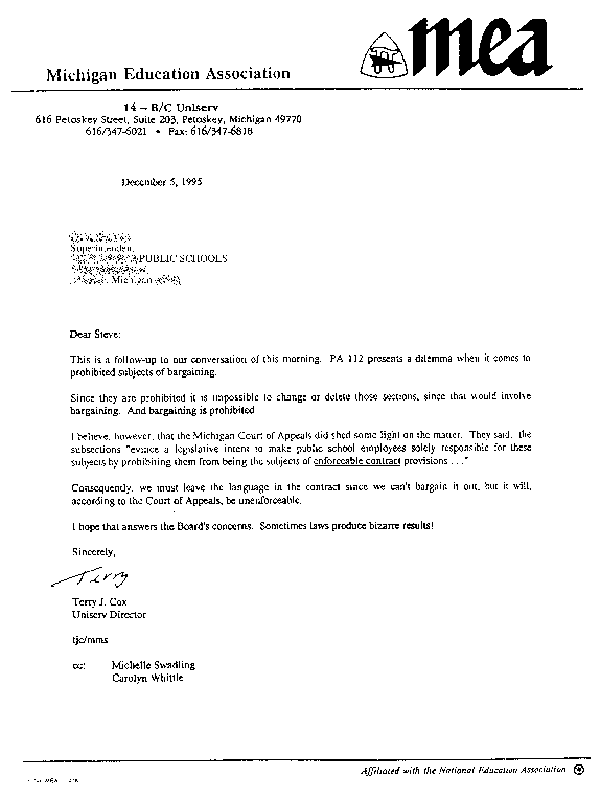
Prohibited subjects of bargaining should never be included in collective bargaining agreements; unfortunately, many contracts throughout the state nevertheless contain them. Few public employees and school officials are knowledgeable enough to recognize which clauses in a collective bargaining agreement are prohibited and unenforceable by law, and consequently, they can be easily misled. For example, MEA official Terry Cox insisted to one district that a prohibited subject of bargaining must remain in the contract, leaving readers of the agreement with the impression that those provisions were enforceable (see Exhibit 1).
Although there are many prohibited subjects of collective bargaining, the following are prohibited under PA 112 of 1994:
Who is or will be the policyholder of any employee group insurance benefit;
Establishment of the starting day for the school year and the amount of pupil contact time required to receive full state aid;
Composition of site-based decision-making bodies;
Decisions involving intra- or interdistrict open enrollment;
Authorization of contracts to organize and operate public school academies (charter schools);
Decisions to contract noninstructional support services;
Decisions involving use of experimental programs and staffing;
Decisions involving use of technology to deliver educational programs and staffing to provide the technology, and the impact of these decisions on individual employees and bargaining units;
Use of volunteers to provide school services; and
Additional compensation or work assignments intended to reimburse an employee for any monetary penalty imposed under PA 112.50
School boards should perform a careful review of all collective bargaining agreement language to insure continuing compliance with the law and applicable court decisions. An experienced labor relations specialist or labor attorney can provide a thorough, section-by-section contract analysis.
The collective bargaining process has many characteristics that tend to produce agreements that fail to meet the needs of school districts, teachers, and their students. The purpose of this section is to provide school board members, parents, teachers, and community members with an understanding of these characteristics and how they often negatively affect the quality of a local school district's educational product.
To avoid being manipulated during the bargaining process, school board members must understand collective bargaining, know the needs of their district, be aware of what any proposed contract says, and consider the long-term effects on the district of any agreed-upon contract language. This last item is especially important, as many districts fail to consider what the consequences of negotiated language will be five or ten years down the road.
School board members should therefore approach the bargaining table with the same level of professional ability, determination, skill, and understanding exhibited by full-time union negotiators. They should also involve the public in the process, constantly communicating the facts about the negotiations to parents, taxpayers, the school employees themselves, and other citizens. "Labor peace at any price" is simply an unacceptable and short-sighted approach.51
The costs-administrative, educational, financial, or otherwise-of the collective bargaining process are discussed below.
Collective bargaining, with its roots in the industrial, mass-production sector of the economy, operates under a "factory model" of bargaining whereby unions focus on securing for their members contracts with uniform benefits, working conditions, and salaries.
The factory model, however, does not work well for individual professionals working in an educational setting. Teachers are not assembly line workers and their "product" is not mass-produced and interchangeable widgets, but individual, educated children.
Uniform treatment of employees under union contracts results in a loss of individual freedom, motivation, and productivity as the creative energy of teachers becomes diverted from the classroom toward union-related activities. The personal and individual interests of teachers are overridden by the factory model's emphasis on the interests of the group.52 In fact, the professional needs of the teacher are seldom properly addressed within the standard terms of a collective bargaining agreement.53 For example, consideration of individual teacher salaries and terms of employment separate and apart from what the union negotiates is forbidden. All teachers, no matter how they perform, are instead paid on the same salary schedule.
This uniform treatment of employees results in a loss of individual freedom, motivation, and productivity as the creative energy of teachers becomes diverted from the classroom toward union-related activities.54 Many quality teachers simply choose to leave their profession in favor of finding greater freedom to exercise their skills and abilities elsewhere.
A recent example in Saginaw highlights the factory model approach of emphasizing uniform rules and procedures over individual needs and talents. Louise Harrison, a finalist for Michigan Teacher of the Year in 1989-90 and Michigan's Creative Writing Teacher of the Year in 1992, requested a transfer to a different school within her district. The administration approved her request, but the local MEA affiliate blocked her transfer on the grounds that it violated seniority rules. Then-board member Ruth Braun noted with concern that the schools in Saginaw "can't override the union and put our best teachers in positions that are in the best interests of students."55
Another consequence of applying the factory model to education is the creation of an atmosphere of antagonism between school districts and employee unions. This antagonistic aspect was recently confirmed in at least one Michigan district when former Saginaw school board president Thomas S. Tilot stated, "Based on our last three negotiations, we spent a whole lot of time in adversarial negotiations."56
Former AFT president Albert Shanker explained the adversarial relationship between unions and employers this way:
Union contracts represent some attempt to limit and curtail the powers of management.
. . . [t]he interest of unions, as long as you have a factory model, is in seeing to it that salaries are adequate and that they are not subject to some individual administrator who can use them politically or in a discriminatory way.57
The industrial or factory model of collective bargaining does not serve the students of unionized teachers well, either. As Seattle, Washington Superintendent John Stanford was quoted as saying, "We lost our way when we became more interested in the employment of adults than in the education of children."58 Even Albert Shanker conceded that, "Once you leave the factory model and start thinking about education, student outcomes, and accountability, there are ways to improve upon the present system."59
Scholarly research shows that effective schools are based on flexibility and individual autonomy.60 But collective bargaining in general, and the factory model in particular, focuses primarily on group interests and one-size-fits-all seniority, transfer, and salary schedule contract provisions, which are discussed more completely in Section 1 of Part II (page 21).
The factory model is detrimental to teachers and ultimately to the students who learn from them.
The nation's two largest teacher unions, the National Education Association (NEA) and the American Federation of Teachers (AFT) encourage their affiliates, including the MEA and Michigan Federation of Teachers (MFT), to use standard or "pattern" contract language in their collective bargaining agreements. Such pattern language appears in the collective bargaining agreements of all 583 Michigan school districts.
"Even without the rigors of bargaining, superintendents can seal their own doom through neglect of faculty attitudes. . . . How do they protect the public from the unions without making themselves the sacrificial lambs?" These pattern agreements, however, do not adequately meet the unique educational needs of individual schools and districts. For example, what may be an appropriate contract provision in an inner-city Detroit school may not be helpful or right for a rural district in the Upper Peninsula.
School board members must take an oath that requires them to carry out the obligations of their offices in the best interest of the public.61 However, the collective bargaining process frequently puts them at odds with their statutory and ethical responsibilities.
Ronald Booth sums up the slings and arrows that board members must face when combining labor relations, human relations, and politics:
[I]f unions do not get what they want at the bargaining table, board members and superintendents can find themselves in jeopardy. If the politics of impasse or strike doesn't get the superintendent fired, then sometimes it's the loss of school spirit that often follows the strike or the teachers' refusal to maintain acceptable relationships with students and parents.
Even without the rigors of bargaining, superintendents can seal their own doom through neglect of faculty attitudes. . . . Today's teachers not only talk about their problems out of school, they organize campaigns to unseat board members and to remove the superintendent.
That leaves school boards and superintendents on the horns of this dilemma: How do they protect the public from the unions without making themselves the sacrificial lambs?
Some boards have said, let's forget the public and give the unions what they want. Other boards have stood fast against the union's demands and been ousted at the next election, soon followed to the sidelines by their superintendents.
Clearly, what is called 'collective bargaining' in the private sector is not necessarily the same thing in the public sector.62
Unions routinely recruit pro-union candidates to run for public office. They then use their considerable resources to get these candidates-who often do not reveal their union support while campaigning-elected to school boards. Former AFT member and 1993 National Teacher of the Year Tracey Bailey is a frequent critic of the unions and their political nature, calling them "special interests protecting the status quo" and pillars of "a system that too often rewards mediocrity and incompetence."63
Usually, the more language that is included in an agreement, the more restricted the school board and administrators are in making decisions.
Collective Bargaining Hinders School Management Decision Making
The agreements that arise from collective bargaining establish the respective rights of school management and the employee union. Usually, the more language that is included in an agreement, the more restricted the school board and administrators are in making decisions.
Too many school boards have agreed to include in collective bargaining agreements subjects that hamper their ability to make timely and crucial decisions that affect the delivery of educational services. The end result is that administrators and teachers both become bound by a rigid and cumbersome set of work rules and procedures.
Needlessly complex union and legal requirements have led to an ineffective and time-consuming accountability process for many districts. The burdensome contractual requirements for the evaluation, discipline, and discharge of employees have frequently lead administrators and school boards to determine that the cost of maintaining high standards of employee professionalism is just too high, leaving ineffective or even incompetent teachers in the classroom.
Toward the end of his life, Albert Shanker recognized that accountability is essential to providing quality education:
The key is that unless there is accountability, we will never get the right system. As long as there are no consequences if kids or adults don't perform, as long as the discussion is not about education and student outcomes, then we're playing a game as to who has the power.64
The adversarial and political nature of the collective bargaining process frequently distorts or stifles communication among key groups in a school district. School board members and administrators, fearful of being charged by the union with unfair labor practices, are often wary of speaking openly and directly with teachers. Taxpayers and members of the community are frequently unaware of, or misinformed about, what is negotiated between their elected school boards and the teacher unions.
For example, unions (and sometimes district negotiators) often make a concerted effort to communicate only the general employee salary increases and not the total bargained increase in compensation. Consequently, Michigan citizens tend not to have a clear understanding of the true employee compensation costs for their districts, which typically range between 80 and 90 percent of a school district's budget.65
This lack of communication has led analysts to argue that collective bargaining has resulted in too much of the public interest being given away or ignored.66
More public and parental involvement in the bargaining process is key to ensuring that schools continue to deliver a high quality education. But while the state of Michigan does permit bargaining to take place publicly, few districts open their negotiations to the entire community. Many other states are now requiring collective bargaining to be done in public. William Keane notes that
The public may tolerate being left out of the process when things are working smoothly. When trouble results, they will be heard. So-called sunshine laws in Florida and other locations, which require that collective bargaining be carried out in public, are on the books because the public interest can be ignored only so long.67
The collective bargaining process involves more than just the interests of school board members and teachers. Many special interests are often represented at the table, each with its own agenda and goals it wants to accomplish. The goals of these various interests are seldom the same.
The agendas on the union side, for example, may include the national union affiliate's agenda (NEA or AFT), the state union affiliate's agenda (MEA or MFT), the local union representative's agenda, the local bargaining unit agenda, and the bargaining team agenda. The school district, on the other hand, has the school board's agenda, the superintendent's agenda, and the administration's agenda to consider.
The presence of so many different agendas often leads to miscommunication and miscalculation. For example, some school boards hold the superintendent responsible for negotiations, but his agenda may not match the board's and, as a result, he may attempt to "buy labor peace" by agreeing to a contract which may not be in the best interest of the public or the students. Sometimes the superintendent and union negotiator exceed their authority during negotiations or give too little time for the board to properly review the terms they have negotiated. These are common ways that a school board finds itself stuck with a contract it did not necessarily agree to or want.
Teachers in some districts have attempted to alleviate these problems by separating from their state and national affiliate parent unions in favor of bargaining for themselves. These locally organized teacher unions have determined that collective bargaining fails when there is an imbalance of power at the negotiating table because one side, the union, is professionally trained while the other, the school board, is composed of community lay people. As the president of Frankenmuth's local teacher union has said, "Being independent allows us to be reasonable with people in the community who have as much at stake as we do."68
Every school district pays a high price for collective bargaining.
Financially, the highest cost associated with collective bargaining is in employee compensation packages. In 1997, the Michigan Association of School Boards reported that statewide salary increases for education employees equaled 2.6 percent. However, this figure does not take into account the total compensation figure, which should include items such as fringe benefits, paid leave, additional duty pay, step increases, and "longevity" (see Section 1 of Part II for a discussion of the structure of teacher salaries). With these factors included, the actual average increase in teacher salaries and benefits exceeded 8.5 percent.
Every school district pays a high price for collective bargaining. Another cost of collective bargaining comes from the time spent negotiating. For districts where the superintendent is expected to be part of the negotiating team, the time spent in preparation and bargaining adds as much as 80 to 100 additional hours to his workload every contract period, not counting the additional overtime for any secretarial, support, and administrative personnel. Districts that hire professional negotiators on either an hourly or per session fee basis pay between $5,000 and $15,000 for each contract period.
Even the physical contract document imposes small but significant costs on schools, unions, or both. The cost to prepare, print, and distribute negotiated collective bargaining agreements to school officials and employees averages about $600 per contract period, and some districts with fewer than 200 teachers have reported costs in excess of $2,000. Some districts also have additional expenses associated with keeping the community at large informed about the negotiations and their outcome.
Still other districts have incurred expenses arising from efforts to make the process less emotionally draining and adversarial. The Saginaw school district and its teacher union report that they pay $2,000 per day plus expenses for a labor relations attorney to guide them through a "collaborative bargaining" approach to their 1998 labor negotiations.69
There are certain unavoidable costs to administering contracts when numerous parties are involved; however, taxpayer funds allocated for educational goals have too often been diverted to pay for negotiations, general contract administration, and the consequences of poorly bargained language. School officials who carefully prepare for collective bargaining and negotiate wisely can not only reserve these resources for their intended purposes, but also maintain the trust of the parents, taxpayers, and students in their community.
Overcoming the Shortcomings of Collective Bargaining
The shortcomings inherent in the collective bargaining process help explain why there is much room for improvement in Michigan school district collective bargaining agreements. Part II of this study provides an analysis of those agreements and recommendations for improving the ability of public schools to provide quality education by making positive changes to the language contained in them.
Every word in a collective bargaining agreement is critical. Each negotiated clause and phrase can have a tremendous impact on a school district's operations, the morale of its employees, and ultimately, the education of the children entrusted to it. Because arbitrators must interpret a contract based primarily on its language, every district's negotiating team should prepare by thoroughly reviewing all contract language to determine current applicability.
This analysis is based on a review of the collective bargaining agreements from each of Michigan's 583 public school districts. Although there exist a great number of identified problems, this section focuses on eight key areas that present the greatest opportunity to significantly improve the agreements and thereby improve educational quality. Each of these eight areas is discussed in detail below, along with recommendations for strengthening, removing, or otherwise improving contract language.
Every collective bargaining agreement should specifically detail the rights and responsibilities that remain vested in the school board. As elected officials, school board members form the only public body with the legitimate responsibility and authority to operate a school district; neither teachers nor unions have been granted authority by the electorate to undertake this responsibility.
School board members are held accountable by parents, taxpayers, and community members for the operation of their schools. Efficient operation requires that school boards never relinquish their ability to make decisions in the management of the district for which they are responsible.
ANALYSIS
The management rights contract language, or "rights of the board of education," is the contract provision that establishes school board control over the operation of the school district. The Michigan legislature has provided the framework for management rights by statute:
A public school employer has the responsibility, authority, and right to manage and direct on behalf of the public the operations and activities of the public schools under its control.70
The contracts reviewed by this study show that many school boards do not fully understand how their control can be relinquished by poor wording of the very terms meant to define their right to exercise control.
A school district may exercise only those management rights that are explicitly established in the collective bargaining agreement.71 Arbitrators may determine that any action a school district takes outside of the rights clearly defined in the collective bargaining agreement constitutes a unilateral change in employment conditions. They may also interpret imprecise language, such as that found in the following examples, as providing inadequate notice to the union of the specific rights reserved by the board.
Here is an example of a poorly worded but standard management rights clause found in a great number of Michigan school districts' bargaining agreements:
The Association [union] recognizes that except as specifically limited or abrogated by the terms and provisions of this Agreement and to the extent authorized by law, all rights to manage and direct the operations and activities of the School District and to supervise the teachers are solely and exclusively vested in the Board.
The broad wording of this management rights provision fails to protect the role and responsibility of the school board and allows the union to define the school board's rights in the agreement. Management rights clauses should instead be written from the perspective that the school board is responsible for school management except as specifically limited by the agreement.
A second example of overly broad language is that which mirrors only the statutory framework:
The Board, on its own behalf and on behalf of the electors of the District, hereby retains and reserves unto itself, without limitation, all powers, rights, authority, duties and responsibilities conferred upon and vested in it by the laws and the Constitution of the State of Michigan and of the United States.
Some districts have attempted to protect their employees' individual rights within the framework of a group agreement by modifying their authority with the following phrase:
The Board of Education in this contract does not seek in any way to deny or restrict any employee's rights established under the Michigan General School Laws or any other laws or regulations which apply.72
This clause could well lead an arbitrator to determine that a disputed management decision places an unwarranted restriction on the individual rights of a teacher protected by this language, even though the decision itself is properly within the purview of management.
The wording of a management rights clause can also restrict the very rights it is intending to define, as in this example:
The Association recognizes and agrees that the School District has the exclusive right to govern all aspects of operating the School District, including the right to discipline for just cause and to direct its entire work force at all times.
Here, the wording may bind the school district to the lengthy "just cause" proceedings (discussed below) for the discipline or discharge of all probationary employees as well as tenured teachers. Arbitrators may apply this interpretation even when a separate section of the contract states that termination or failure to re-employ a probationary employee is not subject to the grievance procedure. This language can still result in lengthy grievance proceedings and defeat the purpose and intent of probation for new employees.
RECOMMENDATION
School districts should adopt strong management rights clauses that explicitly designate the specific rights reserved to the school board, administrators, and management.
A school district's best defense against union charges of unfair labor practices is to clearly state management's rights in the collective bargaining agreement. Ambiguous wording may invite courts and administrative agencies to find that the school administration has waived its right to make unilateral decisions over a subject in dispute.73 Where the management rights provisions or other express terms of the contract explicitly state the employer's right to take a disputed action, the Michigan Employment Relations Commission has ruled that the union waives its right to bargain the matter.74
Following is an example of a strong management rights clause that provides clear notice of the rights retained by the school board. This clause should be placed at the beginning of the agreement so that the contract flows naturally from the express rights laid out in the clause.
Nothing in this Agreement is to be interpreted as constituting a waiver of the Board of Education's rights and responsibilities to create and maintain schools that reflect its public's wishes. The intent of the Agreement is to establish wages, working hours, and conditions of employment with the Association.
Therefore, the Board on its own behalf and on behalf of the electors of the District, hereby retains and reserves unto itself, without limitation, all powers, rights, authority, duties, and responsibilities conferred upon and vested in it by the law and the Constitutions of the State of Michigan and the United States including, but without limiting the generality of the foregoing, the right
To the executive management and administrative control of the school system and its properties and facilities;
To hire all employees and to determine their qualifications and fitness for employment and conditions for their continued employment, or their dismissal;
To establish grades and courses of instruction, including special programs, and to provide for athletic, recreational and social events for students, all as deemed necessary or advisable by the Board;
To determine overall goals and objectives as well as the policies affecting the educational program;
To select textbooks, teaching materials, and teaching aids;
To determine class schedules, class size, the hours of instruction, and the assignment of teachers with respect thereto;
To determine the services, supplies, and equipment necessary to continue its operations and to determine the methods and processes of carrying on the work;
To adopt reasonable rules and regulations;
To determine the location or relocation of its facilities, including the establishment or relocation of new schools, buildings, division or subdivisions thereof, and the relocation or closing of offices, departments, divisions or sub-divisions, buildings, or other facilities;
To determine the financial policies including all accounting procedures, and all matters pertaining to public relations;
To determine the size of the management organization, its functions, authority, amount of supervision, and table of organization; and
To direct the working forces, including the right to hire, promote, discipline, transfer, and determine the size of the workforce.
The exercise of the foregoing powers, rights, duties, and responsibilities by the Board and the adoption of policies, rules, regulations, and practices in furtherance thereof, shall be the exclusive prerogative of the Board except as limited by the specific terms of this Agreement.75
Exclusive representation means that the management must deal solely with the recognized or certified union regarding employee wages, hours, and terms and conditions of employment.76
ANALYSIS
When a public employer recognizes a collective bargaining representative as the agent representing the employees in a defined bargaining unit, PERA grants exclusive recognition to that agent to act for those employees in issues involving wages, hours, and terms and conditions of employment. In addition to including such recognition, more than 500 contracts contain a separate provision by which the school board agrees not to negotiate with any other teacher organization.
In other words, if a school board wished to contract with a math, science, or professional teacher organization for the purposes of professional development for its staff members (a term of employment), it would first require the union's permission.
RECOMMENDATION
School boards should remove exclusive bargaining representative clauses that require union permission before employees can explore opportunities with other professional organizations.
Many school board members and other citizens mistakenly believe that union membership is required for all teachers working under a collective bargaining agreement. The truth is that there is no statute that requires teachers to either become union members or pay union dues in the absence of a contractual agreement between a school district and union called the "union security clause."
The union security clause, if included in a collective bargaining agreement, is what forces school employees to pay union dues. School boards who agree to such a clause become union financial enforcers, often by agreeing to fire any employee who fails to pay dues money. This arrangement allows the two major teacher unions, the NEA/MEA and the AFT/MFT, to take over $800 million per year from the country's teachers without their voluntary consent.77
ANALYSIS
Union security clauses undermine union accountability by forcing teachers to financially support the union whether it has earned their support or not. Employees working under a collective bargaining agreement with a union security clause fit into one of two categories: full union members or "agency fee payers." Agency fee payers are those employees who decline to join the union but are required to pay a "service fee" (or "agency shop fee") to the union for the costs of collective bargaining representation services.
The statute governing union security agreements expressly affirms that dues or service fee payment is not a mandatory condition of employment, but it does not preclude school boards from negotiating a dues or service fee provision if they choose.78 In practice, most school districts require their employees to pay dues or a service fee and provide that the money be involuntarily deducted from the paycheck of any employee who fails to pay.
Dues and service fees in most districts presently average two percent of the negotiated base minimum of each teacher's salary: A teacher with a $30,000 base salary must therefore pay $600 annually in local, state, and national union affiliate dues.
Compulsory unionism for public school employees brought about by union security clauses has had profoundly negative effects on school districts. It has lowered teacher morale and professionalism79 which in turn has hurt student achievement in the classroom. A 1996 study conducted by Harvard professor Caroline Hoxby found that, "Teachers unions increase school inputs but reduce productivity sufficiently to have a negative overall effect on student performance.80" Hoxby also discovered that in addition to having lower student achievement, unionized districts also suffer from higher student dropout rates.81
Currently, every teacher contract in Michigan includes a union security clause whereby the school district agrees to act as the collection agent for union dues. Most districts additionally act as union recordkeepers by transmitting payments to the local union and often separately to state and national affiliates.82 Standard language in over 500 current contracts further provides that
In the event there is a change in the status of the law, so that mandatory deduction from wages pursuant to the paragraph above is prohibited, the employer, at the request of the Association, shall terminate employment of a bargaining unit member that refuses to authorize deduction of the representation benefit fee…. The parties expressly agree that failure of any bargaining unit member to comply with the provisions of this Article is just cause for discharge from employment.
In other words, even if involuntary dues deduction is prohibited by a change in law after the contract is bargained, the school board still agrees to fire any employees failing to pay union dues.
However, dues-paying teachers have constitutionally protected rights to
pay only those costs directly attributable to collective bargaining and negotiations which provide a direct benefit to them;83
object to the amount of agency shop or service fee required; and
have that amount reviewed by an impartial decision maker.84
School districts have an independent responsibility to inform their employees about their rights, but a significant number of current contracts do not mention these rights. More than twenty collective bargaining agreements do not even inform teachers of their right to refrain from becoming full dues-paying union members by choosing instead to pay only an agency shop or service fee.
With few exceptions, those contracts that do advise teachers of the right to object limit teachers' means of protecting those rights. Over 150 collective bargaining agreements contain a standard notification clause as follows:
Pursuant to Chicago Teachers' Union v Hudson, 106 S. Ct. 1066 (1986), the Association has established a "Policy Regarding Objections to Political-Ideological Expenditures-Administrative Procedures." Those administrative procedures (including the timetable for payment) apply only to non-Association bargaining unit members. The remedies set forth in those procedures shall be exclusive and, unless and until such procedures (including any administrative or judicial review thereof) shall have been availed of and exhausted, no dispute, claim, or complaint by an objecting bargaining unit member concerning the application and interpretation of this article shall be subject to the grievance procedure set forth in this Agreement.
This notification clause requires agency fee payers with dues disputes to exhaust internal union-controlled procedures-procedures established by the very union they are opposing-before the matter can be heard in other administrative or judicial forums. Only a small number of the collective bargaining agreements reviewed even provide the terms of the "Policy Regarding Objections to Political-Ideological Expenditures."
The May 1998 U. S. Supreme Court decision, Air Line Pilots Association v Miller85, has established that nonunion agency fee payers have the right to settle their dues disputes in the forum of their choosing, regardless of whether or not they have exhausted the internal union-controlled procedures. The Court held that when a union attempts to bind an agency fee payer to a dispute procedure not of his choosing, it frustrates his ability to exercise his constitutional rights and he is therefore free to pursue an impartial decision maker.
The Miller case may have legal implications concerning the validity of teacher contracts that compel exhaustion of a union-controlled dues dispute process. Please see Section 2 on page 42 for a discussion of the Miller decision. Unions also frequently specify narrow time periods during which employees may resign their membership. If an employee were to challenge this practice in court, it would likely be ruled unconstitutional.
Some current collective bargaining agreements mandate that the amount of the service fee paid by agency fee payers be the same as full membership dues. This is in direct violation of U. S. Supreme Court decisions which provide that objecting employees can be forced to pay only those charges directly attributable to collective bargaining.
Unions often negotiate contract provisions that require new (probationary) employees to immediately apply for full union membership-usually within thirty days of their start date-despite the fact that probationary employees receive only limited representation protection. The agreement in at least one district requires this application to be made within the first week of employment. No contracts, however, specify that the application is required at the time the employee ceases to be on probation.
Unions also frequently specify narrow time periods during which employees may resign their membership in favor of becoming agency shop or service fee payers. Unions may also limit the times when they will accept payment of service fees. If an employee were to challenge these practices in court, they would likely be ruled unconstitutional.
Almost every collective bargaining agreement stipulates that dues will be automatically deducted from employees' paychecks from year to year, while those who object to this deduction must renew their objection annually. These provisions have the effect of limiting the number of objectors by making the act of objecting more burdensome.
Although PA 117 of 1994 requires unions to obtain annual consent from individual employees for the deduction of political action committee contributions, unions are unwilling to allow members that same latitude of choice over the dues themselves. Teachers must expressly agree each year to every other payroll deduction, but they are denied that right when it comes to union dues. Conversely, employees must annually notify the union in writing when they wish to be agency shop or service fee payers.
RECOMMENDATIONS
1. School boards should negotiate union security clauses out of their collective bargaining agreements.
The coercive and unfair nature of such clauses negatively affects school employees' morale, productivity, and professionalism and, ultimately, student achievement. Eliminating them would ameliorate these problems and return more money to the paychecks of hardworking teachers. Unions that excel in representing their members will have no difficulty attracting and keeping the voluntary support of those members.
Teachers themselves should explore all their options for representation. Members of unaffiliated independent teacher unions pay dues as low as $40 per year while enjoying the same rates of pay and benefits as those who are required to support state and national affiliates through higher fees. These independent teacher unions typically have the resources to provide the same membership services as the affiliated unions, including liability, legal representation, and professional negotiating.
2. If the school board chooses not to eliminate the union security clause, it should change the agreement to reflect the board's refusal to serve as union collection agent and recordkeeper.
The school funds spent on these functions could be better directed toward education. Districts themselves can also be held liable under the Weaver v University of Cincinnati court decision (discussed in further detail in Section 2 below) for the amount of any dues illegally collected from employees. Some districts' contracts wisely provide that the school board will not be a party to whatever collection action the union may pursue to collect either dues or service fees.86
School boards should uphold the rights of employees and protect themselves from liability by inserting language that protects from termination teachers who fail to pay union fees. Language that accomplishes this is found in a few existing agreements and specifies that "the payment of the service fee is a condition of employment: provided, that the non-payment of the service fee shall not cause the discharge of any teacher.87"
3. If the school board chooses not to eliminate the union security clause, it should ensure that any negotiated contract language affords the maximum constitutional protections to agency fee payers, including not binding them to an unfair, union-dominated dues dispute procedure.
Agency fee payers (nonunion employees) who object to the amount of the service fee they are compelled to pay are entitled to have their objections heard before an impartial decision maker. School boards should protect the rights of agency fee payers by inserting language into the appropriate area of the union security clause as follows:
Pursuant to Chicago Teachers' Union v Hudson, 106 S. Ct. 1066 (1986), public employees who object to the payment of union dues have a right to pay for only direct collective bargaining costs through the payment of an agency or service fee. Objecting fee payers have the right to have their objections heard by an impartial decision maker and to have their fees held in escrow until such dispute is resolved.
The Hudson decision is discussed in Section 2.
4. If the school board chooses not to eliminate the union security clause, it should avoid bargaining contract provisions that needlessly limit or restrict employees' freedom to resign from the union.
The "just cause" standard and the resulting due process proceeding for employee discipline or discharge is a burdensome and time-consuming process for districts that wish to remove ineffective, unproductive, or even criminal teachers from the classroom. Provisions that restrict employee resignation from the union to a limited time period, such as one month out of the year, are constitutionally suspect and susceptible to legal challenge. The MEA represents to its membership that withdrawal of membership and designation for payment of the agency fee can only occur during a narrow window period annually each August. This restriction has not been found to be constitutionally valid.
5. If the school board chooses not to eliminate the union security clause, it should avoid negotiating any language that requires the service fee paid by objecting nonunion employees to be the same as the amount of full union dues.
Such requirements are in direct violation of U. S. Supreme Court decisions that hold that agency fee payers who object can be compelled to pay only those charges directly attributable to collective bargaining representation.
Improvement #4: Limit "Just Cause" Discipline and Discharge Clauses
"Just cause" refers to contractually established standards of conduct that an employee must breach before he can be disciplined or discharged. Due process is the legal procedure instituted when an employer wishes to discipline or discharge an employee who has breached the "just cause" standard.
"Just cause" is distinct from an "at will" employment arrangement. "At will" means either party may terminate the employment relationship at any time for any reason. The "just cause" standard, on the other hand, is typically applied to employees who have a property interest in the employment relationship. Teachers who have received tenure status, for example, enjoy property rights in their employment relationships.
Many school boards seem not to understand the implications of the "just cause" standard, as evidenced by the number of contracts that extend this standard to all employees in the bargaining unit-including probationary teachers who are still being evaluated for their competence. After all, it sounds reasonable that no employee should be disciplined or discharged unless there was both justice and cause. However, the "just cause" legal standard is not that simple.
ANALYSIS
The "just cause" standard and the resulting due process proceeding for employee discipline or discharge is a burdensome and time-consuming process for districts that wish to remove ineffective, unproductive, or even criminal teachers from the classroom.
Under this standard, a school board can face increased and unplanned expenses in processing employee discipline and discharge matters, including substantial liability for teacher re-instatement or back pay in the event of an unfavorable arbitration or tenure ruling.
Unions do have a legal obligation to represent their members when discipline or discharge is unwarranted or in violation of the collective bargaining agreement. However, the "just cause" standard has sometimes been stretched to include situations that make a travesty of procedural protections intended to guard good teachers from arbitrary and capricious decisions.
One of the most outrageous examples took thirteen years of litigation and cost the Ann Arbor Public Schools district in excess of $350,000 in attorney fees and back pay for an ex-teacher who was imprisoned in Jackson for murder.
An employer must be able to answer "yes" to all seven of the following questions in an arbitration hearing to successfully sustain a "just cause" discipline or discharge decision:
One employee discharge case took thirteen years of litigation and cost the Ann Arbor Public Schools district in excess of $350,000 in attorney fees and back pay for an ex-teacher who was imprisoned in Jackson for murder.88
Did the employer forewarn the employee of possible disciplinary consequences of conduct?
Was the rule or directive involved reasonably related to the orderly, efficient operation of the business?
Before administering discipline, did the employer properly investigate to determine that the employee did violate or disobey the rule or directive?
Was the employer's investigation done in a fair and impartial manner?
Through the investigation, did the employer obtain enough evidence to prove the employee was, in fact, in violation of the rule or directive?
Was the rule, directive, and penalty applied fairly and without discrimination?
Was the discipline applied reasonably related to the gravity of the offense and was the amount of discipline reasonable given the employee's overall record?89
Some arbitrators have held that the standard of progressive discipline does not apply to certain offenses: alcohol on the job, theft, lying, cheating, and violations of criminal statutes reasonably related to the performance of the employer's business operation. Any off-duty misconduct must also be reasonably related to the employer's business purpose.
School officials are often suspicious of the extent to which a union will pursue a matter and, as a result, may fail to discipline or discharge poor or disorderly teachers until well after their conduct has deteriorated seriously. School officials who fear legal action from unions may choose to retain teachers who are not effective or productive in educating students. They may also give large severance settlements instead of discharges to poorly performing teachers or supply good recommendations for poor teachers seeking employment at another school.
The collective bargaining agreements in many districts extend the "just cause" discipline and discharge standard to cover probationary teachers, even though school boards are legally obligated to provide "just cause" only to tenured teachers.
RECOMMENDATIONS
1. School boards should limit the "just cause" standard to include only tenured teachers and provide a less rigid standard for probationary teachers, who are still being evaluated for their competence.
School boards are legally obligated to provide "just cause" employment only to tenured teachers. School boards should carefully review their collective bargaining agreements for any language that makes a "just cause" standard applicable to probationary teachers, and instead specify an annual employment arrangement for them with the following language:
Probationary employees are employed on an annual contract basis, renewable on an "at will" basis, during their probationary period of employment and may be disciplined during that period for any reason as determined appropriate by the school board.
2. School districts should update their collective bargaining agreements to reflect changes in the law regarding the length of teachers' "probationary" status.
In 1994, the Michigan Teacher Tenure Act was amended to establish a four-year probationary period for teachers before they could gain tenure. There are still more than 200 collective bargaining agreements that contain the pre-1994 provisions of a two-year probationary period with a possible extension for a third year.
School boards should modify their agreements to reflect present law, and take advantage of the longer probationary period to thoroughly evaluate teachers before allowing them tenure and a "just cause" standard of discipline and discharge.
3. School boards and administrators should carefully follow the established seven-point test when building a case for the "just cause" discipline or discharge of a tenured teacher.
Arbitrators are unlikely to uphold the discipline or discharge of an employee if the school district does not properly follow and document the steps showing "just cause." School boards and administrators who adhere to the requirements for "just cause" will avoid unnecessarily costly and unfavorable arbitration rulings.
Improvement #5: Strengthen Teacher Evaluation Clauses
School boards and administrators are responsible for the education of children. This obligation is inconsistent with protecting the employment of poorly performing or behaving teachers. Accordingly, school districts must take steps to ensure that the process of teacher evaluation serves the primary consideration of delivering quality education to students while avoiding any potential harm that may result from unqualified or otherwise unfit personnel remaining in the classroom.
The teacher evaluation plays an important part in a school's ability to effectively educate its students. School officials must be able to evaluate the competency and performance of each teacher in order to judge how well he uses his skills to help students learn and achieve.
Because each evaluation is part of a continuum that builds over time, a proper teacher evaluation must go beyond the mere "performance" of an instructor standing in a classroom lecturing and address a teacher's overall ability to establish and maintain a positive learning environment for students. School boards and administrators must keep this focus in mind as they bargain contract language that affects these evaluations.
ANALYSIS
Collective bargaining agreements in Michigan, with few exceptions, place more restrictions on school administrators' rights to evaluate their teachers than do any statutory requirements. NEA President Bob Chase recently acknowledged that, "the heart of education is this: the daily engagement between teacher and pupil, and the commitment that both parties bring to the task.90" Yet unions such as the MEA often demand uniformity in the teacher evaluation process-a cookie-cutter approach that ignores the differences in goals, objectives, standards, and style between elementary and secondary teaching.
Collective bargaining agreements in Michigan, with few exceptions, place more restrictions on school administrators' rights to evaluate their teachers than do any statutory requirements. For example, the way a school conducts an evaluation today may affect how that evaluation can be used in future decision making. If an evaluator fails to immediately identify and address a teacher's known problems or deficiencies during the course of an evaluation, then that evaluator may be prevented by contract from bringing up these problems or deficiencies during future evaluations or discipline proceedings.
Problems arise when teacher evaluators, for whatever reason, choose not to honestly confront poorly performing teachers during the evaluation process. For example, a school official may sometimes be tempted to rate an unsatisfactory teacher as satisfactory because the official believes that poor teacher evaluations reflect negatively on his own job performance. He may also fear that giving an unsatisfactory review to a teacher with problems may only compound those problems.
Awarding a satisfactory rating to unsatisfactory teacher conduct or performance may, however, result in worse problems down the road. Administrators who later want to address that particular conduct may find themselves prevented from doing so by the pattern of past evaluations or the terms of the bargaining agreement.
Some collective bargaining agreements allow for grievances regarding the content of teacher evaluations. Such provisions expose districts and administrators to costly and time-consuming arbitration proceedings. One principal in Manhattan, New York
. . . has spent close to 100 hours out of the [school] building over the past two years in grievance sessions at the district office, at the Board of Education, and at arbitration sessions. Although every one of [the principal's] negative evaluations has eventually been upheld, he still must go through the process for another year before this one employee might have to face formal disciplinary charges-a process that can take several more years.91
RECOMMENDATIONS
1. School board members and administrators should use the five points established under the Michigan Teacher Tenure Act when evaluating a teacher's competency.
Unsatisfactory performance in any one of these five points is sufficient to determine that a particular teacher is not competent:
knowledge of the subject;
ability to impart the subject;
manner and efficiency of discipline over students;
rapport with parents, students, and other faculty; and
physical and mental ability to withstand the strain of teaching.92
The course of action pursued by the school district with regard to a poorly performing teacher must be based on the extent or severity of the poor performance.
2. School boards should remove from their collective bargaining agreements any language that provides for grievances over the content of a teacher evaluation.
The content of teacher evaluations should be left to the sole discretion of school administrators, not to arbitrators in lengthy and expensive grievance proceedings. By making evaluation content a grievable matter, school boards wind up placing the judgment of arbitrators, who do not work with or see the teachers being evaluated, above the judgment of the school administrators, whose responsibility it is to observe and evaluate the teachers' abilities.
3. School board members and administrators should take advantage of professional seminars sponsored by the Michigan Negotiators Association to learn more about the statutes governing teacher evaluations, which evaluation procedures are most effective, and how to bargain appropriate language to make the most of this vital process.
Improvement #6: Replace Seniority-Based Salary Schedules with Performance-Based Pay Scales
Most public school teachers in Michigan are paid according to a seniority-based salary schedule, which awards compensation according to a teacher's years of experience and level of education. This is in contrast to most other areas of commerce and industry, where employees working under a "merit-based" schedule receive compensation that is commensurate with their job performance and productivity.
ANALYSIS
Under a seniority-based, or "single salary schedule," system, individual teachers have a reduced incentive to innovate or excel in the classroom since their level of compensation is not tied to their performance. Despite this, most collective bargaining agreements in Michigan establish teacher salary schedules based solely on a teacher's level of education and years of experience.
These salary schedules are organized into a "grid" which provides for automatic pay increases based upon the number of years a teacher has spent in the district and the kind of college degrees or number of additional academic credit hours he has accumulated or both. These increases are commonly referred to as "step" increases.
Typically, the foundation of the grid is the "base" salary which is equivalent to the salary given to a first year teacher with a bachelor's degree. The remainder of the grid is based upon a percentage of this base salary. For example, a second year teacher with a bachelor's degree might receive a salary 1.04 times the base, a first year teacher with a master's degree might receive 1.10 times the base salary, etc.
As a consequence of this grid, school districts incur additional salary expenses even if there is no change in the base salary. The amount of each salary increase varies depending on the distribution of the district's work force. Districts with more teachers at the lower salary steps, for example, will incur greater expenses than those with more at the top step. These increases may be as high as three percent. All current collective bargaining agreements in Michigan require teachers with master's degrees to be hired according to their step on the pay grid-even when a teacher is willing to work for a lower salary.
If the base salary is also increased, the impact of the step increases is compounded, resulting in greater expense. All associated costs, such as retirement contributions, Medicare and Social Security taxes, etc. are likewise increased.
Many contracts also provide raises for teachers who have "maxed out" the grid at the top step. These raises are referred to as "longevity" steps-cumulative salary bonuses for teachers with many years of experience within a district-and do not appear on the salary grid. Nonetheless, they increase a school district's overall salary and salary-associated expenses.
In most school districts, entry level teachers with only a bachelor's degree and no prior teaching experience receive the base negotiated salary; few districts reserve the unrestricted right to establish the starting salary for a teacher on any step of the pay scale.
Similarly, all current collective bargaining agreements in Michigan require teachers with master's degrees to be hired according to their step on the grid-even when a teacher is willing to work for a lower salary. At the same time, the majority of agreements cap the number of years of out-of-district experience for which a teacher may receive compensation.
Collective bargaining language regarding experience often limits a teacher's salary increases to experience gained within his current district rather than including the total of his experience. The practical consequence of this salary system has been that experienced and highly educated teachers who want to switch districts often find that they cannot do so: Districts that may wish to hire such teachers are unwilling or unable to start them at a salary level commensurate with their credentials.
School districts using a single salary schedule also experience hiring limitations, often finding it difficult to attract good teachers in technical subjects. Many with advanced degrees in science, engineering, or computers prefer to work for employers that offer merit-based pay rather than for schools offering the inflexible pay scales of union contracts.
Teachers working under a seniority-based salary system face a number of disincentives and drawbacks. Such a system does not provide adequate incentives for them to continuously improve their job performance, teaching methods, or professional development in their subject areas.
Without the incentives and motivation that come from the promise of additional compensation, teachers must instead be internally motivated to continue to improve the educational product offered to students. Some teachers, to be sure, are strongly motivated by their passion for teaching-and it is precisely those teachers who deserve recognition through a merit-based pay system for their outstanding classroom contributions.
Another example of the seniority system's inherent unfairness is that only teachers with a combination of both education and experience are able to reach the top of the salary schedule. In other words, a teacher who worked in his district for over thirty years but lacked a doctorate, specialist, or master's degree plus a set number of academic course hours could not advance to the top of the salary scale, no matter how effective an educator he was.
Seniority-based salary schedules also result in "wage compression." Wage compression occurs when the incremental rates of pay between the highest and lowest salaries become reduced through the application of wage increases to the lowest pay level. When an equal percentage of increase is not applied to each salary level, the difference between salaries shrinks, or becomes "compressed." There are practical financial reasons for applying wage increases to the lowest level salary, but the teachers at the top of the pay scale may resent this.
Despite this lack of flexibility and fairness in teacher compensation, many union officials maintain that seniority-based salary schedules that punish the very teachers they represent are the "fairest" system. One current contract provision even bluntly states, "Under no condition shall a teacher be compensated above his/her appropriate step on the salary schedule."93 Such contract language can serve only to dampen individual teacher motivation, initiative, and performance.
Unions such as the NEA remain opposed to changes in the seniority-based salary system. The NEA "believes that performance pay schedules, such as merit pay, are inappropriate."94 The NEA's 1997-98 Resolutions further hold that salary schedule systems must be established based on "preparation, professional growth and length of service and exclude any form of merit pay."95
School districts attempting to establish performance-based pay schedules for their teachers have invariably met with union resistance. However, some districts such as Saginaw have been successful in bargaining a portion of their teachers' salaries based on the requirement that teachers meet certain district-wide goals adopted by the school board.96
RECOMMENDATION
School boards should remove seniority-based salary schedules from their collective bargaining agreements and institute performance-based pay scales that reward outstanding teachers, encourage innovation, and attract the best people for the important job of educating tomorrow's leaders.
A performance-based salary schedule can be based on either teacher performance or student performance. The Michigan legislature in 1995 strengthened school districts' rights to create performance-based salary systems when it passed PA 289 into law. PA 289 states in part that, "A school district or intermediate school district may implement and maintain a method of compensation for its employees that is based on job performance and job accomplishments."97
In 1993, AFT union president Albert Shanker himself proposed performance-based pay, acknowledging that such a system could be developed without being anti-union and its flaws "would be very small compared to what we have now or compared to what you would have without such a system."98
Teacher salaries and benefits are by far the largest expenditure in every school district, averaging around 82 percent of the entire budget.99 Benefits packages by themselves take up roughly 25 to 30 percent of the compensation budget100, and health insurance is typically the second-largest item in the annual budgets of school districts, just behind salaries and wages.101 With health care costs rising and school district revenue projections remaining flat, school districts now more than ever must be value-based purchasers of employee benefits.
ANALYSIS
Former teacher and union leader Myron Lieberman explains that unions encourage increases in benefits over salary increases so that "the salary schedule doesn't look as high, which helps unions maintain public support. The other benefit is that they're able to tell teachers what a terrific deal they got." Often, union leaders argue that teachers aren't getting paid enough-giving voters the sense that schools are underfunded.102
Prior to 1994, the primary insurance plan options for school districts were the MEA-controlled Michigan Education Special Services Association (MESSA), the School Employers Trust (SET), Blue Cross and Blue Shield of Michigan (BCBSM), various health maintenance organizations (HMOs) and third party administrators (TPAs), and some modified traditional plans developed in conjunction with TPA services. A detailed description of each of these plan options can be found in Appendix I on page 45.
Two changes since 1994 have had an impact on the packaging and delivery of health care benefits to districts. One is in the way BCBSM is marketing its products and the other is the increased popularity of managed care products. Both changes are convincing many school boards, administrators, and union members to consider different options for their health care plans rather than "rubber stamping" MESSA as their insurance carrier.
In the past, most administrators automatically turned to the high-priced, union-run MESSA because they were unwilling to battle with the union for changes in employee health care plans. Since revenues could always be increased through regular millage campaigns, many assumed cost considerations were relatively unimportant. MESSA's stronghold in the school market is largely due to this miscalculation and also to its former ability to leverage strikes to exact yearly average benefit increases in excess of nine percent for the last ten years.
A June 1997 Michigan Insurance Bureau audit revealed that MESSA had a surplus of $105 million in excess premiums. MESSA's effective premium rate increase for July 1, 1998 to June 30, 1999, as approved by the Michigan Insurance Bureau, is 10.97 percent. In order to comply with the terms of its 1996 settlement agreement with the state of Michigan, MESSA will apply $29 million of its excess premiums surplus toward reducing the final rates charged to its members.
Some school boards have objected to using MESSA, a wholly owned subsidiary of the MEA, because a portion of the school districts' health care premiums is used to bolster the political and organizational strength of the MEA.103
Funding changes necessitated by Proposal A of 1994 are also compelling many school boards to seek lower cost alternatives to MESSA that maintain current employee benefit levels. Now that changes in the law wrought by PA 112 have eliminated union strike pressure, over 300 districts still using MESSA have the opportunity to explore ways to better manage their resources within existing funding levels.
Unfortunately, even after the PA 112 reforms, many school districts are prevented from changing their health care plans because they failed to negotiate the proper language into their collective bargaining agreements. The areas of an agreement that address funding, specific benefits, and the agreement's relationship with the master insurance contracts are critical for control of health care plans, yet in many cases district officials have not evaluated this language for years.
RECOMMENDATIONS
1. School districts should take advantage of changes in the law to regain control of, and restore flexibility to, health care decision making by (a) removing any contract language that identifies a specific health care insurance administrator, and (b) naming themselves as policyholders for their insurance plans.
(a) Budget pressures and responsible management require school districts to maintain maximum flexibility to choose the most cost-effective ways to provide their employees with bargained benefits. Districts that have found themselves contractually "locked in" to using the expensive MESSA plans now regret surrendering the freedom to choose other administrators.
Accordingly, district negotiators should bargain specific benefits without naming any specific administrator; depending on the negotiated language, a change in insurance administrator or the method of funding should not affect the collective bargaining agreement as long as the benefit levels are bargained in good faith.
(b) PA 112 has made the right to name the holder of a school district's health care insurance policy a prohibited subject of bargaining. School districts should take this opportunity to name themselves as policyholders to the insurance plans they choose. Districts gain a number of benefits from such a move, including the following:
The ability to acquire the claims history data associated with their chosen health care benefit plan. A claims history is a listing of the type and amount of the medical claims made by employees covered by a health care plan. Having the claims history allows a district to evaluate its own data and is essential for acquiring competitive bids from different insurance providers. This information does not violate employees' privacy rights and is necessary for making sound business decisions.
The chance to manage components of the plan such as prescription drugs, mental health benefits, and provider network development.
The opportunity to purchase supplemental programs independently (e.g., life, disability, dental, and vision insurance). This allows school districts to obtain the best value by packaging benefits to fit the needs of the district and its employees.
Districts using MESSA as their insurance administrator have experienced reduced control over their health care plans because MESSA names itself as the policyholder for the plans it takes out on behalf of districts and refuses to share certain vital information about those plans with school boards and administrators.
2. School boards should competitively bid health care plans in order to minimize their expenditures while maximizing the quality of employee coverage.
Competitive bidding among a variety of health care providers and administrators allows school districts to identify the most cost-effective supplier of benefits.
Districts that have sought bids and ultimately switched from MESSA to other insurance carriers have saved from 6 to 28 percent on the cost of providing identical coverage to their employees.104 That has translated into savings as much as $500,000 per year.
Please see Appendix I on page 45 for a comparison of various health care plan options that school districts should evaluate.
3. School district negotiators should come to the bargaining table prepared with benefits proposals that are based upon structured total compensation models.
The school board is responsible for the thorough analysis of all cost and budget controls for each line item, including payroll, benefit, and pension funding. Total compensation models help that analysis by calculating the cost of every portion of employee wages and benefits, including paid leaves, fringe benefits, employer-related costs such as Social Security and workers' compensation taxes, and other expenses.
School districts must take care to bargain benefits language that allows flexibility in health care funding, including the option of self-funding either all or part of their health care plans. Negotiators should be well-versed in all aspects of current and proposed vendor contracts: the well-prepared district negotiating team comes to the bargaining table with knowledge gained from evaluating a variety of health care plans.
4. School boards must work with employee unions to develop trust and a recognition of the need for change.
Teachers and other district employees may be suspicious of changes in their health care benefits, fearing the reduction or elimination of benefits they currently enjoy. Less expensive alternatives to MESSA that provide the same level of coverage do exist, and boards and employees should work together to implement the best alternative plan that fits everyone's needs. Teachers should always be informed about any proposed changes in their level of health care benefits.
The number of students per teacher in a classroom has been an issue in collective bargaining since the first contract negotiations began in Michigan more than thirty years ago. Unions maintain that smaller classes allow teachers to spend more time with each student, thus boosting educational achievement. Consequently, many of Michigan's school districts have negotiated language that affects class size into their bargaining agreements.
ANALYSIS
Over a third of collective bargaining agreements in Michigan currently establish a maximum number of students for each class and provide for mandatory teacher salary bonuses any time this maximum is exceeded. Some contracts mandate that teachers be paid an additional $1 to $4 per day for each student over the maximum. Other contracts specify a $75 bonus per additional student per semester.
Negotiating smaller class sizes has proven to be a costly arrangement for school districts, especially those with growing student populations. Smaller classes mean that more teachers must be hired and put onto the district's payroll, which causes education costs to increase. An analysis of union proposals from 1966-1968, the first two years after collective bargaining was in effect in Michigan, revealed that the proposed class size provisions would have added $3 million to $6 million to affected schools' budgets. School officials admitted that the proposals "would have been extremely costly to grant because of the necessity of hiring many new teachers."105
Charles Rehmus and Evan Wilner concluded in The Economic Results of Teacher Bargaining: Michigan's First Two Years:
Most teacher bargaining requests have included proposed limitations on class size. While school administrators and most school board members are sympathetic with the teacher preference for smaller classes, class size limitations have severe cost impact. A simple example makes the point. Reduction of average class size from 30 to a negotiated maximum of 25 students in a class would result in a 16-2/3-percent increase in teacher salary costs.
106
Establishing class size requirements within a collective bargaining agreement restricts the school administration's decision-making about the most effective use of staff, space, and scarce financial resources.
There is also no evidence that supports the main justification for these proposals; namely, that smaller classes produce improvements in student performance. Education reformer Chester Finn explains the cycle:
Parents take for granted that smaller classes mean better education. Teachers cheer any move to shrink their classroom populations. Unions get more members. Administrators get more staff.… [yet] there's no credible evidence that across-the-board reductions in class size boost pupil achievement.107
Finn goes on to cite University of Rochester economist Eric Hanushek's recent study of the relationship between class size and student performance. Hanushek reportedly found that between 1950 and 1994 the student-to-teacher ratio dropped by 35 percent, from an average of 30 students per class to the current average of 22. At the same time, spending has increased to its highest level and student performance on standardized tests has not improved.108 Hanushek concluded that "there is little systematic gain from general reduction in class size."109
RECOMMENDATION
School districts should remove class size limits from collective bargaining agreements.
Proposals to reduce the student-to-teacher ratio are costly to districts and needlessly restrictive on administrators who must decide on the most effective uses for available resources, including teachers. The school board and administrators should be left free to decide how best to allocate scarce resources most effectively
Many current contracts between Michigan's school districts and teacher unions fail to protect the constitutional rights of teachers as expressed in a number of decisions by various courts, including the U. S. Supreme Court. School boards that fail to consider the legal requirements placed upon them by these court decisions can leave themselves exposed to employee lawsuits and other liabilities, draining more funds away from their mission of educating children.
For example, over two dozen current collective bargaining agreements do not notify teachers of their basic right to refuse union membership and to instead pay only an "agency service fee" to cover the costs of collective bargaining.
Staying informed about legislative and legal requirements can be a tedious and time-consuming chore, but school boards have an obligation to themselves, the taxpayers they represent, and their employees to negotiate contracts that conform to the law and respect the constitutional rights of everyone involved.
Following are seven court decisions that school boards must consider when negotiating collective bargaining agreements with unions. Most of these decisions involve suits brought by objecting Michigan workers, but those that do not are still applicable to public school collective bargaining in this state. The message is clear: School districts must uphold the rights of their employees in any contractual agreement.
The 1977 U. S. Supreme Court decision in Abood v Detroit Board of Education found that forcing public school employees to pay union dues affects their First Amendment rights. The Court held that a government employer and union may reach an agreement requiring employees to pay an agency service fee to cover the costs of collective bargaining, contract administration, and grievance adjustment. However, the decision clarified that objecting employees have a constitutional right to withhold payment of any union fees that support political and ideological causes.
In other words, those objecting employees can be compelled to pay only those expenses directly related to collective bargaining. Under Abood, all public employees have a constitutional right to "prevent the Union's spending a part of their required service fees to contribute to political candidates and to express political views unrelated to its duties as exclusive bargaining representative."111
School boards that negotiate contracts requiring employees to pay union representation fees are acting within their own discretion to force employees to join unions and are therefore legally liable for any failure to protect the rights of objecting employees. Under Abood, employees must be given the clear choice of either joining the union and paying full dues or else paying only a service fee to cover the direct costs of collective bargaining. Contracts that fail to give employees this choice violate the employees' constitutional rights.
In 1986, the U. S. Supreme Court ruled in Chicago Teachers Local 1 v Hudson112 that a union must explain to nonunion workers the purposes for any fees it collects from them. Basing its decision on the earlier Abood case, the Court further found that unions must hold disputed fee money in escrow while resolving worker disputes before an impartial decision maker.
The Court considered it essential for unions to provide adequate information about the portion of financial cost charged for collective bargaining to employees who object to fee payments. School boards must therefore establish contractual agreements which minimize any possibility the objecting employee is subsidizing any union political or ideological activities.
Currently, over 400 collective bargaining agreements in Michigan contain language that either explicitly informs teachers of the Hudson decision or alludes to the fact that employees who object to supporting the union's ideological and political agenda have a forum to challenge their fee assessment. Yet the school board in each of these contracts has agreed with the union that the forum should be established and controlled by the union itself-the very organization with which the objecting employee disagrees.
School districts that have agreed to these contractual terms have limited their employees' Hudson rights to have their objections heard by a mutually agreed-upon and impartial decision maker. School boards should not accept any union-established procedure as sufficient protection of employee rights. Those collective bargaining agreements that do conflict with Hudson and other decisions which govern Michigan employment should be renegotiated to ensure that the constitutional rights of employees are protected and the school district is not exposed to liability.
The U. S. Supreme Court's 1991 decision in Lehnert v Ferris Faculty Association113 discovered that 90 percent of the NEA, MEA, and local union fees being charged to objecting faculty members was spent on union activities unrelated to collective bargaining. The Court again upheld the principle that objecting fee payers cannot be compelled to pay for a union's lobbying, organizing, image building, public relations, or any other activities not directly related to collective bargaining representation. The Court also required the union to provide an audited accounting to objecting fee payers.
Buzenius v NLRB
Recently, the Sixth Circuit Court of Appeals determined in Buzenius v NLRB114 that a union security clause requiring employees to become and remain "members of the Union in good standing" is inconsistent with an employee's right to refuse to join a union and pay full dues.
In this case, the collective bargaining agreement between the employer, Weyerhauser, and the union, United Paperworkers' International, required each employee to remain a "member in good standing" of the union as a condition of employment. In effect, Weyerhauser became the union enforcer by agreeing to fire anyone who failed to pay the union's required fees.
The Court's ruling that such contractual language misrepresented an employee's legal rights reinforced a long-standing national labor relations policy that union membership is completely optional.
In March 1998, the U. S. Supreme Court declined to review the Buzenius decision; it did, however, agree to hear another case involving the same issue. Marquez v Screen Actors Guild115, to be decided later this year, is a case worth watching for Michigan school districts because a substantial number of current bargaining agreements contain some of the same language that the Sixth Circuit Court of Appeals voided in Buzenius.
The U. S. Supreme Court ruled in the 1998 case Air Line Pilots Association v Miller that agency fee payers with disputes over their assessed service fees need not first exhaust a union-controlled arbitration procedure before taking their disputes to an administrative or judicial forum. The Court held that the union requirement that nonunion airline pilots exhaust union arbitration did not meet the impartial decision maker requirement of Hudson.
Bromley v MEA/NEA, et al.,117 pending before the U. S. District Court for Michigan's Eastern District, is a suit brought by a Central Michigan University professor and other nonunion instructors against the MEA, asserting their right to meaningful disclosure of the union's accounting figures. They contend that audited reports do not accurately calculate whether the expenses charged to them by the union are properly chargeable. After more than six years of litigation, the Court recently certified these objecting union fee payers as a class for the purposes of bringing a class action suit.
In accordance with the dictates of Miller, Mackinac Center for Public Policy attorneys expect the Court to hold that union financial records are subject to all the discovery provisions permitted under federal law. Few, if any, of Michigan's public school employers have informed their employees of their right to join this class action to participate in discovering the inappropriate ways in which their union fees are often used.
Perhaps the most important court case of which school boards should be aware is Weaver v University of Cincinnati.118 Weaver addresses something common to all of Michigan's public school collective bargaining agreements: the indemnification clause. School boards rely on these clauses to protect them from any legal or financial consequences arising from their enforcement of union security procedures.
In Weaver, the Sixth Circuit Court of Appeals ruled that public employers have an independent duty to inform their employees of their constitutionally protected rights affirmed in the Hudson decision. Indemnity clauses that specify a union will hold a school board harmless in any legal and financial actions resulting from dues or service fee check-off deductions are no protection to school boards. Any public school employer who participates in establishing procedures which fail to adequately protect employee rights can be held financially liable to aggrieved employees under Weaver.
Weaver has serious implications for Michigan public school employers. Employees who object to paying union service fees are more frequently contesting the amounts they are being charged for non-bargaining activities. Under Weaver, the Court held the public employer accountable for ensuring that all Hudson requirements are followed: "A clause that relieves the employer of all consequences for its failure to assume and conscientiously carry out its duties, including even the cost of defending legal actions, is against public policy."119
Collective bargaining as it is currently practiced must change to meet the increasing public demand for greater student achievement, lower costs, and more accountability in education. School board members and teacher union officials must redefine their relationship to again focus on their primary responsibility of delivering a quality education to every child entrusted to the public schools.
Where school board members have been well informed and properly prepared to address union proposals, collective bargaining has been a successful vehicle for improving employee benefits while maintaining the educational welfare of students. Unfortunately, too many districts are operating under bargaining agreements that include language detrimental to both of these goals. Student performance and employee protection both suffer as a result.
Michigan school boards must therefore thoroughly research and understand the implications of the 1994 changes in collective bargaining law as well as relevant court cases and legal decisions made by administrative bodies such as MERC. Armed with this information, district negotiators should then thoroughly review union contract language with an eye toward renegotiating or eliminating altogether any clauses that
restrict the board's management rights;
confer unnecessary and exclusive privileges to unions
misdirect scarce resources away from educational goals;
surrender education policy decision-making abilities to unions;
establish unreasonably restrictive teacher discipline, evaluation, and discharge procedures;
agree to expensive employee benefits that could be provided at lower cost;
mandate unfair, morale-sapping salary schedules; or
abandon the district's obligations to protect its employees' constitutional rights.
Every school district now has the ability through careful collective bargaining to effect reforms that will help meet the demands of parents, taxpayers, students, and teachers themselves. School board members in Michigan's 583 school districts must seize the opportunity to transform the bargaining process from an adversarial one into one more focused on cooperatively improving the educational product, increasing value, and protecting the rights of all concerned.
The majority of school districts in Michigan use the MEA-owned Michigan Education Special Services Association (MESSA) as a health care benefits provider for their employees. MESSA is expensive, however, and districts looking for areas where they can free up scarce resources for education have lately begun exploring less expensive health care options. Districts that have switched from MESSA to other insurance carriers have saved from 6 to 28 percent on the cost of providing identical coverage to their employees. That has translated to savings of as much as $500,000 per year.
To help school board members and administrators make informed decisions about health care coverage, a comparison of various fringe benefit packages available to school districts is provided below. An analysis of the data and information about the cost and quality of health care benefit plans and services will help school districts become value-based purchasers.
Successful alternative health care plans today embrace two different delivery system philosophies:
managed care systems, such as preferred provider organizations (PPOs), point of service (POS), and health maintenance organizations (HMOs); or
dual-funded approaches.
Managed care systems can deliver the same benefits to employees as more traditional plans and in some cases may even offer benefit enhancements. At the same time, districts can realize significant savings, and the more control their managed care organization has over its providers, the higher the savings.
Another benefit is that some managed care plans can provide a district with its claims history. This is important in controlling costs and bidding for coverage from a variety of providers. The drawback to managed care is that it frequently offers less choice in health care providers. Employees understandably may not like having to change physicians or hospitals.
The dual-funded approach involves the use of a different funding mechanism for a more traditional approach to health care delivery, similar to existing programs. This approach actually creates a health care plan that is controlled by the district and its employees, allowing each district to control its own destiny. The dual-funded plan typically works as follows:
The district purchases a high-deductible, insured, comprehensive major medical program from a reputable health care benefit vendor, such as Blue Cross and Blue Shield of Michigan.
The district commits to self-funding part of the health care program's risk. This risk should have a reinsured safeguard for the district and its employees.
The district obtains third party administrator (TPA) services from a reputable company that can satisfactorily adjudicate claims in a timely and accurate manner. Customer service is a key element: The TPA should be able to provide information on both the insured and the self-funded parts of the plan. The TPA should also be able to provide the district's claims history in an appropriate format that maintains employee confidentiality.
Some districts have used this dual-funded approach for a number of years and reaped substantial savings. Dual-funded plans have also successfully delivered comparable benefits while maintaining the same provider networks for employees. When negotiating such plans, districts should use the bargaining process itself as the vehicle to decide all the benefit levels that will be delivered.
The savings realized under these plans are directly related to the claims used by a district's employees, and can therefore vary from district to district. Savings can also vary according to a district's geographical location and the rating and pricing methodology of a particular plan's products.
Most districts have also insured the self-funded portion of their plans with an umbrella protection policy which allows for budgeting based on an established cap for an annual period. Savings compared to MESSA have been anywhere from 6.4 percent to 28.4 percent for districts of all sizes.120 A district with
40 enrolled employees achieved total savings of 9.9 percent over two years.
100 enrolled employees achieved total savings of 13.4 percent over three years.
200 enrolled employees achieved total savings of 28.4 percent over three years.
500 enrolled employees achieved total savings of 6.4 percent over two years.
1,000 enrolled employees achieved total savings of 7.4 percent over three years.121
The amount of money saved varies based on the time the plan has been in effect and the number of enrolled participants in the group. In the examples above, the approximate savings range from a two-year cumulative savings of $50,000 to $357,000. For groups that have had three years of experience with their own plans, the approximate cumulative savings range is $217,000 to $1,558,000.
Dual-funded plans can also incorporate a managed care component that provides employees with the opportunity to gradually enter a managed care program without fear of sanction. This approach is referred to as a "passive" PPO. Districts using this "passive" approach to managed care dual-funded plans secure additional savings while maintaining current employee benefit levels.
School districts using either the traditional or managed care approach to a dual-funded delivery arrangement receive the benefit of their group's claims history. Having this data allows districts the flexibility to evaluate different health care options in the future. Without this data, school districts tend to be "handcuffed" to their current plans.
MESSA was created by the MEA in 1960 to administer insurance benefits to members of the teacher union. MESSA is a third party administrator (TPA) of health care insurance, meaning that it only administers benefits underwritten by other companies.
MESSA's community-rated products have been underwritten by Blue Cross and Blue Shield of Michigan (BCBSM) since 1985. Being a TPA allows MESSA the latitude to pay benefits outside the parameters of BCBSM's guidelines. This ultimately means additional costs to school districts through higher premiums for the benefits paid beyond what is considered appropriate by BCBSM.
The TPA approach allows MESSA to take advantage of BCBSM-negotiated provider discounts through the "participating" provider networks of BCBSM. It also gives MESSA the ability to pay additional benefits on behalf of their subscribers to both participating and nonparticipating BCBSM providers by directing payments through the subscribers.
It further allows MESSA subscribers to use the services of physicians not included in the BCBSM network (nonparticipating) without any sanctions on the employees. This provides MESSA with a benefit design that expands the benefits beyond the accepted practices of BCBSM and the ability to circumnavigate the participating provider network of BCBSM.
This last feature makes it difficult for school districts to duplicate MESSA benefits in an alternate health care plan using only BCBSM, resulting in higher premiums for the districts to pay.
In the collective bargaining process, where maintaining benefits is important, school districts cannot look to a standard BCBSM product to measure up to the MESSA program. The district could purchase the services of a TPA to adjudicate the claims outside a BCBSM standard plan. This, however, would probably involve additional costs, not only from a claims perspective, but also from an administrative perspective.
MESSA's main advantage over school districts is its status as the policyholder of the health care plan. This entitles it to make unilateral decisions which benefit its members, while potentially creating negative financial consequences for the benefit payers-the school districts. In these situations, a school district covering its employees through MESSA has no control over its health care plan because MESSA is the policyholder.
MESSA has another advantage: its members are not limited in their choice of physicians. They can go to any physician in the state and still have their benefits paid through MESSA. This provides a very difficult challenge to districts desiring to bring an alternative to the bargaining table.
MESSA's approach to the physician community will understandably result in increased costs to the districts through the premiums charged by MESSA. Employees using the services of a nonparticipating physician are reimbursed at a rate that is much higher than BCBSM will allow, thereby increasing claim costs which in turn increases the premiums charged to school districts.
Another way MESSA maintains a strong grip over school districts is by withholding its claims history data. In order to secure competitive bids from other health care vendors, school districts need to be able to document the type and amount of medical claims made by their employees. By withholding claims history data, MESSA prevents school districts from acquiring legitimate insured health care bids from other vendors to use for comparative purposes. MESSA justifies withholding this data by citing the fundamental insurance principle that states that good insurance risks will leave the pool and only the bad risks will remain.
This position is similar to the one taken by BCBSM-but only when it underwrites smaller groups. It may be that withholding claims history data is an actuarially sound practice for the underwriting of small groups, but withholding it from larger groups serves only to hold them captive to their current plans.
For larger groups which have the numbers to take a credible risk, lack of access to claims history data eliminates the opportunity to pursue alternative plans. MESSA has used this position as a tremendously successful retention tool.
The School Employers Trust (SET) was created by the founder of the MESSA plans, so it is not surprising that there are many similarities between SET and MESSA:
Benefits are delivered in part through their own TPA;
Plans use participating and nonparticipating providers;
The TPA does not release claims history information;
Plans are underwritten by BCBSM; and
Benefits are designed to be identical to MESSA plans.
SET has supporters in the education industry primarily because of its affiliation with the Michigan Association of School Boards. It can be thought of as the school board and administrator version of the MESSA plans. The pool of contracts is, however, substantially smaller than MESSA's, and SET has recently provided optional product lines through Fortis Insurance Company.
Historically, the annual health care rates for SET groups usually reflect slightly lower costs than the MESSA rates for comparable plans. These SET products can provide a viable option to districts that are only looking at comparable benefits at initially lower rates.
The drawbacks for school districts are similar to those of the MESSA plan; the most important being that the groups do not have access to their claims history. These control tactics limit districts' future options and effectively forces them to stay in a community-rated program regardless of their claims history or size.
For years, BCBSM has had education-specific programs that were developed to compete with the MESSA plans before MESSA selected BCBSM as its underwriter. The plans were identified as "4.0" plans and included the highest benefits BCBSM could offer under state regulations. These were benefit-rich plans by BCBSM standards but they still could not reach the benefit levels of MESSA due to the fact that they were limited by the benefit scopes that had been approved for BCBSM by the Michigan Insurance Commission. Additionally, BCBSM could not pay nonparticipating physicians, as MESSA does, because of their agreements with participating physicians.
Some districts which were successful in negotiating these "4.0" plans had them eliminated by BCBSM in the late 1980s when MESSA began questioning why BCBSM should compete with its block of business. The groups that already had these attractive plans were allowed to have them "grandfathered in" by BCBSM. However, under the agreement with MESSA, districts or segments of school employees in districts desiring a "4.0" plan that did not fall under the grandfather rule were disallowed from joining a "4.0" BCBSM plan.
For example, when a large public school district in southeastern Michigan researched its options three years ago, it went to BCBSM to see if it would allow the teachers to have the "4.0" plan. This was a logical option for the district because the administrators' group already had the "4.0" plan in place. The district was denied because the "grandfather" provision applied only to identifiable segments which had the coverage and could not be expanded to include another segment or the entire group.
These BCBSM plans along with other more traditional plans are currently in place in some districts which have been successful at the bargaining table. Most of these traditional plans have been in place for a number of years and are performing well for the respective districts.
The rating for these plans follows the standard rating methodologies BCBSM has filed with the Insurance Commission for not only school groups, but all groups in general. This means that for a group of more than 100 individuals, the group is experience-rated and has the option of being self-funded. For groups of fewer than 100, the group is community- or area-rated. This approach is similar to that used by MESSA and SET.
Health maintenance organizations (HMOs) entered the education marketplace a number of years ago only to be met with MEA members' firm allegiance to the MESSA health care plan. As part of the federal mandate of HMOs years ago, they were offered during bargaining as an option. However, enrollment in HMOs is very small in most districts.
HMOs are similar to MESSA as far as the richness of the benefits, but their closed physician and hospital networks do not compare as favorably to MESSA's open access.
HMOs are also similar to MESSA in that they do not provide districts with their claims histories. However, the premiums charged by HMOs are attractive when compared to MESSA premiums (some are as much as 30 percent lower). This savings has caused some boards to take the plans to the bargaining table only to face significant resistance in most instances because they are viewed by employees as a benefit reduction due to the reduced access.
Third Party Administrators Other Than MESSA and SET
TPAs other than MESSA and SET played a small role in schools prior to the 1994 reforms-too small to usefully evaluate their presence. For the most part, they could not command discounts sufficient to produce cost savings.
One TPA, however, Michigan Employee Benefit Services, Inc. (MEBS), has successfully used a dual-funded approach with non-MEA union bargaining units in schools. MEBS was the exclusive TPA for the Public Employee Trust fund (PET), which was established by five AFL-CIO unions for the benefit of AFL-CIO members.
The labor trustees of PET developed the fund to provide high quality employee benefits for its member at lower costs. They use BCBSM as the exclusive underwriter for their health care products. Smaller groups of education employees enrolled through PET are in the BCBSM education area industry-rated pool. Larger groups of more than 100 employees are rated based on their own claims history data through the BCBSM experience-rated system with PET holding the risk.
The MEBS dual-funded approach program has provided an excellent balance of savings and quality benefits, according to districts that have used it.
MEBS has met the needs of education employers with this concept as well as many other private sector employers that have been interested in self-funding their employee benefits. Many of these employers have been reluctant because of concerns regarding their group size, comprehensive benefit levels, and potential risk. This is particularly true if claims history data are not available, or there is a concern about the lack of cost containment in a self-funded program.
For these reasons, MEBS has developed a minimum risk approach to self-funding by using the high deductible Comprehensive Major Medical (CMM) contracts with BCBSM.
By using these high-deductible plans, the employer significantly reduces his premium costs while providing catastrophic coverage for his employees. With the premium savings, he can self-fund the benefit levels to those of his current plan.
The arrangement MEBS has with BCBSM allows BCBSM to process all claims to the BCBSM provider contract levels. The Explanation of Benefits forms are then sent to MEBS, where the claims are readjusted to the levels selected by the employer. This dual processing is not apparent to the employee.
It should be noted that MEBS is only one of many TPAs in the state that could perform similar services. MEBS, however, has more experience with this particular approach in the education industry. Additionally, MEBS has provided a number of school districts with the ability to create their own health care plan, which in turn has produced savings for those districts.
PET also had specific benefit plans designed for AFL-CIO members that mirrored the MESSA plans as closely as they could using BCBSM as the underwriter. These plans continue to serve their bargaining units well.
Although both union-sponsored TPAs (MESSA and PET) are 501(c)(9) trusts and are both monitored by the Internal Revenue Service, the significant difference is in the management approach used by the trustees of the funds. PET has trustees that also operate Taft Hartley Trust Funds which are monitored by the Department of Labor (DOL).
The strong influence of the DOL, its policies and procedures, and the desire of the trustees to use money paid into the funds to serve the needs of their members creates an attitude which is carried over to the management of PET.
In the Taft Hartley Trust environment the use of any money coming into the Trust is earmarked solely for the purpose of benefits for members covered by the Trust. The DOL strictly enforces this policy.
The data shown in the table on pages 57-73 were gathered from the collective bargaining agreements of all 583 Michigan school districts. The documents were obtained by the Mackinac Center for Public Policy using the Freedom of Information Act.
The following defines the terms and codes used in the Appendix II collective bargaining agreement table.
School District
The name of the school district.
Union
The name of the employee representative organization that negotiated the collective bargaining agreement with the school district. In many cases, this is the name of the school district followed by "Education Association," i.e., Allen Park Education Association is abbreviated as APEA.
No contract. The school district did not provide a contract or was in the process of negotiating at the time of the FOIA request.
Not reviewed. The collective bargaining agreement was not reviewed by this study.
ER (Exclusive Representation)
Some collective bargaining agreements name a particular union as the exclusive representative for district employees. A "Y" in this column indicates that the agreement contains a clause that names the negotiating union as exclusive employee representative. An "N" means there is no such clause in the agreement.
US (Union Security)
A union security clause allows for the termination of employees who fail to pay union dues. A "Y" means the agreement includes a union security clause; an "N" indicates that it does not.
JC (Just Cause)
A "Y" in this column means the collective bargaining agreement contains a clause providing for a "just cause" standard of discipline and discharge for all district employees. An "N" indicates that the agreement does not extend "just cause" to probationary employees.
SC (Seniority Clause)
"Y" indicates that the collective bargaining agreement contains a clause that establishes seniority as the basis for vacancies, transfers, layoffs, and recalls. An "N" in this column means the agreement has no such clause.
PB (Pay for Bargaining)
Some collective bargaining agreements provide for fully compensated release time for employees who participate in contract negotiations. "Y" indicates the agreement contains this clause.
MS (Maintenance of Standards)
"Maintenance of Standards" clauses require that the contract language regarding teaching conditions and work load be so detailed that nothing in the working environment may be altered without negotiations. A "Y" in this column means that such a clause is in the agreement, or that "N" indicates no such clause or detailed language.
HC (Hudson Clause)
A "Y" in this column shows that the collective bargaining agreement specifically informs employees of their right, established in the U. S. Supreme Court decision Chicago Local Teachers I v. Hudson, to refuse payment of dues not specifically related to collective bargaining expenses. An "N" indicates there is not specific language in the agreement that explains Hudson rights. A "C" means that the agreement references an existing policy regarding Hudson rights but does not explain the legal precedents and rationale behind it.
CS (Class Size)
Many collective bargaining agreements contain clauses that establish class size guidelines or mandatory maximums. A "Y" in this column indicates such a clause is present in the collective bargaining agreement. A blank column indicates there is no specific clause addressing class size, but that school districts are not precluded from adopting class size operating policies.
Expires
The date the collective bargaining agreement reviewed by this study expires or expired.
Negotiated Fringe Benefits
Specific employee benefits negotiated into the collective bargaining agreement.
H = MESSA health benefits
Hn = Non-MESSA health benefits
H*= Benefits negotiated without a carrier specified
D = MESSA dental benefits
Dn = Non-MESSA dental benefits
V = MESSA vision benefits
Vn = Non-MESSA vision benefits
HDV=$ = A set dollar amount per month is allotted for health, dental, and vision
LtD = Long-term disability
Li = Life insurance
MP =MESSA PAK
MP/C = MESSA PAK with cafeteria plan
R/D = Reimbursement of deductibles of insurance costs, up to a specified limit
A = Annuity (May be dependent on enrollee’s use of the health benefit package)
L = Longevity (Additional payment for years of service in the district, i.e. 15 years, etc.)
ERInc = Early retirement incentive bonus package
Ret = Retirement bonus for years of service
Sev = Severance pay bonus at retirement in addition to longevity pay
U = Uniforms
T = Tuition (T followed by a percentage indicates partial tuition payments)
TLOAN = Short-term tuition loans
At = Athletic tickets
$=PTC+RptCPkup+Rec day = Additional compensation for attendance at parent/teacher conferences, report card pickup day, and recordkeeping day
COLA = Cost-of-Living Adjustments
Chair$ = Additional compensation for chairs of departments
S+Fam+F… = Total leave days available but deducted from sick leave time
S# = Sick days and number of days
Wed = Paid leave for attendance at weddings
Va = Vacation and number of days
P# = Personal & number of days
Sab = Paid sabbatical leave
F# = Funeral and number of days
VAP=Voluntary Assistance Program
Fam# = Family illness leave (may or may not be deducted from sick days)
Rel = Paid leave for religious activities
EMERG = Emergency leave
Prof# = Professional/business leave days for continuing education, etc.
FLEX = flex time available
Hum = Humanitarian leave
Lia = Liability Insurance
Le = Legal representation
M = Paid leave when getting married
MERIT = Paid leave for meritorious service
RECR = Paid recreational leave
DRHTG = Paid leave for deer hunting
JOBSHRG = Job sharing available
Dues = Professional organization dues paid
Salary Range
The base pay and highest salary of the salary schedule are given for the 1997-1998 contract year or the last year of an expired 1997 contract.
| School District | Union | ER | US | JC | SC | PB | MS | HC | CS | Expires | Negotiated Fringe Benefits | Salary Range ($) |
| Adams Township School District | ATEA | Y | Y | Y | Y | Y | Y | N | Y | 8/31/99 | S5,P2,F6,H,Dn,V,LtD,A, Li,L | 25,230-44,767 |
| Addison Community Schools | AEA | Y | Y | Y | Y |
| Y | N |
| 6/30/97 | S10,F5,P2,Fam5,ERInc,H,LtD,D,V, Li,A | 27,511-48,813 |
| Adrian Public Schools | AEA | Y | Y | Y | Y |
| Y | Y | Y | 6/30/97 | S10,F5,LtD,F1,P2,MP,C, ERInc,L | 27,595-60,425 |
| Airport Community Schools | No contract |
|
|
|
|
|
|
|
|
|
|
|
| Akron-Fairgrove Schools | AFEA | Y | Y | Y | Y | Y | Y | Y |
| 8/31/99 | S8,P4,F5,Fam5,H,D,LtD,Li,A,V,L | 29,479-50,394 |
| Alba Public Schools | NMEA | Y | Y | Y | Y |
| Y | N |
| 8/31/99 | S10,P3,F5,MP,C | 21,072-38,032 |
| Albion Public Schools | SCUBA | Y | Y | Y | Y |
| Y | N | Y | 8/14/99 | S+Fam+F+P17,Le,Lia,MP,C,Li,L | 26,635-60,356 |
| Alcona Community Schools | AEA | Y | Y | Y | Y |
| Y | Y | Y | 8/31/01 | S+P+F30,MP/C,ERInc,L | 25,111-49,469 |
| Algonac Community Schools | SCEA | Y | Y | Y | Y |
| Y | N | Y | 8/25/98 | S12,P2,F5,MP,C | 25,068-53,824 |
| Allegan County ISD | ESA | Y | Y | Y | Y |
| Y | N |
| 8/31/99 | S12,P2,F3,H,Dn,Vn,Va,LtD,Li,L | 26.127-46,740 |
| Allegan Public Schools | AEA | Y | Y | Y | Y | Y | Y | N |
| 6/30/99 | S+F+P15,H,D,V | 26,097-50,395 |
| Allen Park Public Schools | APEA | Y | Y | Y | Y | Y | Y | N | Y | 8/31/98 | S15,F3,M5,Fam3,Prof1,Li,H,LtD,D, V,A | 36,883-68,340 |
| Allendale Public Schools | AEA | Y | Y | Y | Y |
| Y | Y | Y | 6/30/99 | S15,F3,P1,Prof1,H,Dn,V,LtD,Li, ERInc,T | 29,283-54,634 |
| Alma Public Schools | AEA | Y | Y | Y | Y |
| Y | N | Y | 6/30/97 | S10,F3,P2,H,D,V,Li,LtD,L | 26,695-48,585 |
| Almont Community Schools | AEA | Y | Y | Y | Y | Y | Y | N | Y | 6/30/99 | S10,P3,Prof1,F3,ERInc,Li,Hn,D,V,L | 28,204-58,635 |
| Alpena Public Schools | AEA | Y | Y | Y | Y |
| Y | C | Y | 8/31/01 | S15,F5,P2,Prof1,Hn,Dn,Vn,Li,LtD,L | 27,143-53,472 |
| Alpena-Montmorency-Alcona ESD | AMAFT | Y | Y | Y | Y |
| Y | N |
| 8/28/99 | S15,P3,F4,Hn,Dn,Vn,LtD,Lia,T | 30,259-58,169 |
| Anchor Bay School District | MEA Local 1 | Y | Y | Y | Y |
| Y | N | Y | 8/31/99 | S11,F4,Prof3,H(n),LtD,Dn,Vn,COLA | 31,124-57,118 |
| Ann Arbor Public Schools | AAEA | Y | Y | Y | Y | Y | Y | N | Y | 8/25/99 | S10+,P2,Prof,MP/C,L | 26,690-62,700 |
| Arenac Eastern Schools | No contract |
|
|
|
|
|
|
|
| - - |
|
|
| Armada Area Schools | AEA | Y | Y | Y | Y |
| Y | N |
| 8/31/97 | S+Fam30+,P3,LtD,F5,MP/C,L | 27,845-57,785 |
| Ashley Community Schools | No contract |
|
|
|
|
|
|
|
| - - |
|
|
| Athens Area Schools | AEA | Y | Y | Y | Y |
| Y | N | Y | 8/25/99 | S10, P2,Prof2,F5,T50%,ERInc,L, MP/C | 26,900-47,400 |
| Atherton Community Schools | AEA | Y | Y | Y | Y |
| Y | N | Y | 8/31/99 | S+Fam+F12,P2,EMERG,Li,LtD,H,D, V,A | 30,000-53,200+ |
| Atlanta Community Schools | NMEA | Y | Y | Y | Y |
| Y | Y |
| 8/31/98 | S+Fam10,F3,P3,L,MP/C, ERInc | 25,718-43,392 |
| Augres-Sims School District | ASEA | Y | Y |
| Y |
|
|
| Y | 6/30/99 | S10, P2,Prof1,F3,ERInc,L,MP/C | 28,400-43,700 |
| Avondale School District | No contract |
|
|
|
|
|
|
|
| - - |
|
|
| Bad Axe Public Schools | TCBA | Y | Y | Y | Y |
| Y | N |
| 8/24/98 | S+Fam10,MP | 24,550-49,450 |
| Baldwin Community Schools | BEA | Y | Y | Y | Y |
| Y | C | Y | 8/31/00 | S+Fam+F+P14,MP/C,L | 24,194-43,065 |
| Bangor Public Schools | BEA | Y | Y | Y | Y |
| Y | N | Y | 8/22/00 | S+Fam10,P2,F3,MP/C | 25,850-48,870 |
| Bangor Township School District | No contract |
|
|
|
|
|
|
|
| - - |
|
|
| Baraga Area Schools | CCEA | Y | Y | Y | Y |
| Y | N | Y | 9/1/00 | S+Fam+F12,P1-4,Prof,L,H,D,V,Li, ERInc | 24,700-47,700 |
| Bark River-Harris Schools | UPEA | Y | Y | Y | Y |
| Y | C | Y | 6/30/98 | S+P15,Prof,L,MP/C | 25,850-45,500 |
| Barry ISD | BIEA | Y | Y | Y |
|
| Y | Y |
| 8/15/00 | S+Fam10,F1-5,P2,Prof2,L,Hn,Dn, Vn,Lin,LtDn,T | 27,856-52,033 |
| Bath Community Schools | ICEA | Y | Y | Y | *Y |
| Y | C | Y | Ext 3/31/98 | S+Fam+F11,P2,Prof1,t,L,MP/C | 27,000-48,026 |
| Battle Creek School District | BCEA | Y | Y | Y | Y |
| Y | Y |
| 6/30/00 | S+Fam10,P1F3,L,MP/C | 26,419-54,285 |
| Bay City Public School District | BCEA | Y | Y | Y | Y |
| Y | N | Y | 8/15/00 | S+Fam+P16,F1-3,MP/C | STILL BARG |
| Bay-Arenac ISD | BAEA | Y | Y | Y | S |
| Y | N |
| 6/30/99 | S12,F3,Prof2,P2,L,T,H,Dn,Vn,Li,Le | 27,980-54,411 |
| Beal City Schools | BCEA | Y | Y | Y | Y |
| Y | N | Y | 6/30/98 | S+Fam10,P3,F3,MP/C,L | 25,955-43,524 |
| Bear Lake Schools | BLEA | Y | Y | Y | Y |
| Y | N | Y | 7/1/99 | S+Fam10,F5,P2,L,H,LtD,D,Li,A | 26,767-49,136 |
| Beaver Island Community Schools | BIEA | Y | Y | Y | Y |
| Y | N |
| 8/31/98 | S+Fam+F,15,P2,MP/C,Lia,Le | 27448-51973 |
| Beaverton Rural School | BEA | Y | Y | Y | S |
| M | N | Y | 6/30/98 | S+Fam10,P2,HDV=$ | 24630-48471 |
| Bedford Public Schools | BEA | Y | Y | Y | Y |
| Y | N | Y | 6/30/98 | S+Fam10/20,F5,P2,H,D,V,L | 26,627-53,664 |
| Beecher Community Schools | BEA | Y | Y | Y | Y | Y | Y | N | Y | 8/31/99 | S10,P1,F3,+MP/C,L | 27,717-54,286 |
| Belding Area Schools | BEA | Y | Y | Y | Y |
| Y | N | Y | 8/21/98 | S+Fam+F+P15,H,D,V,LtD |
|
| Bellaire Public Schools | NMEA | Y | Y | Y | Y |
| Y | C | Y | 8/31/98 | S+Fam+F10,P+Prof4,L,MP/C |
|
| Bellevue Community Schools | ECEA | Y | Y | Y | Y |
| Y | N |
| 7/1/99 | S+Fam10,P2 | 23,461-45,153 |
| Bendle Public Schools | No contract |
|
|
|
|
|
|
|
| - - |
|
|
| Bentley Community Schools | Local 10 MEA | Y | Y | Y | Y |
| Y | N | Y | 8/30/98 | S+Fam+P10,F3,MP/C,L | 26,266-53,842 |
| Benton Harbor Area Schools | No contract |
|
|
|
|
|
|
|
| - - |
|
|
| Benzie County Central Schools | BCCEA/NMEA | Y | Y | Y | Y |
| Y | N | Y | 8/31/00 | S+Fam+F12,P2,L,MP/C | 25,757-49,418 |
| Berkley School District | BEA | Y | Y | Y | Y |
| Y | N | Y | 8/25/99 | S+P13,MP/C,L | 28,855-63,696 |
| Berrien ISD | BCIEA | Y | Y | Y | Y |
| Y | N |
| 6/30/00 | S+Fam+P14,F5,Hn,Li,LtD,Dn,Vn | 33,063-52,439 |
| Berrien Springs Public Schools | BSEA | Y | Y | Y | Y |
| Y | N |
| 6/30/99 | S10,P2,Hn,Dn,Li,LtD,Dn,Vn | 27,132-46,970 |
| Bessemer Area School District | BEA | Y | Y | Y | Y |
| Y | N | Y | 8/31/98 | S+Fam+P10,F3,,Prof3,MP/C, ERInc,L | 24,663-46,498 |
| Big Bay de Noc Schools | UPEA | Y | Y | Y | Y |
| Y | N |
| 8/31/98 | S+Fam+F10,P3,Prof1,Hn,Li,Dn,Vn | 24,696-46,403 |
| Big Rapids Public Schools | BREA | Y | Y |
| Y |
|
|
| Y | 8/24/01 | S+Fam+F+P10,Prof,MP/C | 26,991-52,036 |
| Birch Run Area Schools | BREA | Y | Y | Y |
|
| Y | N | Y | 8/15/01 | S+Fam+Emer12,P2,Sev,L,MP/C | 27,315-51,365 |
| Birmingham School District | BEA | Y | Y | Y | Y |
| Y | N | Y | 6/30/99 | S+Fam+F12,P3,REL2,FLEX,L,Li, LtD,Dn,V | 30,019-69,790 |
| Blissfield Community Schools | LCEA | Y | Y | Y | Y |
| Y | C | Y | 8/31/98 | S+Fam+F10,P2,Prof,L,H,D,V,LtD,Li,ERInc,Sev | 29,418-51,104 |
| Bloomfield Hills Schools | BHEA | Y | Y | Y | Y |
| Y | N | Y | 8/27/99 | S+Fam+P+REL+F+Spec leave11, FLEX,Dn,Vn,Li,LtD,StD,L,Sev | 28,016-70,633 |
| Bloomingdale Public Schools | VBCEA | Y | Y | Y | Y |
| Y | N | Y | 8/17/99 | S+Fam+P+F12,H,Dn,Li | 26,245-47,313 |
| Boyne City Public Schools | NMEA | Y | Y | Y | Y |
| Y | N | Y | 8/31/99 | S+Fam10-12,F4,Prof1,Hn,LtD,Li,Dn, V,ERInc,Sev | 26,871-54,216 |
| Boyne Falls Public Schools | NMEA | Y | Y | Y | Y |
| Y | C | Y | 8/31/98 | S+Fam10,F3,Prof2,P2,MP/C | Not Curr Sched |
| Branch ISD | BIO | Y | Y | Y | Y |
| N | N |
| 3/31/99 | S11,F5,Hn,Dn,Li,StD,LtD,403B | 31,283-54,406 |
| Brandon School District | BEA | Y | Y | Y | Y |
| Y | Y | Y | 8/30/00 | S+Fam10,F3,P2,Sev,T,MP/C | 27,789-58,915 |
| Brandywine Public Schools | BEA | Y | Y | Y |
|
| Y | N |
| 6/30/98 | S+Fam+F10,P2,HDV=$499.25/mo | 25,711-46,534 |
| Breckenridge Community Schools | MMEA | Y | Y | Y | Y |
| Y | N | Y | 6/30/99 | S+Fam10,P2,F5,L,ERInc,MP/C | 27,712-55,671 |
| Breitung Township Schools | UPEA/MEA | Y | Y | Y | Y |
| Y | N |
| 6/30/99 | S+Fam+F10,P3,L,ERInc,MP/C | 25436-54341 |
| Bridgeport-Spaulding Community Schools | BEA | Y | Y | Y | Y |
| Y | N | Y | 8/31/07 | S+Fam+F13,P2,T,MP/C,MERIT | 28,065-53,357 |
| Bridgman Public School District | B 5-C EA | Y | Y | Y | Y |
| Y | N |
| 8/20/97 | S+Fam10,P2,Prof3,F5,MP/C | 26,393-50,147 |
| Brighton Area Schools | WLEA/Brighton | Y | Y | Y | Y |
| Y | N | Y | 6/30/98 | S+Fam+P12,F5,MP/C | 31,668-62,422 |
| Brimley Area Schools | BEA | Y | Y | Y | Y |
| Y | N | Y | 8/31/97 | S+Fam+F+P13,ERInc,MP/C | 22,777-45,130 |
| Britton-Macon Area School | BMEA | Y | Y | Y | Y |
| Y | N |
| 6/30/00 | S10,P2,F5,Sev,MP/C | 28,288-51,654 |
| Bronson Community Schools | 4-C Unifed BA | Y | Y | Y | Y |
| Y | N |
| 6/30/98 | S+Fam12,P2,F5,Lia,H,Dn,Vn,/C | 26,970-50,709 |
| Brown City Community Schools | No contract |
|
|
|
|
|
|
|
| - - |
|
|
| Buchanan Community Schools | No contract |
|
|
|
|
|
|
|
| - - |
|
|
| Buckley Community Schools | NMEA | Y | Y | Y | Y |
| Y | N | Y | 8/31/98 | S+Fam+F12,P+Prof3,MP/C, | 25,284-41,714 |
| Buena Vista Schools | BVEA | Y | Y | Y | Y |
| Y | N | Y | 6/30/01 | S+Fam+P10,Prof3,Rel1,Hn,Li,Dn, LtD,Vn,L | 30,494-56,910 |
| Bullock Creek School District | BCEA | Y | Y | Y | Y |
| Y | N | Y | 8/31/99 | S+Fam+F15,P2,L,H,Dn,/C,LtD,Li | 25,404-50,238 |
| Burr Oak Community Schools | BOEA/SMEA | Y | Y | Y | Y |
| Y | N |
| 6/30/99 | S+F10,Prof2,Lia,MP/C,L | 22,197-31,001 |
| Burt Township Schools | No contract |
|
|
|
|
|
|
|
| - - |
|
|
| Byron Area Schools | BEA | Y | Y | Y | Y |
| Y | N | Y | 6/30/98 | S+Fam+P+F+11,H,LtD,Li,V,D,/C | 30,196-52,300 |
| Byron Center Public Schools | No contract |
|
|
|
|
|
|
|
| - - |
|
|
School District |
Union |
ER |
US |
JC |
SC |
PB |
MS |
HC |
CS |
Expires |
Negotiated Fringe Benefits |
Salary Range ($) |
| Cadillac Area Public Schools | CEA | Y | Y | Y | Y |
| Y | C | Y | 8/31/00 | S+Fam+F12,P2,MP/C,L,ERInc | 27,074-50,496 |
| Caledonia Community Schools | KCEA | Y | Y | Y | Y |
| Y | N | Y | 8/31/00 | S+Fam10,P,MP/C,T,Sev | 30,513-63,162 |
| Calhoun ISD | SCUBA | Y | Y | Y | Y |
| Y | Y |
| 7/1/98 | S+FAM,12,F3,RECR5,MP/C,Sev | 26,742-53,443 |
| Calumet Public Schools | CEA | Y | Y | Y | Y |
| Y | N |
| 8/31/97 | S+Fam10,P2,Prof5,F3,DRHTG,L, MP/C,R/D,ERInc | 23,867-44,007 |
| Camden-Frontier Schools | 4-C Unified BA | Y | Y | Y | Y |
| Y | N | Y | No date | S+Fam+F10,P3,Sev,A,MP/C | 26,167-44,613 |
| Capac Community Schools | CEA | Y | Y | Y | Y |
| Y | N | Y | 8/20/00 | S+Fam13,F6,P2, MP/C,T | 25,786-53,006 |
| Carman-Ainsworth Community Schools | CAEA | Y | Y | Y | Y |
| Y | N | Y | 6/30/00 | S+P+Fam+F,MP/C,L,$=PTC+ RptCPkup+Rec day | 30,263-61,128 |
| Carney-Nadeau Public Schools | CNEA/UPEA | Y | Y | Y | Y |
| Y | N |
| 8/31/98 | S+Fam+F12,P2,Prof1,MP/C,T,Sev, ERInc | 23,908-45,079 |
| Caro Community Schools | CEA/MEA | Y | Y | Y | Y |
| Y | Y | Y | 6/30/98 | S+Fam+F,P12,Sev,MP/C,L | 29,284-52,006 |
| Carrollton Public Schools | No contract |
|
|
|
|
|
|
|
| - - |
|
|
| Carson City-Crystal Schools | CCCEA | Y | Y | Y | Y |
| Y | N | Y | 6/30/98 | S+Fam+F+P8-12,L,MP/C | 25,520-52,300 |
| Carsonville-Port Sanilac Schools | TCBA | Y | Y | Y | Y |
| Y | Y | Y | 8/31/98 | S+Fam+P+F16,MP/C,L | 27,669-48,415 |
| Caseville Public Schools | CEA | Y | Y | Y | Y |
| Y | N | Y | 8/31/99 | S+Fam+F+P12,L,MP/C (w/deduct) | 26,543-47,697 |
| Cass City Public Schools | TCBA | Y | Y | Y | Y |
| Y | N | Y | 8/15/98 | S+Fam12,F3,P2,MP/C,Prof1 | 28,810-50,278 |
| Cassopolis Public Schools | SMEA | Y | Y | Y | Y |
| Y | C |
| 6/30/96 | S+Fam10,P2,F5,T,L,H,D,Li,Sev | 24,925-44,714 |
| Cedar Springs Public Schools | KCEA | Y | Y | Y | Y |
| Y | C | Y | 6/30/99 | S+Fam+F12+(F3)Sev,MP/C,COLA | 28,725-62,545 |
| Center Line Public Schools | CLEA | Y | Y | Y | Y |
| Y | C | Y | 8/31/00 | S+Fam+F+P13,Ret,Hn,Dn,LtD,V,Li,L | 31,723-68,134 |
| Central Lake Public Schools | NMEA | Y | Y | Y | Y |
| Y | N | Y | 8/31/00 | S+Fam+F12,MP/C,L | 28,942-47,251 |
| Central Montcalm Public Schools | CMEA | Y | Y | Y | Y |
| Y | Y | Y | 6/30/98 | S+Fam+F+P10,L,Sev,MP/C | 26,626-51,852 |
| Centreville Public Schools | SMEA | Y | Y | Y | Y |
| Y | C | Y | 6/30/97 | S+Fam10,P2,F4,MP/C | 27,011-42,261 |
| Charlevoix Public Schools | NMEA | Y | Y | Y | Y |
| Y | C |
| 8/31/99 | S+Fam+P12,F5,Prof,T,ERInc,A, MP/C,R/D | 28,176-55,568 |
| Charlevoix-Emmet ISD | CEIEA | Y | Y | Y | Y |
| Y | N |
| 8/15/00 | S+Fam+P+Prof+F30,HDV= $628.48/mo,ERInc | 29,939-61,415 |
| Charlotte Public Schools | No contract |
|
|
|
|
|
|
| - - |
|
| |
| Chassell Township Schools | CCEA | Y | Y | Y | Y |
| Y | N |
| 8/31/98 | S+Fam+F12,Prof2,P2,MP/C,L,ERInc | 25,143-46,319 |
| Cheboygan Area Schools | NMEA | Y | Y | Y | Y |
| Y | Y | Y | 8/31/99 | S+Fam+P12,MP/C; ERInc | 26,000-51,253 |
| Cheboygan-Otsego- Presque Isle ISD | COPIFT | Y | Y | Y | Y |
| Y | N |
| 6/30/98 | S+Fam10,P3,F4,ProfInc,Dues, JOBSHRG, ERInc,A | No Curr Sch |
| Chelsea School District | WLEA | Y | Y | Y | Y |
| Y | C | Y | 6/30/99 | S+Fam10-20,F5,P2.5,Prof,Hn,Dn, V,Li | 32,619-62,227 |
| Chesaning Union Schools | MEA | Y | Y | Y | Y |
| Y | N | Y | 7/31/99 | S+Fam+P11,Sev,F5,Prof,Camp=P1, MP/C,L | 27,232-49,591 |
| Chippewa Hills School District | CHEA | Y | Y | Y | Y |
| Y | N | Y | 9/11/00 | S+Fam+F+P15,Prof2,MP/C,L, ERInc | 25,870-49,087 |
| Chippewa Valley Schools | CVEA | Y | Y | Y | Y |
| Y | N |
| 8/31/00 | S+Fam+Grad+P11,F5,Hn,D,Li,LtD,V,Ret,Sev,COLA | 28,000-69802 |
| Clare Public Schools | CEA | Y | Y | Y | Y |
| Y | Y | Y | 6/30/98 | S+Fam+F10,P2,Prof,Ret,MP/C,L | 26,214-48,220 |
| Clare-Gladwin ISD | No contract |
|
|
|
|
|
|
|
| - - |
|
|
| Clarenceville School District | CEA | Y | Y | Y | Y |
| Y | N | Y | 8/22/97 | S+Fam10,F5,P4, Prof1,MP/C,Sev,L | 29,297-58,954+ |
| Clarkston Community Schools | CEA | Y | Y | Y | Y |
| Y | N | Y | 8/31/98 | S+Famn10,F3-5,P2,Prof,Sev,Hn, Dn,LtD,Li,Vn,T | 28,922-66,057 |
| Clawson School District | CEA | Y | Y | Y | Y |
| Y | N | Y | 8/26/98 | S+Fam+F+P14,Prof,Sev,MP/C | 29,842-60,036 |
| Climax-Scotts Community Schools | KCEA | Y | Y | Y | Y |
| Y | N |
| 6/30/00 | S+Fam10,P2,F3,MeritLeave, MP/C,Ret | 22,400-49,553 |
| Clinton Community Schools | LCEA | Y | Y | Y | Y |
| Y | N | Y | 8/31/97 | S+Fam+P11,F5,Prof,L,MP/C,ERInc | 27,324-49,543 |
| Clinton County ISD | CIEA | Y | Y | Y | Y |
| Y | N |
| 6/30/97 | S+Fam+P12,F3,MP/C,Sev | 28,208-47,616+ |
| Clintondale Community Schools | LOC 1 | Y | Y | Y | Y |
| Y | N | Y | 8/31/98 | S+Fam+P12,Prof,COLA,ERInc, MP/C | 26,000-65,290 |
| Clio Area Schools | LOC 10 | Y | Y | Y | Y |
| Y | N | Y | 8/15/98 | S+Fam+F10,P2,MP/C | 26,000-65,290 |
| Coldwater Community Schools | CEA | Y | Y | Y | Y |
| Y | N | Y | 7/1/98 | S+Fam10,P2,F5,Hn,Dn,Vn,L | 30,356-53,541 |
| Coleman Community Schools | CEA | Y | Y | Y | Y | Y | Y | N | Y | 6/30/99 | S+Fam+F9,P3,MP/C,ERInc,L | 24,055-46,913+ |
| Coloma Community Schools | NBCEA | Y | Y | Y | Y |
| Y | Y | Y | 6/30/99 | S+Fam+F12,P2,Prof,MP/C | 24,461-45,742 |
| Colon Community Schools | SWEA | Y | Y | Y | Y |
| Y | N |
| 8/15/97 | S10,F5,P2,Hum,MP/C,L,T | 23,477-38,990+ |
| Columbia School District | No contract |
|
|
|
|
|
|
|
| - - |
|
|
| Comstock Park Public Schools | KCEA | Y | Y | Y | Y | Y | Y | C | Y | 8/31/99 | S+Fam11,P2,F3,STD,RET,L, JOB SHRG,MP/C | 28,045-57,307 |
| Comstock Public Schools | KCEA | Y | Y | Y | Y |
| Y | Y | Y | 8/31/99 | S+Fam10,P2,F3,MP/C,L,ERInc | 24,901-50,549 |
| Concord Community Schools | JCEA | Y | Y | Y | Y |
| Y | C | Y | 8/31/99 | S+Fam+F11,P3,Sev,L,MP/C | 29,495-49,207+ |
| Constantine Public Schools | SMEA | Y | Y | Y | Y |
| Y | C | Y | 8/25/98 | S+Fam+Grad10,F3,P2,Prof,MP/C,L | 25,495-47,228+ |
| Coopersville Area Public Schools | CEA | Y | Y | Y | Y | Y | Y | Y | Y | 8/24/97 | S+Fam+F15,Prof2,ERInc,Ret,MP/C | 28,189-64,751+ |
| Coor ISD | CEA | Y | Y | Y | Y |
| Y | C |
| 6/30/98 | S+Fam+F12,Prof5,P2,Liab, ERInc,MP/C | ave of 4 dist |
| Copper Country ISD | CCIEA | Y | Y | Y | Y |
| Y | N | Y | 8/31/00 | S+Fam12,Sev,Emerg,P2,F3,MP/C,L | 25,724-46,219 |
| Corunna Public Schools | SCEA | Y | Y | Y | Y |
| Y | Y | Y | 6/30/01 | S+Fam+F12,Prof,P2,MP/C, JOB SHRG,L | 28,270-52,021 |
| Covert Public Schools | No contract |
|
|
|
|
|
|
|
| - - |
|
|
| Crawford AuSable Schools | CAFT | Y | Y | Y | Y |
| Y | N | Y | 8/27/00 | S+Fam+Grad8,P4,F5,Hn,Dn,Ret,A, Li,LtD,Vn,Dues,L | 25,344-46,651+ |
| Crestwood School District | CFT | Y | Y | Y | Y |
| Y | N | Y | 8/31/98 | S+Fam+F+P13,Hn,Dn,Li,LTG,Ret, JOB SHRG,Lia | 32,133-62,960 |
| Croswell-Lexington Schools | CLEA | Y | Y | Y | Y |
| Y | N | Y | 6/30/00 | S+Fam+F+P15,Prof2,TLOAN, MP/C,Sev | 24,465-50,529 |
School District |
Union |
ER |
US |
JC |
SC |
PB |
MS |
HC |
CS |
Expires |
Negotiated Fringe Benefits |
Salary Range ($) |
| Dansville Schools | ICEA | Y | Y | Y | Y |
| N | N |
| 6/30/99 | S+Fam10,MP,Le,L | 28,062-48,936 |
| Davison Community Schools | DEA | Y | Y | Y | Y |
| Y | N | Y | 8/31/98 | S10,P2,F3,Lia,H,D,V,Li,LtD,A,At,Le | 28,824-60,854 |
| DeTour Area Schools | NMEA | Y | Y | Y | Y |
| Y | N |
| 8/31/00 | S+Fam13,F5,P4,H,D,V,L,ERInc | 25,156-48,274 |
| DeWitt Public Schools | ICEA | Y | Y | Y | Y |
| Y | Y | Y | 8/23/97 | S+Fam10,F5,H,LtD,Li,Dn,V,Le | 29,485-54,930 |
| Dearborn Heights School District | WC/MEA | Y | Y | Y | Y | Y | Y | N | Y | 8/31/00 | H,D,V,Li,S5,F5,Fam5,P2,Le | 33,296-71,626 |
| Dearborn Public Schools | DFoT | Y | Y | Y | Y | Y | Y | N | Y | 6/30/00 | S+Fam10+F15,P3,L,T,Sev,LtD,Li, Vn,Dn | 30,000-68,646 |
| Decatur Public Schools | DEA | Y | Y | Y | Y |
| N | N | Y | 6/30/99 | S+F3+P3+Fam512,Lia, | 25,395-44,755 |
| Deckerville Community Schools | TCBA | Y | Y | Y | Y |
| Y | N | Y | 8/22/00 | S+Fam8+F511,P3,Prof6,H,D,V,Li, LtD,Le | 26,522-45,385 |
| Deerfield Public Schools | LCEA | Y | Y | Y | Y |
| N | N | Y | 6/30/00 | S10,F3,P1,Fam7,MP/C,Le,ERInc | 27,564-50,399 |
| Delta-Schoolcraft ISD | DSEA | Y | Y | Y | Y |
| Y | N |
| 6/30/99 | S12,P2,Prof,MP/C | 24,718-55,368 |
| Delton-Kellogg Schools | DKEA/SCUBA | Y | Y | Y | Y |
| Y | N | Y | 8/25/01 | S+Fam10,P2,F3,MP,Le,L | 28,368-53,150 |
| Detroit Public Schools | DFoT | Y | Y | Y | Y |
| N | N | Y | No Date | S15,F5,P5,LiA,A,Vn,Li,Hn,Dn,Le,T | 30,537-56,408 |
| Dexter Community Schools | DEA | Y | Y | Y | Y |
| Y | N | Y | 6/30/98 | S+Fam10,P3,F3,Hn,Dn,Li,Vn,LtD,Le | 31,874-66,459 |
| Dickinson-Iron ISD | UPEA | Y | Y | Y | Y | Y | Y | N | Y | 6/30/98 | S+Fam10,F3,P3,Prof,MP/C,ERInc | 30,876-44,870 |
| Dowagiac Union Schools | VCEA | Y | Y | Y | Y |
| Y | N |
| 8/20/00 | S+Fam+F+P12,ERInc,HDV=$,L | 26,778-49,736 |
| Dryden Community Schools | DEA | Y | Y | Y | Y |
| Y | C | Y | 6/30/98 | S+P+Fam12,MP,Prof2,L | 27,929-59,429 |
| Dundee Community Schools | DEA | Y | Y | Y | Y | Y | Y | N | Y | 8/31/99 | S12,Fam5,P3,F5,H,D,V,Li,LtD,L,Le | 26,938-50,796 |
| Durand Area Schools | SCEA | Y | Y | Y | Y |
| Y | N | Y | *8/15/01 | S+Fam+P+F15,Ret,MP/C,L | 27,467-56,000 |
| East China School District | ECEA | Y | Y | Y | Y |
| Y | C | Y | 8/25/98 | S+F13,Hn,Dn,Li,LtD,Vn,A,Le,Sev,L | 29,335-61,593 |
| East Detroit Public Schools | EDFoT | Y | Y | Y | Y |
| Y | N |
| 9/6/00 | S11,F3,Hn,Dn,Vn,Li,LtD,L,Sev | 29,917-61,477 |
| East Grand Rapids Public Schools | EGREA | Y | Y | Y | Y |
| N | N | Y | 6/30/98 | S10,F5,P2,H,Li,LtD,Dn,Lia,Sev,T,Le | 29,099-60,817 |
| East Jackson Community Schools | EJEA | Y | Y | Y | Y |
| Y | N |
| 8/31/97 | S+P+F+Fam12,MP,Le,L | 28,360-49,704 |
| East Jordan Public Schools | EJEA | Y | Y | Y | Y |
| Y | N | Y | 6/30/97 | S12,F5,P2,MP,A,ERInc,Sev | 27,140-52,109 |
| East Lansing Public Schools | ELEA | Y | Y | Y | Y |
| Y | C | Y | 6/30/98 | S10,F5,P2,A,Li,Dn,Hn,V,SeV | 28,647-56,006 |
| Eastern Upper Peninsula ISD | EUPIEA | Y | Y | Y | Y |
| Y | N |
| 6/30/98 | S+Fam15,F3,P3/6,T,H,Dn,Li,LtD | 26,198-48,841 |
| Eaton ISD | ECEA | Y | Y | Y | Y |
| Y | N |
| 6/30/98 | S+Fam10,F10,Prof,P2,MP/C, JOB SHRG | 26,384-49,926 |
| Eaton Rapids Public Schools | EREA | Y | Y | Y | Y |
| Y | C | Y | 6/30/98 | S12,F4,P4,A,L,ERInc,MP | 24,324-52,167 |
| Eau Claire Public Schools | ECEA | Y | Y | Y | Y |
| Y | N |
| 8/31/99 | S+Fam+F+12,P2,A,MP,ERInc,Le | 22,446-43,642 |
| Ecorse Public Schools | EFoT | Y | Y | N | Y | Y | Y | N | Y | 8/31/99 | S+F+M+P15,F3,L,Le,Hn,Dn,Vn,Li,A, Sev | 30,129-60,515 |
| Edwardsburg Public Schools | SMEA | Y | Y | Y | Y |
| N | Y | Y | 6/30/99 | S10,F3,P2,Le,MP | 27,161-46,631 |
| Elk Rapids Public Schools | NWEA | Y | Y | N | Y |
| Y | C | Y | 8/31/97 | S+Fam10,F5,P2,MP | 26,512-51,301 |
| Elkton-Pigeon-Bay Port Schools | TCBA | Y | Y | Y | Y |
| Y | N | Y | 6/30/99 | S+Fam+F10,P2,Prof,L,Hn,Dn,Vn, LtD,Li,A | 27,161-49,173 |
| Ellsworth Community Schools | NMEA | Y | Y | Y | Y |
| Y | N | Y | 8/31/00 | S+F+Fam14,MP,L,ERInc | 26,881-43,273 |
| Engadine Consolidated Schools | EEA | Y | Y | Y | Y | Y | Y | N | Y | 8/31/99 | S13,F5,Fam3,P3,ERInc,Sev,MP,Le | 23,415-46,825 |
| Escanaba Area Schools | EEA | Y | Y | Y | Y |
| Y | N | Y | 6/30/99 | S+Fam+F15,Sev,ERInc,MP/CA | 28,530-59,522 |
| Essexville-Hampton Public Schools | EHEA | Y | Y | Y | Y |
| N | N | Y | 8/31/00 | S+Fam12,P2,H,D,Li,V,A,LtD,F5,Le | 26,436-61,539 |
| Evart Public Schools | EEA | Y | Y | Y | Y | Y | Y | Y | Y | 8/15/99 | S+F+Fam12,P2,MP,ERInc,L,Le,T | 26,287-45,016 |
| Ewen-Trout Creek Schools | EWCEA | Y | Y | Y | Y |
| Y | N |
| 6/30/00 | S+Fam10,P3,F5,Prof,H/Hn,D,V, LtD,ERInc | 24,736-45,437 |
| Fairview Area Schools | FEA | Y | Y | N | Y |
| Y | N | Y | 8/31/99 | S+Fam10,P3,F3,Sev,L,Hn,Dn,Vn,LtD | 25,765-44,505 |
| Farmington Public Schools | FEA | Y | Y | Y | Y |
| Y | Y | Y | 8/30/98 | S+Fam+F+P12,Prof,Sev,JOBSHRG,Li,HN,LtD,Dn,V,L,Ret | 32,105-66,704 |
| Farwell Area Schools | FEA | Y | Y | Y | Y |
| Y | Y | Y | 9/30/97 | S+Fam10,F3,P3,MP/C*,Prof,A, ERInc,Le,L | 24,771-44,723 |
| Fennville Public Schools | FEA | Y | Y | Y | Y |
| Y | N | Y | 6/30/98 | S+Fam+F10,P1,Prof,MP/C | 23,974-42,324 |
| Fenton Area Public Schools | FEA | Y | Y | Y | Y |
| Y | N | Y | 8/31/97 | S+Fam+F10,P2,MP/C,L,JOBSHRG | 28,589-57,963+ |
| Ferndale School District | FEA | Y | Y | Y | Y |
| Y | N | Y | 8/31/98 | S+Fam+F13,P3,MP/C,JOBSHRG | 25,360-49,399 |
| Ferry Community Schools | No contract |
|
|
|
|
|
|
|
| - - |
|
|
| Fitzgerald Public Schools | FEA | Y | Y | Y | Y |
| Y | N | Y | 8/31/00 | S+Fam+P15,Ret,Hn,Dn,Li,Vn,LtD,A | 31,281-65,090 |
| Flat Rock Community Schools | FREA | Y | Y | Y | Y |
| Y | N |
| 8/31/00 | S+Fam11,P3,F3,Ret,Sev,MP/C | 30,039-60,968 |
| Flint Community Schools | UTF | Y | Y | Y | Y | Y | Y | N | Y | *8/31/00 | S+Fam+F12,P2,Prof,MP/C,Ret,L | 23,414-58,737 |
| Flushing Community Schools | Local10 | Y | Y | Y | Y |
| Y | N | Y | 8/31/98 | S+Fam+P10,F3,MP/C, | 29,195-60,770 |
| Forest Area Community Schools | FAEA | Y | Y | Y | Y |
| Y | Y | Y | 8/31/99 | S+Fam+F12,P3,Prof,T,ERInc,MP/C | 25,159-47,182 |
| Forest Hills Public Schools | FHEA | Y | Y | Y | Y | Y | Y | N | Y | 8/28/98 | S+Fam+F10,P2,EMERG,MP/C, ERInc,L | 30,089-66,196 |
| Forest Park School District | FPEA | Y | Y | Y | Y |
| Y | N | Y | 8/31/00 | S+Fam13,F3,P3,Prof,L,Hn*,Dn*, Vn*,Li,ERInc | 23,509-46,855+ |
| Fowler Public Schools | ICEA | Y | Y | Y | Y |
| Y | N |
| 8/31/00 | S+Fam+F12,P2,Prof,Sev,Hn,Dn,V, LiLtD,JOBSHRG,ERInc | 25,103-44,318 |
| Fowlerville Community Schools | FEA | Y | Y | Y | Y |
| Y | C | Y | 8/31/99 | S+Fam10,P3,F5,Sev,L,MP/C, ERInc,Lia | 28,123-54,771 |
| Frankenmuth School District | FTPO | Y | Y | Y | Y |
| Y | N | Y | 8/24/00 | S+Fam+F11,P2,Hn,Dn,Vn,LtD,Li | 28,460-57,555 |
| Frankfort-Elberta Area Schools | FEEA | Y | Y | Y | Y |
| Y | Y | Y | 8/31/98 | S+Fam+F10,P2,MP/C,L,Sev | 26,642-48,727 |
| Fraser Public Schools | Local1 | Y | Y | Y | Y |
| Y | N | Y | 8/31/00 | S+P12,COLA,L,Li,LtD,Dn,H*,V,Prof | 31,692-65,985 |
| Free Soil Community Schools | No contract |
|
|
|
|
|
|
|
| - - |
|
|
| Freeland Community Schools | FEA | Y | Y | Y | Y | Y | Y | Y | Y | 8/15/99 | S+Fam10,P3,F5,L,MP/C,Sev | 28,291-50,639 |
| Fremont Public Schools | FEA | Y | Y | Y | Y |
| Y | N | Y | 8/18/97 | S+Fam10,P2,F3,Prof,JOB SHRG, ERInc,MP/C | 28,591-57,182 |
| Fruitport Community Schools | FEA | Y | Y | Y | Y |
| Y | N | Y | 8/24/99 | S+F11,P2,F5,Ret,MP/C | 28,729-61,193 |
| Fulton Schools | FEA | Y | Y | Y | Y |
| Y | C |
| 8/31/98 | S+Fam+F10,P3,Prof,Sev,MP/C,Hn | 26,236-48,510 |
School District |
Union |
ER |
US |
JC |
SC |
PB |
MS |
HC |
CS |
Expires |
Negotiated Fringe Benefits |
Salary Range ($) |
| Galesburg-Augusta Schools | KCEA | Y | Y | Y | Y |
| Y | N | Y | 6/30/99 | S+Fam10,P2,F3,MERIT,MP/C | 23,760-47,520 |
| Galien Township School District | No contract |
|
|
|
|
|
|
|
| - - |
|
|
| Garden City Public Schools | GCEA | Y | Y | Y | Y |
| Y | N | Y | *8/31/99 | S+Fam+P13,Li,DepLi,LtD,Hn,Dn, Vn,A | 32,347-70,840+3% |
| Gaylord Community Schools | NMEA | Y | Y | Y | Y |
| Y | C | Y | 8/31/00 | S+Fam10,P2,F5,MERIT,Lia,MP/C, Sev,Ret | 29,065-50,542 |
| Genesee ISD | GIEA | Y | Y | Y | Y |
| Y | N |
| 8/28/00 | S+Fam+P+F13,H/Hn,A,LtD,D,V,L | 30,357-61,731 |
| Genesee School District | Local10 | Y | Y | Y | Y |
| Y | N | Y | 8/25/98 | S+P+F10,MP/C | 26,840-57,365 |
| Gerrish-Higgins Schools | REA | Y | Y | Y | Y |
| Y | N | Y | 6/30/99 | S+Fam+F+P15,Prof,Hn,Dn,Vn,LtD, Li,ERInc | 25,030-48,108 |
| Gibraltar School District | GEA | Y | Y | Y | Y |
| Y | N | Y | *8/15/01 | S7,P4,Prof,F3,Ret,JOBSHRG, COLA,L,MP/C | 27,003-61,440 |
| Gladstone Area Schools | UPEA | Y | Y | Y | Y | Y | Y | N | Y | 6/30/99 | S+Fam+F12,P3,ERInc,Lia | 26,705-53,844 |
| Gladwin Community Schools | GEA | Y | Y | Y | Y | Y | Y | Y | Y | 8/20/99 | S+Fam+F12,Prof,P3 | 26,584-53,155 |
| Glen Lake Schools | GLFT | Y | Y | Y | Y |
| Y | N | Y | 8/31/99 | S+Fam8,B2,P2,F4,Hn,Dn,Vn,LtD, ERInc,L | 28,222-49,492 |
| Gobles Public Schools | VCEA | Y | Y | Y | Y |
| Y | N | Y | 8/22/98 | S+Fam+F12,Prof,P2,Sev,MP/C, | 26,339-47,967 |
| Godfrey-Lee Public Schools | KCEA | Y | Y | Y | Y |
| Y | Y | Y | 8/31/97 | S+Fam+F+P15,MP/C,T,ERInc, | 27,727-57,396 |
| Godwin Heights Public Schools | GHEA | Y | Y | Y | Y |
| Y | N | Y | 8/31/97 | S+Fam+F+Emerg+P12,MP/C,L | 29,803-60,557 |
| Gogebic-Ontonagon ISD | GOIEA | Y | Y | Y | Y |
| Y | C |
| *8/22/99 | S+Emerg+P+Fam15,H,Dn,T,ERInc,L | 24,919-48,487 |
| Goodrich Area Schools | Local10 | Y | Y | Y | Y |
| Y | N | Y | *7/31/00 | S12,F5,P3,L,MP/C | 26,966-55,937 |
| Grand Blanc Community Schools | GBEA | Y | Y | Y | Y |
| Y | N | Y | 8/31/98 | S+Fam+F+P11,MP/C,Sev,L | 28,045-59,145 |
| Grand Haven Area Public Schools | No contract |
|
|
|
|
|
|
|
| - - |
|
|
| Grand Ledge Schools | ECEA | Y | Y | Y | Y |
| Y | C | Y | 8/31/97 | S+Fam+F+P12,Prof,L,MP/C | 26,324-53,964 |
| Grand Rapids Public Schools | GREA | Y | Y | Y | Y | Y | Y | N | Y | 8/21/00 | S+Fam+F10,P3,ERInc,T,MP/C,L | 29,262-53,035 |
| Grandville Public Schools | KCEA | Y | Y | Y | Y |
| Y | N | Y | 6/1/99 | S10, F5, Fam2, P2,MP | 30,337-63,022 |
| Grant Public Schools | GEA | Y | Y | Y | Y | Y | Y | Y | Y | 6/30/00 | S+Fam11,F5,P3,Ret,MP/C | 28260-56,396 |
| Grass Lake Community Schools | JCEA | Y | Y | Y | Y | Y | Y | Y | Y | 8/15/97 | S+Fam+F10,Prof,P2,MP/C,L,ERInc | 27,794-50,876 |
| Gratiot-Isabella RESD | Not reviewed |
|
|
|
|
|
|
|
| - - |
|
|
| Greenville Public Schools | GEA | Y | Y | Y | Y | Y | Y | N | Y | 6/30/99 | S+Fam10,F5,P3,L,H,Dn,V,Li,LtD | 28,348-52,683 |
| Grosse Ile Schools | GIEA | Y | Y | Y | Y |
| Y | N | Y | 8/31/97 | S+P+F+Fam12,LtD,Hn,Li,Dn,Vn,Ret | 31,762-66,065 |
| Grosse Pointe Public Schools | GPEA | Y | Y | Y | Y |
| Y | N | Y | *8/31/00 | S10/Unltd,P2,F5,Fam2,Prof, COLA,MP/C,L | 31,895-70,881 |
| Gull Lake Community Schools | KCEA | Y | Y | Y | Y |
| Y | N | Y | 6/30/98 | S+Fam+F10,P2,Prof,Sab,MP/C,L | 23,548-49,020 |
| Gwinn Area Community Schools | GEA | Y | Y | Y | Y |
| Y | N | Y | 8/31/98 | S+Fam,F+P10,Prof,Sev,ERInc, MP/C,Dep Li,L | 24,952-53,398 |
| Hale Area Schools | HFT | Y | Y | Y | Y |
| N | N |
| 6/30/97 | S+Fam5F5+P12,Le,T,Ahn,Dn,LtD, Sev,L | 26,198-46,963 |
| Hamilton Community Schools | HEA | Y | Y | Y | Y | Y | N | N | Y | 8/20/98 | S+F+Fam+Prof10,P1,Sev,MP | 28,786-56,708 |
| Hamtramck Public Schools | HFT | Y | Y | Y | Y |
| Y | N | Y | 8/28/95 | S12, F3,P3,Sev,Hn,Dn,LtD,Li,Vn | No Curr Sch |
| Hancock Public Schools | CCEA | Y | Y | Y | Y | Y | Y | N | Y | 8/31/99 | S+F12,P2,Eri,Sev,MP | 25,191-48,543 |
| Hanover-Horton Schools | HHEA | Y | Y | Y | Y |
| Y | N | Y | 8/31/96 | S+P+F11,Prof,H* | 26,649-49,589 |
| Harbor Beach Community Schools | HHEA | Y | Y | Y | Y |
| Y | N | Y | 8/31/98 | S11,Fam4,P3,F3,Prof3,H*,D*V,Li,A | 26,699-49,589 |
| Harbor Springs Public Schools | HSEA | Y | Y | Y | Y |
|
| C |
| 1997 | S+Fam+F+P19,T,MP | 28,499-63,226 |
| Harper Creek Schools | SCUBA | Y | Y | Y | Y |
| Y | N | Y | 8/27/98 | S10,P2, F5,MP | 27,494-53,570 |
| Harper Woods School District | Local 1 | Y | Y | Y | Y |
| Y | N | Y | 8/31/99 | S+Fam+P10,MPA,COLA,L | None |
| Harrison Community Schools | HEA | Y | Y | Y | Y |
| Y | N | Y | 8/17/99 | S10,P3,F5,Fam10,Sev,MP | 25,269-49,977 |
| Hart Public Schools | HEA | Y | Y | Y | Y |
| Y | N | Y | 6/20/05 | S10,P2,F5,MP,L | 26,015-48,908 |
| Hartford Public Schools | VBCEA | Y | Y | Y | Y |
| Y | C | Y | 8/24/98 | S+F810,H,L,P2 | 26,571-50,133 |
| Hartland Consolidated Schools | WLEA | Y | Y | Y | Y |
| Y | Y | Y | 8/31/99 | S+Fam10,P4,F4,MP,L,COLA | 30,548-63,558 |
| Haslett Public Schools | HEA | Y | Y | Y | Y |
| Y | N | Y | 8/15/98 | S10,.Fam10,P2,F2,MP | 29,946-54,781 |
| Hastings School District | HEA | Y | Y | Y | Y | Y | Y | Y | Y | 6/30/99 | S+Fam10,P1,F3,ERInc,At | 28,250-61,193MP/C |
| Hazel Park Schools | HPEA | Y | Y | Y | Y |
| Y | N | Y | *8/31/01 | S+Fam+F+P12,L,Sev,JOBSHRG, MP/C | 28,760-51,060 |
| Hemlock Public Schools | HFT | Y | Y | Y | Y |
| Y | N |
| 8/15/99 | S+Fam+F+EMER12,P2,Hn,Dn,Li, LtD,Vn | 27,156-48,318 |
| Hesperia Community Schools | HEA | Y | Y | Y | Y | Y | Y | N | Y | 8/31/98 | S+Fam10,F5,P8,Sev,MP/C | 28,875-52,999 |
| Highland Park Schools | No contract |
|
|
|
|
|
|
|
| - - |
|
|
| Hillman Community Schools | NMEA | Y | Y | Y | Y |
| Y | N |
| 8/31/97 | S5,Fam5,F5,P2,Prof,ERInc,MP/C,L | 25,274-46,965 |
| Hillsdale Community Schools | 4-CUBA | Y | Y | Y | Y |
| Y | N | Y | 8/14/99 | S+Fam+F9,P53,Prof,Ret,MP/C,T | 26,134-52,952 |
| Hillsdale ISD | Not reviewed |
|
|
|
|
|
|
|
| - - |
|
|
| Holland Public Schools | HEA | Y | Y | Y | Y |
| Y | Y | Y | 8/31/99 | S+Fam15,F2,P2,Sev,MP/C,Ret, JOBSHRG | 29,282-59,123 |
| Holly Area Schools | HEA | Y | Y | Y | Y |
| Y | N |
| 8/18/98 | S+Fam+P10,F5,L,T,MP/C, | 27,208-56,814 |
| Holt Public Schools | ICEA | Y | Y | Y | Y |
| Y | N | Y | 6/30/97 | S+Fam+F+P10,L,MP/C,Ret | 30,075-58,050 |
| Holton Public Schools | HEA | Y | Y | Y | Y | Y | Y | N | Y | 8/23/97 | S+Fam+EMERG10,P1,MP/C,ERInc | No Curr Sch |
| Homer Community Schools | No contract |
|
|
|
|
|
|
|
|
|
|
|
| Hopkins Public Schools | HEA | Y | Y | Y | Y |
| Y | N | Y | 8/18/99 | S+Fam+F+P2,Prof,MP/C,L,A,ERInc | 27,085-50,959 |
| Houghton Lake Community Schools | HLEA | Y | Y | Y | Y |
| Y | Y | Y | 6/30/98 | S+Fam+F15,P3,Prof,Dues,MP/C, ERInc,L,Sev | 24,474-41,859 |
| Houghton-Portage Township Schools | CCEA | Y | Y | Y | Y |
| Y | N |
| 8/31/00 | S+Fam10,F3,P3,ERInc,MP/C,L,Ret | 24,830-44,473 |
| Howell Public Schools | WLEA | Y | Y | Y | Y |
| Y | N | Y | 6/30/99 | S+Fam10,P2,Sev,MP/C | 27,033-58,070 |
| Hudson Area Schools | LCEA | Y | Y | Y | Y |
| Y | N | Y | 8/31/00 | S+Fam10,F5,P2,T,ERInc,L,A,Sev, MP/C | 31,197-54,350 |
| Hudsonville Public Schools | HEA | Y | Y | Y | Y |
| Y | Y | Y | 8/31/97 | S+Fam+F+P10,Sev,ERInc,MP/C | 29,637-59,612 |
| Huron ISD | Not reviewed |
|
|
|
|
|
|
|
| - - |
|
|
| Huron Schools | HEA | Y | Y | Y | Y | Y | Y | Y | Y | 8/31/97 | S+Fam+F11,P2,Prof,Sev,Ret,MP/C | 29,445-56,956 |
| Huron Valley Schools | HVEA | Y | Y | Y | Y |
| Y | N | Y | 8/20/00 | S+Fam10,F5,Prof,Sev,ERInc,MP/C | 27,561-60,825 |
School District |
Union |
ER |
US |
JC |
SC |
PB |
MS |
HC |
CS |
Expires |
Negotiated Fringe Benefits |
Salary Range ($) |
| Ida Public Schools | MCEA | Y | Y | Y | Y |
| Y | N | Y | 8/31/99 | S+Fam+F+P12,L,Sev(s days), MP/C,T | 26,406-49,212 |
| Imlay City Community Schools | ICFT | Y | Y | Y | Y |
| Y | N | Y | 8/31/00 | S10,P2,F1-5,Prof,Hn,Dn,Vn,LtD,L | 28,090-58,220 |
| Ingham ISD | NOT R |
|
|
|
|
|
|
|
| - - |
|
|
| Inkster Public Schools | No contract |
|
|
|
|
|
|
|
| - - |
|
|
| Inland Lakes Schools | ILEA/NMEA | Y | Y | Y | Y |
| Y | Y | Y | 8/31/99 | S11,Prof,F5,P2,MP/C,COLA,T,L, Lic,Chair$,ERInc | 24,201-46,638 |
| Ionia County ISD | NOT R |
|
|
|
|
|
|
|
| - - |
|
|
| Ionia Public Schools | IEA | Y | Y | Y | Y |
| Y | C | Y | 8/31/98 | S+P+Fam+F11,Prof,L,MP/C | 26,693-48,716 |
| Iosco ISD | NOT R |
|
|
|
|
|
|
|
| - - |
|
|
| Iron Mountain School District | UPEA | Y | Y | Y | Y |
| Y | N |
| 6/30/98 | S+F10,P3,Prof,L,ERInc,MP/C | 23,950-47,187 |
| Ironwood Area Schools | IEA | Y | Y | Y | Y |
| Y | N | Y | 6/30/00 | S+Fam12,F3,Community2,Sev,H,D, Li,/C,ERInc | 26,491-49,856 |
| Ishpeming School District No. 1 | IEA | Y | Y | Y | Y |
| Y | N | Y | 8/31/00 | S+Fam12,F5,P2,MP/C,ERInc,Sev | 23,452-51,595 |
| Ithaca Public Schools | IEA | Y | Y | Y | Y |
| Y | C | Y | 6/30/00 | S+Fam10,P2,EMERG,Prof,MP/C | 27,285-54,270 |
| Jackson ISD | JIEA | Y | Y | Y | Y |
| Y | N | Y | 8/14/99 | S+Fam12,F3,P3,Prof,MP/C | 31,470-66,674 |
| Jackson Public Schools | JEA | Y | Y | Y | Y |
| Y | C | Y | 8/24/97 | S+Fam+P12/17,F5,L,MP/C,ERInc | 25,194-63,936 |
| Jefferson Schools | JEA | Y | Y | Y | Y |
| Y | N | Y | 8/31/98 | S+Fam+M12/15,P2,F5,Prof,Sev,L, MP/C |
|
| Jenison Public School | JEA | Y | Y | Y | Y |
| Y | N | Y | 8/31/99 | S+Fam+F10,P2,T,Prof,MP/C, ERInc,Sev | 30,152-61,453 |
| Johannesburg-Lewiston Schools | NMEA | Y | Y | Y | Y |
| Y | N | Y | 8/21/99 | S+Fam12,P4,F2-5,ERInc,L,MP/C | 29,167-50,517 |
| Jonesville Community Schools | No contract |
|
|
|
|
|
|
|
| - - |
|
|
| Kalamazoo School District | KCEA | Y | Y | Y | Y |
| Y | Y | Y | - - | S+Fam10,P4,F5,MP/C,Sev,T | 26,855-56,664 |
| Kalamazoo Valley ISD | Not reviewed |
|
|
|
|
|
|
|
| - - |
|
|
| Kaleva Norman Dickson School District | KNDEA | Y | Y | Y | Y |
| Y | N |
| 8/31/00 | All leaves12,T,MP/C,L | 27,371-48,151 |
| Kalkaska Public Schools | No contract |
|
|
|
|
|
|
|
| - - |
|
|
| Kearsley Community Schools | KEA | Y | Y | Y | Y |
| Y | N | Y | 8/31/98 | S+Fam+F+P10,T,Prof,Li,H,LtD,Dn, V,L | 28,259-60,850 |
| Kelloggsville Public Schools | KCEA | Y | Y | Y | Y |
| Y | N | Y | 8/21/98 | S+Fam+P12,F5,Prof5,Sev,l,T,H,Li, Dn,LtD,Vn | 30,497-57,030 |
| Kenowa Hills Public Schools | KHEA | Y | Y | Y | Y |
| Y | N | Y | 8/31/00 | S+Fam+P+F13,Prof,MP/C,T,ERInc, | 29,947-63,488 |
| Kent City Community Schools | KCEA | Y | Y | Y | Y |
| Y | N | Y | 8/31/98 | S+Fam+F+Prof13,P2H,Dli,LtD,Vn, ERInc | 28217-58093 |
| Kent ISD | KCEA | Y | Y | Y | Y |
| Y | N |
| 8/31/99 | S+Fam12,P2,F5,Prof,Sev,T,MP/C | 30,568-62,359 |
| Kentwood Public Schools | KCEA | Y | Y | Y | Y |
| Y | N | Y | 8/31/98 | S+Fam12,F5,Prof,T,MP/C,Sev | 30,228-64,084 |
| Kingsley Area Schools | KFT | Y | Y | Y | Y |
| Y | N | Y | No Date | S+Fam10,P2,F3,Prof,Sev,T,Hn,Li, LtD,Dn,Vn,ERInc | 28,748-49,062 |
| Kingston Community Schools | Tri-County BA | Y | Y | Y | Y |
| Y | C | Y | 8/31/99 | S+Fam+P11,F2-3,MP/C | 27,379-48,637 |
| L'Anse Area Schools | CCEA | Y | Y | Y | Y | Y | Y | C | Y | 8/31/00 | S+Fam+F+P13,MP,Le,ERInc,L,T | 23,956-43,723 |
| L'Anse Creuse Schools | L1/MEA | Y | Y | Y | Y |
| Y | C | Y | 8/31/00 | S+Fam11,F5,P2,H,D,V,Li,LtD,L,Le | 28,521-65,931 |
| Laingsburg Community Schools | LEA | N | Y |
| Y |
|
|
|
| - - | S+Fam+F10,Hn,Dn,Vn,LtD,Li,L |
|
| Lake City Area Schools | LCFoT | Y | Y | Y | Y |
| Y | N | Y | 8/31/99 | S+Fam+P3+F9,Hn,Dn,Vn,Li,LtD, ERInc | 24,358-46,095 |
| Lake Fenton Community Schools | L10/MEA | Y | Y | Y | Y | Y | Y | N | Y | 7/1/00 | S+P3+F13,Li,H,LtD,D,V,L,Le | 28,719-61,434 |
| Lake Linden-Hubbell Schools | CCEA | Y | Y | Y | Y |
| Y | N | Y | 8/31/98 | S+Fam512,P2,F3,Hn,Dn,V,ERInc,L | 23,550-43,578 |
| Lake Orion Community Schools | LOEA | Y | Y | Y | Y |
| Y | N | Y | 8/27/98 | S+Fam+P10,F6,Hn,D,Li,LtD,L | 27,203-64,768 |
| Lake Shore Public Schools | LSFT | Y | Y | Y | Y |
| Y | N | Y | 8/31/99 | S+Fam+EMER+Wed+Rel12,P3,F5, Hn,Dn,Li,Vn,A,Sev,VAP,T | 29,009-57,051 |
| Lakeshore Public Schools | NBCEA | Y | Y | Y | Y |
| Y | N | Y | 8/31/99 | S+Fam10+F5+P212,H,Dn,Vn,Li,T | 28,770-50,358 |
| Lakeview Community Schools | LEA | Y | Y | Y | Y | Y | Y | C | Y | 7/1/99 | S+Fam5+F5+P10,H,V,D,Li,LtD,A, Le,ERInc | 26,489-47,415 |
| Lakeview Public Schools | L1/MEA | Y | Y | Y | Y |
| Y | C | Y | 8/31/98 | S+Fam+F12,L,T,Lia,H,D,V,Li,LtD | 31,662-63,464- |
| Lakeview School District | SCUBA/LEA | Y | Y | Y | Y |
| Y | N | Y | 8/21/98 | S+Fam10,P1,F3,L,A,MP/C,ERInc, T,JOBSHRG | 27,521-60,603 |
| Lake Ville School District | LEA | Y | Y | Y | Y |
| Y | N | Y | 8/31/02 | S+P12,F5,H,T,D,V,LtD | 25,864-58,921 |
| Lakewood Public Schools | LEA | Y | Y | Y | Y | Y | Y | N | Y | 6/30/97 | S+Fam10 ,P+F3,Le | 26,472-50,826 |
| Lamphere Schools | No contract |
|
|
|
|
|
|
|
| - - |
|
|
| Lansing Public Schools | LSEA | Y | Y | Y | Y |
| Y | C | Y | 7/31/99 | S+Fam+F10,P2,MP,Lia,Le |
|
| Lapeer Community Schools | LEA | Y | Y | Y | Y |
| N | N | Y | 6/30/98 | S+Fam10,F3,P2.Le,H,LtD,Li,D,V,L | 29,352-62,975 |
| Lapeer County ISD | Not reviewed |
|
|
|
|
|
|
|
| - - |
|
|
| Lawrence Public Schools | LEA | Y | Y | Y | Y |
| Y | N | Y | 8/25/97 | S+F+Fam10,P2,Prof,Sev,Le,MP/C,L | 26,434-47,785 |
| Lawton Community Schools | LEA | Y | Y | Y | Y | Y | N | N | Y | 8/17/98 | S+P1+Fam10,F5,MP | 24,774-45,699 |
| Leland Public Schools | LEA | Y | Y | Y | Y |
| Y | C | Y | 8/31/98 | S+Fam12,P3,ERInc,T,Lia,MP | 28,882-50,832 |
| Lenawee ISD | Not reviewed |
|
|
|
|
|
|
|
| - - |
|
|
| Les Cheneaux Community Schools | LFT | Y | Y | N | Y |
| Y | N | Y | 6/30/00 | S+F+P12,P3,Hn,Dn,Vn,Ltd,Ret/Sev, ERInc | 23,508-45,252 |
| Leslie Public Schools | LEA | Y | Y | Y | Y |
| Y | N | Y | 6/30/99 | S+Fam12,P2,F5,MP | 27,193-50,849 |
| Lewis Cass ISD | Not reviewed |
|
|
|
|
|
|
|
| - - |
|
|
| Lincoln Consolidated Schools | LEA | Y | Y | Y | Y | Y | Y | N | Y | 8/31/97 | S+Fam+F13,P2,Prof,MP/C,A, ERInc,L,Le,JOBSHRG | 26,618-60,233 |
| Lincoln Park Public Schools | No contract |
|
|
|
|
|
|
|
| - - |
|
|
| Linden Community Schools | LEA | Y | Y | Y | Y |
| Y | N | Y | 8/31/99 | S+F+P12,MP,Le | 26,708-56,857 |
| Litchfield Community Schools | 4CUBA | Y | Y | Y | Y | Y | Y | C | Y | 6/30/98 | S+Fam+F12,P3,MP,L | 26,427-50,849 |
| Littlefield Public Schools | NMEA | Y | Y | Y | Y | Y | Y | Y | Y | 8/31/98 | Prof2,P4,S+Fam+F8,MP,ERInc, L,Le | 26,444-48,142 |
| Livingston ESA | Not reviewed |
|
|
|
|
|
|
|
| - - |
|
|
| Livonia Public Schools | LEA | Y | Y | Y | Y | Y | Y | N | Y | 8/15/99 | S+Fam+F10,Prof,P3,F3,Hn,Dn, Vn,A,Ret,L | 31,910-65,748 |
| Lowell Area Schools | LEA | Y | Y | Y | Y |
| Y | N | Y | 8/23/99 | S+Fam10+P12,Le,ERInc,MP | 30,597-63,205 |
| Ludington Area School District | LEA | Y | Y | Y | Y |
| Y | N | Y | 8/31/98 | S+Fam10,P2,F4,MP/C,ERInc,Le, At,L | 26,575-57,864 |
School District |
Union |
ER |
US |
JC |
SC |
PB |
MS |
HC |
CS |
Expires |
Negotiated Fringe Benefits |
Salary Range ($) |
| Mackinac Island School District | MIEA | Y | Y | Y | Y |
| N | N |
| 6/30/98 | S+Fam+EMERG12,P3/5,F5,L, MP/C | 25,112-45,498 |
| Mackinaw City Public Schools | NMEA | Y | Y | Y | Y | Y | N | N | Y | 8/31/00 | Prof1,P2,S+Fam4+F10,H,A,Li,Dn, LtD,Vn | 26,181-43,043 |
| Macomb ISD | Not reviewed |
|
|
|
|
|
|
|
| - - |
|
|
| Madison District Schools | MEA | Y | Y | Y | Y |
| Y | N | Y | 8/31/99 | S+Fam,+F5,P2,H,Li,Dn,LtD,V,Le | 27,725-58,646 |
| Madison School District | LCEA | Y | Y | Y | Y | Y | N | C | Y | 8/25/99 | S+Fam+F10,H,D,V,LtD,Li,ERInc | 29,597-53,613 |
| Mancelona Public Schools | NMEA | Y | Y | Y | Y |
| Y | N | Y | 8/31/97 | P2,S+Fam+F12.MP,T,L,ERInc | 24,449-40,872 |
| Manchester Community Schools | WLEA | Y | Y | Y | Y |
| Y | N | Y | 6/30/99 | S+Fam10+F15,MP,Le | 27,324-61,072 |
| Manistee Area Public Schools | MTA/MEA | Y | Y | Y | Y | Y | Y | N | Y | 6/30/98 | P2,S+F+Fam15,At,ERInc | 26,831-49,143 |
| Manistee ISD | Not reviewed |
|
|
|
|
|
|
|
| - - |
|
|
| Manistique Area Schools | UPEA | Y | Y | Y | Y | Y | Y | N | Y | 8/31/00 | S+Fam5+F12,P3,ERInc | 25,643-47,246 |
| Manton Consolidated Schools | MEA | Y | Y | Y | Y |
| Y | N | Y | 1997 | S+Fam+F10,MP,ERInc | 26,089-43,462 |
| Maple Valley Schools | MVEA | Y | Y | Y | Y |
| Y | N | Y | 6/30/97 | S+Fam10,F5,P2,MP,Le | 23,278-47,905 |
| Marcellus Community Schools | SMEA | Y | Y | Y | Y |
| N | N | Y | 8/15/99 | S12,P3,MP,Le | 25,514-45,252 |
| Marenisco School District | MTEA | Y | Y | Y | Y |
| Y | N | Y | 6/30/98 | S+F10,P3,H,D,V,A,Li,L,ERInc | 26,280-42,496 |
| Marion Public Schools | MSEA | Y | Y | Y | Y | Y | Y | N | Y | 8/24/99 | S+F10,P2,MP/C,Le | 25,633-42,788 |
| Marlette Community Schools | MEA | Y | Y | Y | Y |
| Y | N | Y | 6/30/98 | S+F15,P7,Hn,Dn,Li,V,A | 26,509-51,343 |
| Marquette Alger ISD | Not reviewed |
|
|
|
|
|
|
|
| - - |
|
|
| Marquette Public Schools | No contract |
|
|
|
|
|
|
|
| - - |
|
|
| Marshall Public Schools | SCUBA | Y | Y | Y | Y |
| Y | C | Y | 8/25/98 | S+Fam10,F3,ERInc,Le,Lia,MP | 27,676-55,759 |
| Martin Public Schools | MEA | Y | Y | Y | Y |
| Y | C | Y | 6/30/96 | S+F+Fam10,P2,Le,L,H,D,V,Li,LtD,T | 25,575-48,549 |
| Marysville Public Schools | SCCEA | Y | Y | Y | Y |
| Y | N | Y | 8/30/97 | S+Fam+F12,H,Li,V,LtD,Sev,L | 25,932-54,218 |
| Mason Consolidated Schools | MCEA | Y | Y | Y | Y | Y | Y | C | Y | 8/31/98 | S+F+Fam12,H,D,V,Le | 26,817-49,020 |
| Mason County Central Schools | MCCEA | Y | Y | Y | Y |
| N | C | Y | 8/15/98 | S+F10,P2,MP,L | 27,023-56,249 |
| Mason County Eastern Schools | MCEEA | Y | Y | Y | Y | Y | Y | N | Y | 8/31/99 | S+Fam+F10,MP,Le,Lia | 25,281-45,175 |
| Mason Public Schools | ICEA | Y | Y | Y | Y | Y | Y | C | Y | 8/15/99 | S+Fam+F12,P2,MP,L,Le | 27,909-54,255 |
| Mason-Lake ISD | Not reviewed |
|
|
|
|
|
|
|
| - - |
|
|
| Mattawan Consolidated Schools | MEA/KCEA | Y | Y | Y | Y |
| Y | Y | Y | 6/30/00 | S12,F2,P2,H,Li,Dn,V | 26,181-57,022 |
| Mayville Community Schools | No contract |
|
|
|
|
|
|
|
| - - |
|
|
| McBain Rural Agricultural Schools | MEA | Y | Y | Y | Y |
| N | N | Y | 8/31/99 | S+Fam11,P2,F1,Hn,Dn,Vn,Li,LtD,Le | 25,964-46,126 |
| Mecosta-Osceola ISD | Not reviewed |
|
|
|
|
|
|
|
| - - |
|
|
| Melvindale-Northern Allen Park Schools | MFoT | Y | Y | Y | Y |
| Y | N | Y | 6/30/99 | S+Fam+P14,Hn,Dn,LtD,Li,Vn,Le,A | 28,146-68,454 |
| Memphis Community Schools | MEA | Y | Y | Y | Y |
| Y | C | Y | - - | S12,P2,Hn,Dn,V,LiLtD,Le,U | 23,093-48,729 |
| Mendon Community Schools | SMEA | Y | Y | Y | Y |
| Y | C | Y | 8/15/00 | S+Fam5+F4+P12,MP,Le | 24,605-42,478 |
| Menominee Area Public Schools | UPEA | Y | Y | Y | Y |
| Y | N | Y | 6/30/98 | S+Fam10,P2,F4,ERInc,MP | 25,436-51,844 |
| Menominee County ISD | Not reviewed |
|
|
|
|
|
|
|
| - - |
|
|
| Meridian Public Schools | MEA | Y | Y | Y | Y |
| Y | N | Y | - - | S12,F5,Fam5,LtD,,H,Li,Dn,Le,P3 | 24,047-47,216 |
| Merrill Community Schools | No contract |
|
|
|
|
|
|
|
| - - |
|
|
| Mesick Consolidated Schools | MEA | Y | Y | Y | Y |
| Y | Y | Y | 8/31/98 | S+Fam+F10,P2,H,D,V,Li,LtD,A, ERInc,Le | 25,820-42,535 |
| Michigan Center Schools | JCEA | Y | Y | Y | Y |
| Y | N | Y | 8/31/00 | S+Fam12,F3,H,D,V,LtD,Li,Le | 27,476-53,442 |
| Mid Peninsula School District | MPEA | Y | Y | Y | Y |
| Y | N | Y | 6/30/98 | S+F+Fam9,P3,H,D,V,Li,A | 22,750-47,920 |
| Midland County ISD | Not reviewed |
|
|
|
|
|
|
|
| - - |
|
|
| Midland Public Schools | MCEA | Y | Y | Y | Y |
| Y | N | Y | 8/27/99 | S12,P3,Fam5,F5,Li,Hn,Dn,LtD,V,Le | 29,661-65,341 |
| Milan Area Schools | MEA | Y | Y | Y | Y |
| Y | N | Y | 8/15/98 | S+Fam+F13,P3,Hn,Dn,Vn,LtD,Li, Le,Ath | 30,570-58,820 |
| Millington Community Schools | TCBA | Y | Y | Y | Y |
| N | C | Y | 6/30/98 | S+Fam5+F2+P3,12,F3,Hn,D,Li, LtD,V | 31,050-57,341 |
| Mio-AuSable Schools | NMEA | Y | Y | Y | Y |
| Y | Y | Y | 8/31/98 | S+Fam+P3+F212,MP | 24,370-42,603 |
| Mona Shores Schools | MSTEA | Y | Y | Y | Y |
| Y | N | Y | 8/29/99 | S+Fam10,F5,P2,L,A,H,D,V,Li, LtD,Le | 29,895-56,412 |
| Monroe County ISD | Not reviewed |
|
|
|
|
|
|
|
| - - |
|
|
| Monroe Public Schools | MCEA | Y | Y | Y | Y |
| N | C | Y | 8/31/01 | S+Fam12,P2.F3,H,V,Dn,Li,Le | 28,468-59,420 |
| Montabella Community Schools | MEA | Y | Y | Y | Y |
| N | N | Y | 6/30/98 | S+Fam+F+P13,MP/C | 24,473-44,319 |
| Montague Area Public Schools | MTEA | Y | Y | Y | Y |
| Y | Y | Y | 8/22/99 | S+Fam10+P15,F5,MP,Le,Lia | 27,652-52,831 |
| Montcalm Area ISD | Not reviewed |
|
|
|
|
|
|
|
| - - |
|
|
| Montrose Community Schools | MEA | Y | Y | Y | Y |
| Y | N | Y | 8/31/98 | S12,Fam5,F5,MP,A,Le | 27,256-56,661 |
| Morenci Public Schools | LCEA | Y | Y | Y | Y | Y | Y | Y | Y | 8/20/02 | S+F5+P10,L,Le,MP | 29,901-46,368 |
| Morley-Stanwood Community Schools | MSEA | Y | Y | Y | Y |
| N | N | Y | 8/31/00 | S+Fam10,,P2,F3,MP,ERInc | 26,470-49,076 |
| Morrice Area Schools | SCEA | Y | Y | Y | Y |
| Y | Y | Y | 6/30/98 | S+P+F+Fam10,MP,Le,L,Sev | 27,724-52,745 |
| Mt. Clemens Community Schools | MEA Local1 | Y | Y | Y | Y |
| Y | C | Y | 8/31/97 | S+F+P+Fam12,H,D,V,Li,LtD,Le | 25,462-61,656 |
| Mt. Morris Consolidated Schools | MMEA | Y | Y | Y | Y |
| Y | N | Y | 6/30/99 | S+Fam9,P3,F5,MP | 28,008-56,112 |
| Mt. Pleasant Public Schools | MPEA | Y | Y | Y | Y | Y | Y | N | Y | 6/30/98 | S+Fam10,F5,MP,Le,Lia | 26,910-52,324 |
| Munising Public Schools | MEA | Y | Y | Y | Y | Y | Y | N | Y | 8/31/02 | S10,P3,MP,ERInc,Le | 24,782-44,320 |
| Muskegon Area ISD | Not reviewed |
|
|
|
|
|
|
|
| - - |
|
|
| Muskegon Heights Schools | No contract |
|
|
|
|
|
|
|
| - - |
|
|
| Muskegon Public Schools | MCTEA | Y | Y | Y | Y |
| Y | N | Y | 6/30/99 | S+Fam+F11,Prof,Sev,MP/C, ERInc,L | 30,824-60,585 |
| N.I.C.E. Community School District | NEA | Y | Y | Y | Y |
| Y | C | Y | 8/31/00 | S+Fam11,F3,MP,ERInc | 23,362-51,396 |
| Napoleon Community Schools | NEA | Y | Y | Y | Y |
| Y | N | Y | 8/31/97 | S+Fam10,P2,F4,MP | 30,506-53,086 |
| Negaunee Public Schools | UPEA | Y | Y | Y | Y |
| Y | N | Y | 8/30/00 | S+Fam5,P4,F5,MP,Le,Lia | 23,949-52,688 |
| New Buffalo Area Schools | NB5CEA | Y | Y | Y | Y |
| Y | C | Y | 6/30/99 | S+Fam+F10,P2,MP,Le | 25,708-48,497 |
| New Haven Community Schools | SCEA | Y | Y | Y | Y | Y | Y | N | Y | 6/30/99 | S+Fam10,P3+F5,MP,IREnc | 26,337-51,677 |
| New Lothrop Area Public Schools | NEA | Y | Y | Y | Y | Y | Y | N | Y | 6/30/00 | S+Fam10,P3,F5,L,MP,Ale | 28,375-59,202 |
| Newaygo ISD | Not reviewed |
|
|
|
|
|
|
|
| - - |
|
|
| Newaygo Public Schools | NDEA | Y | Y | Y | Y |
| Y | N | Y | 6/30/98 | S+Fam+P10,F6,T,L,Le,MP/C,ERInc, | 24,621-50,473 |
| Niles Community Schools | NDEA | Y | Y | Y | Y |
| Y | N | Y | 6/30/98 | S+Fam+P10,F6,Prof,Ret,MP/C,A | 24,497-50,291 |
| North Adams-Jerome Public Schools | No contract |
|
|
|
|
|
|
|
| - - |
|
|
| North Branch Area Schools | NBEA | Y | Y | Y | Y | Y | Y | N | Y | 8/26/97 | S+Fam+F+P12,H,Dn,Li,V,ERInc,Le | 27,451-57,266 |
| North Central Area Schools | UPEA | Y | Y | Y | Y |
| Y | N | Y | 6/30/98 | S10,P2,Fam,F,Le,MP,ERInc | 22,729-36,382 |
| North Dickinson County Schools | NDEA | Y | Y | Y | Y |
| Y | N |
| 8/31/97 | S10,P2,F5,T,ERInc,MP,ERInc | 23,718-46,976 |
| North Huron Schools | TCBA | Y | Y | Y | Y | Y | Y | N | Y | 6/30/98 | S+Fam+F10,P,MP,Lia,Le | 26,833-46,364 |
| North Muskegon Schools | NMEA | Y | Y | Y | Y |
| Y | N | Y | 6/30/98 | S10,P1+,Fam+F5,A,ERInc,L,S,D,V,Li | 28,392-54,053 |
| Northport Public School | NEA | Y | Y | Y | Y |
| Y | N | Y | 8/31/97 | S+Fam10+F10,P2,MP | 28,167-50,635 |
| Northview Public Schools | NEA | Y | Y | Y | Y |
| Y | N |
| 8/31/00 | S+Fam10,P2,Hn,Dn,Vn,LtD,Li | 30,741-62,250 |
| Northville Public Schools | NEA | Y | Y | Y | Y |
| Y | N | Y | 8/31/98 | Hn,Dn,V,Li,LtD,Lia,L,T,Le,A | 30,414-65,759 |
| Northwest School District | JCEA | Y | Y | Y | Y | Y | Y | Y | Y | 6/30/98 | S+Fam+F+M12,Le,MP | 28,804-52,461 |
| Norway-Vulcan Area Schools | UPEA | Y | Y | Y | Y |
| Y | N | Y | 6/30/00 | S+Fam10,P2,MP,ERInc,L | 27,176-48,861 |
| Novi Community Schools | NEA | Y | Y | Y | Y |
| Y | N | Y | 6/30/99 | S+Fam+F15,P4,Prof1,MP,L,Sev | 30,151-48,992 |
School District |
Union |
ER |
US |
JC |
SC |
PB |
MS |
HC |
CS |
Expires |
Negotiated Fringe Benefits |
Salary Range ($) |
| Oak Park Public Schools | OPEA | Y | Y | Y | Y |
| Y | N | Y | 6/30/98 | S+F+Fam+P14,MP,A,Le | 28,181-61,821 |
| Oakland ISD | Not reviewed |
|
|
|
|
|
|
|
| - - |
|
|
| Oakridge Public Schools | OEA | Y | Y | Y | Y |
| Y | Y |
| 6/30/01 | S+F10,P2,L Le,MP | 29,006-50,147 |
| Oceana ISD | Not reviewed |
|
|
|
|
|
|
|
| - - |
|
|
| Okemos Public Schools | ICEA | Y | Y | Y | Y |
| Y | C | Y | 7/31/99 | S+Fam+F10,P2,MP,Le | 29,291-56,784 |
| Olivet Community Schools | OEA | Y | Y | Y | Y |
| Y | C | Y | 6/30/99 | S+Fam5+F12,MP,A,Le | 27,611-51,118 |
| Onaway Area Schools | No contract |
|
|
|
|
|
|
|
| - - |
|
|
| Onekama Consolidated Schools | OEA | Y | Y | Y | Y |
| Y | Y |
| 8/31/97 | S+Fam10,P2,MP,Le,A,ERInc | 28,154-51,079 |
| Onsted Community Schools | OEA | Y | Y | Y | Y | Y | Y | C | Y | 8/14/00 | S+Fam12,P2,F5,MP/C,T | 27,923-52,752 |
| Ontonagon Area Schools | No contract |
|
|
|
|
|
|
|
| - - |
|
|
| Orchard View Schools | OVSEA | Y | Y | Y | Y |
| Y | C | Y | 8/15/97 | S+Fam+F10,P2,L,MP,ERInc | 28,998-59,155 |
| Osceola Township Schools | CCEA | Y | Y | Y | Y |
| N | N |
| 8/31/98 | S+Fam10,P3,F5,ERInc,Le,MP+,A,L | 24,174-43,190 |
| Oscoda Area Schools | OEA | Y | Y | Y | Y |
| Y | N | Y | 6/30/99 | S+Fam12,P2,MP,ERInc,Le,L,T,A | 26,766-51,580 |
| Otsego Public Schools | OEA | Y | Y | Y | Y |
| N | N | Y | 6/30/98 | S10,P2,F5,Fam7,H,Dn,Vn | 27,060-51,740 |
| Ottawa Area ISD | Not reviewed |
|
|
|
|
|
|
|
| - - |
|
|
| Ovid-Elsie Area Schools | OEEA/ICCEA | Y | Y | Y | Y |
| Y | N | Y | 8/30/00 | S+P12,F5,MP | 25,400-47,783 |
| Owendale-Gagetown Area Schools | TCBA | Y | Y | Y | Y | Y | N | N | Y | 6/30/00 | S+Fam10,P3,F5,MP | 23,785-42,253 |
| Owosso Public Schools | OEA | Y | Y | Y | Y |
| Y | N | Y | 6/30/00 | S+Fam+F12,P2,MP,L,Le | 29,589-54,155 |
| Oxford Community Schools | OEA | Y | Y | Y | Y |
| Y | N | Y | 8/30/98 | S+Fam10,F4,P2+,Prof3,T | 25,537-61,832 |
| Parchment School District | PEA | Y | Y | Y | Y |
| Y | C | Y | 6/30/98 | S+Fam10,F5,P2,Le | 26,012-52,563 |
| Paw Paw Public Schools | PEA | Y | Y | Y | Y |
| Y | N | Y | 8/27/97 | S+Fam+F10,P2,MP | 26,409-51,455 |
| Peck Community Schools | PEA | Y | Y | Y | Y |
| Y | C | Y | 8/31/98 | S+Fam+F3+P2,H,Li,LtD,V,Dn | 25,106-45,119 |
| Pellston Public Schools | PC-NMEA | Y | Y | Y | Y |
| Y | C | Y | 8/31/00 | S+Fam15,P2,F5,MP,Le | 26,037-46,003 |
| Pennfield School District | PEA/SCUBA | Y | Y | Y | Y |
| Y | Y | Y | 8/15/99 | S+Fam11,P2,F3,MP,Le | 25,665-50,407 |
| Pentwater Public Schools | PEA | Y | Y | Y | Y |
| Y | N | Y | 8/31/99 | S+Fam10,F3,P2,H-,Dn,V,Li,L,Le | 26,047-45,467 |
| Perry Public Schools | PEA | Y | Y | Y | Y |
| Y | N | Y | 8/31/99 | S+F10,P2,MP, | 27,012-49,432 |
| Petoskey Public Schools | PEA | Y | Y | Y | Y |
| Y | N | Y | 8/31/00 | S+F+Fam11,P2,MP+,ERInc,Lia,Le | 29,356-56,526 |
| Pewamo-Westphalia Schools | PWEA | Y | Y | Y | Y | Y | Y | N | Y | 6/30/98 | S+F+Fam11,P2,Le | 27,856-52,299 |
| Pickford Public Schools | PEA | Y | Y | N | Y |
| Y | N | Y | 8/31/99 | S+F+Fam12,P2.MP,L | 22,473-41,867 |
| Pinckney Community Schools | LEA/PU | Y | Y | Y | Y |
| Y | N | Y | 8/31/98 | S12,P2,F3,MP,Lia,L | 31,809-60,568 |
| Pinconning Area Schools | PEA | Y | Y | Y | Y | Y | Y | N | Y | *8/1/00 | S+Fam10,F5,P3,Prof,U,Hn,Li,Dn, LtD,Le,A | 27,324-53,356 |
| Pine River Area Schools | PREA | Y | Y | Y | Y |
| Y | C | Y | 8/31/00 | S10,P2,MP,F3,LeL | 26,564-42,780 |
| Pittsford Area Schools | PEA | Y | Y | Y | Y |
| Y | C | Y | 8/31/00 | S+Fam+F15,MP,ERInc,T | 29,496-48,971 |
| Plainwell Community Schools | PEA | Y | Y | Y | Y |
| Y | C | Y | 6/30/99 | S+Fam+F10,P2,H,Dn,Vn,L | 26,754-48,389 |
| Plymouth-Canton Community Schools | PCEA | Y | Y | Y | Y |
| Y | N | Y | 8/28/98 | S+Fam+F15,Hn,D,LtD,V,Li,T,L,Le | 32,412-64,207 |
| Pontiac School District | No contract |
|
|
|
|
|
|
|
| - - |
|
|
| Port Hope Community Schools | PHEA | N | N | N | N |
| N | N |
| 7/1/98 | S10,P3,H,Dn,V,LtD,Li | 25,629-44,697 |
| Port Huron School District | PHEA | Y | Y | Y | Y |
| Y | N | Y | 8/15/99 | S+Fam+F10,H,DnV,Li | 25,253-59,666 |
| Portage Public Schools | PEA | Y | Y | Y | Y |
| Y | N | Y | 6/30/98 | S10,Le,F3,H,Dn,Li,LtD,V,A | 26,834-54,200+ |
| Portland Public Schools | PEA | Y | Y | Y | Y |
| Y | N | Y | 6/30/98 | S+Fam+F+P12,U,A,Le,MP | 26,760-54,971 |
| Posen Consolidated Schools | NMEA | Y | Y | Y | Y |
| Y | N | Y | 8/31/98 | S10,F4,P2,H+,Dn,LtD,Le,Sev | 24,608-44,089 |
| Potterville Public Schools | No contract |
|
|
|
|
|
|
|
| - - |
|
|
| Quincy Community Schools | QEA | Y | Y | Y | Y |
| Y | N | Y | 6/30/00 | S+Fam+F15,P2,EMERG,Prof,Hn,Li, Dn,LtD | 27,732-51,568 |
| Rapid River Public Schools | RREA | Y | Y | Y | Y |
| Y | N | Y | 6/30/99 | S+Fam14,P2,F3,MP,ERInc | 25,661-46,923 |
| Ravenna Public Schools | REA | Y | Y | Y | Y |
| Y | Y | Y | 8/31/99 | S+F10,P2,MP,ERInc,L,Le | 29,920-51,196 |
| Reading Community Schools | 4-CUBA | Y | Y | Y | Y |
| Y | N |
| 6/30/00 | S+Fam11,F3,Prof,MP/C,L | 26,616-46,766 |
| Redford Union Schools | WC/MEA | Y | Y | Y | Y |
| Y | C | Y | 8/31/00 | S+F+Fam+P+Prof10,Vn,Dn,Hn,LtD, Li,Lia,L | 32,870-68,127 |
| Reed City Public Schools | RCEA | Y | Y | Y | Y | Y | N | Y | Y | 6/30/00 | S+Fam10,P2,F5,MP,Sev | 25,566-52,258 |
| Reese Public Schools | PREA | Y | Y | Y | Y | Y | Y | N | Y | 8/29/98 | S+Fam+P12,F5,MP,Le | 27,145-49,402 |
| Reeths-Puffer Public Schools | R-P EA | Y | Y | Y | Y |
| Y | Y | Y | 8/31/98 | S+Fam10,F5,P3,MP,Le | 28,935-51,389+ |
| Republic-Michigamme Schools | RMEA | Y | Y | Y | Y | Y | Y | C | Y | 8/31/99 | S10,F3,P3,H,D,V,LtD,ERInc,Sev,A | 24,055-48,110 |
| Richmond Community Schools | REA | Y | Y | Y | Y |
| Y | C | Y | 8/31/97 | S+Fam10,F5,P+Prof3,MP,A,Le | 26,561-57,809 |
| River Rouge School District | RREA | Y | Y | Y | Y |
| Y | N | Y | 8/31/97 | S+F+P14,Hn,L,Dn,V,LtD,Li,A | 30,760-68,452 |
| River Valley Schools | RVEA | Y | Y | Y | Y |
| Y | N | Y | 6/30/00 | S+F+Fam10,P2,H,D | 24,195-50,822 |
| Riverview Community Schools | REA | Y | Y | Y | Y |
| Y | N | Y | 8/31/98 | S+Fam12,P3,F5,Hn,Dn,Vn,Li,LtD,At | 34,406-70,337 |
| Rochester Community Schools | REA | Y | Y | Y | Y |
| Y | N | Y | 8/31/99 | S+Fam+F12,Hn,Dn,LtD,V,l,Eri, | 29,774-70,248 |
| Rockford Public Schools | KCEA/REA | Y | Y | Y | Y | Y | Y | N | Y | 8/25/97 | S10,P3,F5,Lia,Eri,T,MP | 30,185-61,656 |
| Rogers City Area Schools | NMEA/RCEA | Y | Y | Y | Y |
| Y | C | Y | 6/22/05 | S+Fam+F+P45,MP | 25,474-43,152 |
| Romeo Community Schools | No contract |
|
|
|
|
|
|
|
|
|
| |
| Romulus Community Schools | WCEA | Y | Y | Y | Y |
| Y | N | Y | 6/16/05 | S12,Sev,Hn,Li.LtD,V,A,D | 31,221-66,332 |
| Roseville Community Schools | RFT | Y | Y | Y | Y |
| Y | N | Y | 8/31/98 | S13,P3,F5,U, T,L,Le,Hn,Li,Dn,Vn,LtD | 27,179-62,914 |
| Royal Oak Public Schools | ROEA | Y | Y | Y | Y |
| Y | N | Y | 8/31/97 | S+Fam15,F5+P3,Lia,Le,T,MP | 30,920-67,639 |
| Rudyard Area Schools | RFT | Y | Y | Y | Y | Y | Y | N | Y | 6/30/97 | S+Fam5+F3+P13,Hn,Li,Dn.,Vn,LtD | 22,014-44,126 |
School District |
Union |
ER |
US |
JC |
SC |
PB |
MS |
HC |
CS |
Expires |
Negotiated Fringe Benefits |
Salary Range ($) |
| Saginaw ISD | SIFoT | Y | Y | Y | Y |
| Y | N |
| 6/30/98 | S5+V+M+Fam+F+Prof+15,P2,Hn, Dn,Vn,Lia,Le,LtD,Li,/C,A, | 27,528-64,201 |
| Saginaw City School District | SEA | Y | Y | Y | Y |
| Y | N | Y | 6/30/98 | S+M+F,Fam10,P2,H,D,V,LtD,A,L, Lia,Li,Le | 26,496-61,421 |
| Saginaw Township Community Schools | STEA | Y | Y | Y | Y |
| N | C | Y | 7/31/99 | S+P+Fam15,F3,Hn,D,V,LtD,Li,At, Lia,Le,Prof | 28,241-64,237 |
| Saline Area Schools | WLEA/SEA | Y | Y | Y | Y |
| Y | N | Y | 6/30/98 | S+F+Fam10-20,P2,MP/C,A,L,U, Va,Lia,Le,Prof3 | 33,551-62,388 |
| Sand Creek Community Schools | LCEA/SCEA | Y | Y | Y | Y |
| N | C | Y | 8/31/01 | S+Fam,F3+10,P3,Prof,Le,MP/C,A, L,Sev,T,ERInc | 29,486-53,839 |
| Sandusky Community Schools | SEA | Y | Y | Y | Y |
| Y | N | Y | 6/30/99 | S+Fam13,P3,F5,Le,H,D,V,LtD,L,Sev | 26,644-48,488 |
| Sanilac ISD | TBA | Y | Y | Y | Y |
| Y | N | Y | 6/30/98 | S+Fam12,F10,Prof1,Sev,P2,MP/C | 28,497-52,097 |
| Saranac Community Schools | SEA | Y | Y | Y | Y |
| Y | Y | Y | 8/20/99 | S+F+Fam10,P2,Prof,MP/C,A,L,Sev | 26,050-50,035 |
| Saugatuck Public Schools | STA | Y | Y | Y | Y |
| N | Y | Y | 6/30/99 | S+F+Fam10,H,D,V,LtD,Li,A,T | 28,425-52,018 |
| Sault Ste. Marie Area Schools | SEA | Y | Y | Y | Y | Y | Y | N | Y | 8/31/99 | S16,P3,FAM3,F5,MP,ERInc, Le,ProfUnlimited | 23,686-52,707 |
| Schoolcraft Community Schools | KCEA | N | Y | Y | Y |
| Y | N | Y | 8/31/00 | S10,Funl,P2.5,T,MP | 25,362-50,478 |
| Shelby Public Schools | SEA | Y | Y | Y | Y |
| Y | C | Y | 8/30/99 | S+F+Fam15,Sev,MP,H,D,V,LtD,Li,Le | 26,518-49,558 |
| Shepherd Public Schools | SEA | Y | Y | Y | Y | Y | Y | Y | Y | 6/30/98 | S12+P2,Lia,MK,H,D,V,A,LtD,Li,L,Le | 25,212-49,265 |
| Shiawassee ISD | SIEA | Y | Y | Y | Y | Y | Y | N |
| 8/29/99 | S13,F5,Le,MP,A | 29,257-53,684 |
| South Haven Public Schools | SHEA | Y | Y | Y | Y |
| Y | N | Y | 8/22/00 | S12,P2, F3,Prof2,Fam3+,Le,At,A, MP/H,D,V,Li | 26,695-50,470 |
| South Lake Schools | SLEA | Y | Y | Y | Y |
| Y | N | Y | 8/31/00 | S+P10,F3,A,MP,H,D,V,LtD,Li,Le | 30,255-65,806 |
| South Lyon Community Schools | SLEA | Y | Y | Y | Y |
| Y | N | Y | 8/31/99 | S+Fam12,F5,P2,MP,A,L | 29,767-57,821 |
| South Redford Schools | SREA | Y | Y | Y | Y | Y | Y | N | Y | 8/31/99 | SUnl,Fam=Unl,F5,H,D,V,LtD,Li,A, ERInc,Sev | 32,097-67,419 |
| Southfield Public Schools | SEA | Y | Y | Y | Y | Y | Y | Y | Y | 8/12/99 | ,S+Fam+F+P14,MP,A,L,Le,T | 32,165-72,844 |
| Southgate Community Schools | UToS | Y | Y | Y | Y |
| Y | N | Y | 8/31/98 | S+Fam10,F4,Hn,Dn,Vn,LtD,Li,Le | 32,551-62,544 |
| Sparta Area Schools | SEA | Y | Y | Y | Y | Y | Y | N | Y | 8/16/99 | S+P+Fam10,F3,H,Dn,V,LtD,Li,Le | No Curr Sch |
| Spring Lake Public Schools | SLEA | Y | Y | Y | Y |
| Y | Y | Y | 6/30/98 | S15,F10,P2,H,D,V,LtD,Li,Le,ERInc | 30,432- 61,777 |
| Springport Public Schools | SEA | Y | Y | Y | Y |
| N | C | Y | 8/20/97 | S+F+Fam10,Le,MP,L | 27,227-47,100 |
| St. Charles Community Schools | SCEA | Y | Y | Y | Y |
| Y | N |
| 6/30/00 | ,S+F+Fam10,P2,Le,MP | 27,877-50,386 |
| St. Clair ISD | IEA | Y | Y | Y | Y |
| Y | C |
| 6/30/97 | S,15,F+Fam+P5+,H,Dn,V,LtD,LI,U,Le | 26,348-54,739 |
| St. Ignace Area Schools | SIEA | Y | Y | Y | Y | Y | Y | Y | Y | 8/31/99 | S+F+Fam11,H+,Dn,V,Li | 22,971-43,991 |
| St. Johns Public Schools | SJEA | Y | Y | Y | Y | Y | Y | C | Y | 8/20/00 | S+Fam13,P2,MP | 29,119-51,070 |
| St. Joseph ISD | SMEA | Y | Y | Y | Y | Y | Y | N | Y | 8/31/00 | S+F10,P2,F5,H,D,V,LtD,Li | 27,455-53,812 |
| St. Joseph Public Schools | NBCEA | Y | Y | Y | Y | Y | Y | N | Y | 8/31/00 | ,S+Fam+P12,F5,HDV=$521.84/mo | 27,007-54,445 |
| St. Louis Public Schools | SLEA | Y | Y | Y | Y |
| Y | N | Y | 6/30/00 | S+Fam10,P2,F5,,H,D,V,Li,LtD | 27,254-52,982 |
| Standish-Sterling Community Schools | SSEA | Y | Y | Y | Y |
| Y | N | Y | 8/31/99 | S10,F1,P1,H,D,V,Li,Le | 27,965-52,003 |
| Stephenson Area Schools | UPEA | Y | Y | Y | Y | Y | Y | N | Y | 6/30/98 | S+FaM+F10,P3,H,D,V,LtD,Li,Le, ERInc | 22,455-44,911 |
| Stockbridge Community Schools | ICEA | Y | Y | Y | Y |
| Y | N | Y | 8/23/98 | S+Fam10,F5,P2,MP,ERInc,L | 26,883-50,010 |
| Sturgis Public Schools | SMEA/SEA | Y | Y | Y | Y |
| Y | N |
| 8/19/98 | S+Fam10,P2.5,F3+,H,D,V,LtD,A | 27,324-49,183 |
| Summerfield Schools | MCEA | Y | Y | Y | Y | Y | Y | Y | Y | 6/30/99 | S+P+Fam+F12,H,D,V,Li,LtD, ERInc,Le | 26,394-49,068 |
| Superior Central Schools | SCEA | Y | Y | Y | Y |
| Y | N |
| 6/30/00 | S+Fam+F+EMERG11,P3,Sev,MP/C | 24,050-44,260 |
| Suttons Bay Public Schools | MNEA/SBEA | Y | Y | Y | Y |
| Y | C | Y | 8/31/00 | S+Fam10,F5,P2,ERInc,H+,D,V | 26,250-47,326 |
| Swan Valley School District | SVEA | Y | Y | Y | Y | Y | Y | N | Y | 8/15/99 | S+Fam+F+M+P10,Le,H,D,V,LtD,Li, A,L,Le,ERInc | 26,705-52,281 |
| Swartz Creek Community Schools | SCEA | Y | Y | Y | Y |
| N | N | Y | 8/31/97 | S+F3+Fam+P14,H,D,V,A,LtD,Li, Le,ERInc | 29,893-58,065 |
| Tahquamenon Area Schools | TAEA | Y | Y | Y | Y |
| Y | N | Y | 8/31/00 | S11,P2,H+,D,V,LtD,Li,A,ERInc,Sev | 23,316-46,678 |
| Tawas Area Schools | TAFoT | Y | Y | Y | Y | Y | Y | N |
| 6/30/98 | S=Unl,P2,Hn,Dn,Vn,ERInc,Le,LtD,Li | 26,594-46,174 |
| Taylor Public Schools | TFoT | Y | Y | Y | Y |
| Y | N | Y | 8/31/00 | S13,F3,P5,Hn,Dn,Vn,LtD,Li,A, ERInc,Le,Sev | 24,493-67,232 |
| Tecumseh Public Schools | LCEA | Y | Y | Y | Y | Y | Y | N | Y | 8/31/98 | S10,P3,MP,T | 28,125-55,690 |
| Tekonsha Community Schools | 4CUBA | Y | Y | Y | Y |
| Y | N | Y | 6/30/98 | S+Fam10,P2,F3,MP,T,Le | 27,623-45,627 |
| Thornapple-Kellogg Schools | TKEA | Y | Y | Y | Y | Y | Y | N | Y | 2000 | S10,Fam5,P3,F5,H,D,V,LtD,Li,A, Le,L,ERInc | 28,807-59,054 |
| Three Rivers Community Schools | SMEA | Y | Y | Y | Y |
| N | N | Y | 8/15/00 | S+Fam10,P2,H,D,LtD,Li,A,L,Le | 25,401-47,245 |
| Traverse Bay Area ISD | Not reviewed |
|
|
|
|
|
|
|
|
|
|
|
| Traverse City Area Public Schools | TCEA | Y | Y | Y | Y |
| Y | N | Y | 8/25/98 | S+Fam10,F8,A,L,Le,P2,Hn,Dn, LtD,Li,V | 25,427-53,375 |
| Trenton Public Schools | WC-MEA | Y | Y | Y | Y |
| Y | N | Y | 8/31/98 | S20,P3,Hn,Dn,Vn,Li,A | 35,939-70,129 |
| Tri County Area Schools | TCEA | Y | Y | Y | Y |
| Y | N | Y | 8/15/98 | S+Fam+P10,MP | 26,553-65,321 |
| Troy School District | TEA | Y | Y | Y | Y |
| Y | N | Y | 8/14/99 | S+F+Fam+P14,MP/C,L,Sev,ERInc, Sev | 31,077-79,256 |
| Tuscola ISD | TIEA | Y | Y | Y | Y |
| Y | Y |
| 8/31/98 | S+Fam+F+P3+M12,MP,Sev | 30,593-55,865 |
| Ubly Community Schools | UEA | Y | Y | Y | Y |
| Y | N |
| 8/30/99 | S+Fam+F+P12,L,Le,MP | 26,939-48,320 |
| Union City Community Schools | UCEA | Y | Y | Y | Y |
| Y | C | Y | 6/30/99 | S+F+Fam+P12,Le,MP | 24,985-47,946 |
| Unionville-Sebewaing Area Schools | USEA | Y | Y | Y | Y |
| Y | N | Y | 6/30/97 | S+Fam+F15,P2,Le,MP | 27,291-48,783 |
| Utica Community Schools | UEA | Y | Y | Y | Y | Y | Y | N | Y | 6/30/99 | S11, Fam5, F6, P3,H,Dn,V,LtD,Li, L,Le | 29,000-74,726 |
School District |
Union |
ER |
US |
JC |
SC |
PB |
MS |
HC |
CS |
Expires |
Negotiated Fringe Benefits |
Salary Range ($) |
| Van Buren ISD | VBIEA | Y | Y | Y | Y | Y | N | 8/22/00 | S+Fam16,F5,P2,L,MP | 26,541-51,618 | ||
| Van Buren Public Schools | VBEA | Y | Y | Y | Y | Y | N | 8/31/98 | S+Fam15,F5,P2,H,Li,LtD,Dn,A,V,Le, ERInc |
27,801-61,193 | ||
| Van Dyke Public Schools | PPoVD | Y | Y | Y | Y | Y | N | Y | 6/30/98 | S8,P5,F3,Lia,ERInc,Sev,Hn,Dn,Vn, LtD,Li,Lia,COLA |
27,857-65,576 | |
| Vanderbilt Area Schools | VEA/NYEA | Y | Y | Y | Y | Y | N | Y | 8/31/97 | S+Fam12,F3,P2,MP | 25,211-41,432 | |
| Vandercook Lake Schools | Y | Y | C | 8/31/98 | S+Fam+F12,P2,MP | 27,130-48,783 | ||||||
| Vassar Public Schools | VEA | Y | Y | Y | Y | Y | N | Y | 8/31/99 | S+Fam10,F5,P2,MP,L | 27,541-50,623 | |
| Vestaburg Community Schools | VEA | Y | Y | Y | Y | Y | Y | 6/30/97 | S+Fam+F+P11,L,MP | 25,072-44,552 | ||
| Vicksburg Community Schools | VEA | Y | Y | Y | Y | Y | N | Y | 6/30/01 | S+Fam+P+F10,H,D,V,L,ERInc,Le | 25,678-50,610 | |
| Wakefield Township Schools | WEA | Y | Y | Y | Y | Y | N | Y | 8/31/97 | S+Fam10,F3,P2,H,D,V,A | 25,150-45,604 | |
| Waldron Area Schools | WEA | Y | Y | Y | Y | Y | Y | Y | 8/15/00 | S+Fam10,P3,F5,Le,L,MP | 25,378-47,392 | |
| Walkerville Rural Community Schools |
WEA | Y | Y | Y | Y | Y | C | Y | 6/30/99 | S10,F3,P2,MP | 26,005-44,448 | |
| Walled Lake Consolidated Schools | WLEA | Y | Y | Y | Y | Y | N | Y | 8/31/99 | S+F+Fam11,P2,MP | 29,070-70,692 | |
| Warren Consolidated Schools | WEA | Y | Y | Y | Y | Y | N | Y | 8/24/98 | S12,F3,H,D,V,LtD,Li,Le,A,L | 33,006-68,851 | |
| Warren Woods Public Schools | MEA/NEA/ Local 1 |
Y | Y | Y | Y | Y | C | Y | 8/31/00 | S+Fam+P10,H,D,V,Li,LtD | 31,965-63,143 | |
| Washtenaw ISD | Wise Unit II, MFT |
Y | Y | Y | Y | Y | N | 6/30/99 | S+Fam+F15,P2,Hn,Dn,Vn,LtD,Li | 29,960-64,057 | ||
| Waterford School District | WEA | Y | Y | Y | Y | Y | Y | C | Y | 6/30/99 | S,Fam3,F3,H,D,V,LtD,Li | 26,072-64,944 |
| Watersmeet Township Schools | WEA | Y | Y | Y | Y | N | N | Y | 6/30/99 | S12,P3,F3,Fam5 | 25,647-50,488 | |
| Watervliet Public Schools | WES | Y | Y | Y | Y | Y | N | Y | 6/30/00 | S+Fam12,F5,P2,MP,A | 25,049-46,465 | |
| Waverly Community Schools | WEA | Y | Y | Y | Y | Y | N | Y | 6/30/97 | S+F+Fam12,P2,H,Dn,V,Li,LtD | 27,805-59,707 | |
| Wayland Union Schools | WUEA | Y | Y | Y | Y | Y | Y | N | Y | 6/30/00 | S+F5+Fam513,P2,H,Dn,Vn,Le | 25,104-50,546 |
| Wayne RESA | Not reviewed | Y | Y | Y | Y | Y | N | Y | 6/30/97 | S12+P3,F5,Hn,Dn,Vn,LtD,Li,Lia | 33,400-54,007 | |
| Wayne-Westland Community Schools |
WWEA | Y | Y | Y | Y | Y | N | Y | 8/21/98 | S+Fam+F10,F2,P3,H,V,D,Li,LtD,A, L,Le |
28,311-68,086 | |
| Webberville Community Schools | WEA | Y | Y | Y | Y | Y | Y | N | Y | 6/30/00 | S+P+Fam+F15,Prof2,MP | 27,276-47,418 |
| West Bloomfield Public Schools | WBEA | Y | Y | Y | Y | Y | N | Y | 8/31/99 | S+Fam13,P2,F3,MP,A | 29,569-71,599 | |
| West Branch - Rose City | WB-RCEA | Y | Y | Y | Y | Y | Y | Y | 6/30/00 | S+Fam15,F3,P2,H,D,V,LtD,ERInc, | 24,376-50,780 | |
| West Iron County Public Schools | WICEA | Y | Y | Y | Y | Y | Y | N | Y | 8/30/99 | S+Fam+P15,F3,MP,L,ERInc,Lia,Le | 24,101-44,418 |
| West Ottawa Public Schools | WOEA | Y | Y | Y | Y | Y | Y | Y | 8/31/99 | S+Fam15,F3,P2,H,D,V,Li,LtD,ERInc,L,LgTermCare | 30,518-61,189 | |
| Western School District | WEA | Y | Y | Y | Y | Y | Y | Y | 8/31/99 | S+Fam+F18,P2,U | 30,751-54,019 | |
| Westwood Community Schools | Wayne Co. MEA/NEA |
Y | Y | Y | Y | Y | Y | Y | 8/31/98 | S+Fam+F10,P5,MP,L,T | 34,385-68,876 | |
| Westwood Heights Schools | WHEA | Y | Y | Y | Y | Y | N | Y | 6/30/97 | S+P3+Fam3+,MP,A,L | 25,440-51,988 | |
| Wexford-Missaukee ISD | Not reviewed | - - | ||||||||||
| White Cloud Public Schools | WCEA | Y | Y | Y | Y | Y | N | Y | 6/30/98 | S+Fam3+P3+F12,MP,T,Le,U | 28,167- 57,206 | |
| White Pigeon Community Schools | SMEA | Y | Y | Y | Y | Y | C | Y | 8/15/98 | S+F+Fam11,H,Dn,Le,ERInc,R/D | 25,395-45,442 | |
| White Pine Public Schools | WPEA | Y | Y | Y | Y | Y | N | 8/31/98 | S12,F5,P3,H,D,V,L,Li,ERInc | 23,952-46,375 | ||
| Whitefish Township Schools | WFOT | Y | Y | Y | Y | Y | N | 6/30/00 | S+Fam+F15,P3,Hn,Dn,Vn,LtD,Lia | 22,174-40,108 | ||
| Whiteford Schools | MCEA | Y | Y | Y | Y | Y | Y | Y | Y | 7/31/99 | S+Fam+F13,P3,Prof3,H+,D,Li,Lia,L | 25,888-48,491 |
| Whitehall District Schools | WEA | Y | Y | Y | Y | Y | Y | Y | 8/31/99 | S+Fam10,P2,L,MP,ERInc | 28,251-53,539 | |
| Whitmore Lake Public Schools | No contract | - - | ||||||||||
| Whittemore-Prescott Area Schools | WPEA | Y | Y | Y | Y | Y | Y | N | Y | 8/20/97 | S+P+F15,T,MP/C,L,ERInc | 25,504-47,084 |
| Williamston Community Schools | CLEA/WEA | Y | Y | Y | Y | Y | N | Y | 6/30/98 | S+F36+P2+Fam15,MP,A,Le,L,ERInc | 27,318-53,192 | |
| Willow Run Community Schools | WLEA/WREA | Y | Y | Y | Y | Y | Y | C | Y | 8/31/97 | S12,Fam5,P2,H,D,V,LtD,Li,ERInc, Sev,Le,Lia |
28,877-57,607 |
| Wolverine Community Schools | WEA | Y | Y | Y | Y | Y | Y | C | Y | 8/31/97 | S10,P4,Prof2,F5,H+,D,LtD,V | 25,475-45,794 |
| Woodhaven School District | WEA | Y | Y | Y | Y | Y | Y | N | Y | 8/24/00 | S10,P2,F5,Hn,Dn,Vn,Li,A,Le | 32,287-67,341 |
| Wyandotte Public Schools | WEA | Y | Y | Y | Y | Y | Y | N | Y | 8/31/00 | S12,P3,F5,Hn,Dn,V,LtD,A,Lia | 35,068-67,000 |
| Wyoming Public Schools | No contract | - - | ||||||||||
| Yale Public Schools | YEA | Y | Y | Y | Y | Y | N | Y | 6/30/98 | S+Fam+F15,P4,H+,D,V,LtD,Li,L | 27,637-55,305 | |
| Ypsilanti School District | YEA | Y | Y | Y | Y | Y | C | Y | 9/6/99 | S+Fam10+,P4+,Le,L,ERInc,Hn,Dn, Vn,Li,A |
26,402-56,592 | |
| Zeeland Public Schools | ZEA | Y | Y | Y | Y | Y | Y | C | Y | 8/31/99 | S+Fam+F10,P2,MP,ERInc,Sev | 30,323-62,020 |
Margaret O’Connor, "The Price We Pay for Government Work," Viewpoint on Public Issues No. 95-35, December 4, 1995, Mackinac Center for Public Policy.
William G. Keane, Win Win or Else: Collective Bargaining in An Age of Public Discontent, (Thousand Oaks, CA: Corwin Press, Inc., 1996), p 4.
James D. Koerner, Who Controls American Education? (Boston: Beacon Press, 1968), pp 36-37.
1947 PA 336, MCL 423.201, et. seq.; MSA 17.455(1), et seq.
OAG, 1947-48, No 29, p 170; OAG, 1947-48, No 496, p 380; OAG, 1951-52, No 1368, p 205.
1947 PA 336, MCL 423.201, 211 as amended provides: "Representatives designated or selected for purposes of collective bargaining by the majority of the public employees in a unit appropriate for such purposes, shall be the exclusive representatives of all the public employees in such unit for the purposes of collective bargaining in respect to rates of pay, wages, hours of employment or other conditions of employment, and shall be so recognized by the public employer: Provided, That any individual employee at any time may present grievances to his employer and have the grievances adjusted, without intervention of the bargaining representative, if the adjustment is not inconsistent with the terms of a collective bargaining contract or agreement then in effect, provided that the bargaining representative has been given opportunity to be present at such adjustment."
MCL 423.204 Repealed by 1965 PA 379, 2.
Charles M. Rehmus and Evan Wilner, The Economic Results of Teacher Bargaining: Michigan’s First Two Years (Institute of Labor and Industrial Relations, University of Michigan), no. 6 of The Research Papers, 1968, p 2.
Koerner, n 3 supra, p 36.
Id.
Rehmus, n 8 supra, pp 3-4.
Id.
Id., pp 11-16.
HB 5128, House Legislative Analysis.
Michigan State AFL-CIO v Michigan Employment Relations Comm, Wayne Co. Circuit Court no. 94-420562-CL, 1995.
Michigan State AFL-CIO v Michigan Employment Relations Comm, Michigan Educ Ass’n v Governor, 453 Mich 362; 551 NW2d 165 (1995).
Mike Thompson, "Deal-hammering time arrives in Saginaw," The Saginaw News, February 9, 1998, p A1.
Detroit Police Officers Ass’n v Detroit, 391 Mich 44; 214 NW2d 803 (1974).
Amalgamated Transit Union, Local 1564, AFL-CIO v Southeastern Michigan Transportation Authority, 437 Mich 441; 473 NW2d 249 (1991).
Detroit Police Officers Ass’n, n 18 supra.
Detroit Police Officers Ass’n, n 18 supra, p 55; Van Buren Pub School Dist v Wayne Circuit Judge, 61 Mich App 6; 232 NW2d 278 (1975).
Central Michigan Univ Faculty Ass’n v Central Michigan Univ, 404 Mich 268; 273 NW2d 21 (1978).
Id.
City of Saginaw, 1982 MERC Lab Op 727; City of Ishpeming, 1995 MERC Lab Op 687.
Genesee Co, 1992 MERC Lab Op 295.
Kent Co Educ Ass’n v Cedar Springs Pub Schools, 157 Mich App 59; 403 NW2d 494 (1987).
North Dearborn Heights, 1966 MERC Lab Op 434.
West Ottawa Educ Ass’n v West Ottawa Pub Schools Bd of Educ, 126 Mich App 306; 337 NW2d 533 (1983).
Id.
Taylor Federation of Teachers v Taylor School Dist Bd of Educ, 75 Mich App 476; 255 NW2d 651 (1977).
St. Joseph Pub Schools, 1985 MERC Lab Op 454.
Woodhaven School Dist, 1982 MERC Lab Op 1540.
Spring Lake Pub Schools, 1988 MERC Lab Op 362.
Garden City Pub Schools, 91 MERC Lab Op 588 (1982).
First National Maintenance Corp v NLRB, 452 US 666, 678; 101 S Ct 2573; 69 L Ed2d 318 (1981).
Id.
Westwood Community Schools, 1972 MERC Lab Op 313.
Central Michigan Univ Faculty Ass’n, n 22 supra pp 280-83.
West Ottawa Educ Ass’n, n 29 supra.
Bay City Educ Ass’n v Bay City Pub Schools, 430 Mich 370; 422 NW2d 504 (1988) lv den 432 Mich 853.
Bullock Creek School Dist of Midland Co, 1970 MERC Lab Op 112.
Bd of Educ of the School Dist of the City of Detroit, 1974 MERC Lab Op 813.
Portland Pub Schools, 1977 MERC Lab Op 1123.
John Pagen, "Michigan Learned These Seven Bargaining Lessons—the Hard Way," American School Board Journal, August 1975, p 37.
Diane Divoke, "Teachers, Covet Your Policy Power," American School Board Journal, June 1979, pp 30-31.
MCL 380.1202a; MSA 15.41202(1).
Wayne Co Civil Service Comm, 1975 MERC Lab Op 1000.
Detroit Police Officers Ass’n, n 18 supra, pp 54-55.
Male v Grand Rapids Educ Ass’n, 98 Mich App 742; 295 NW2d 918 (1980).
1994 PA 112, 215 (3) and (4), MCL 423.215 (3) and (4).
Robert C. O’Reilly, "Things a Board Ought Never Bargain," presented at the Annual Meeting of the National School Boards Association, 1983, p 2, "The discussion of an expanded bargaining concept for education has been offered only to demonstrate that school boards are so bounded by a short range view, and school administrators so unaware of some larger perspectives of labor relations, that boards are operationally wedded to a system that may not produce the best service in that school community for the money spent."
Whittemore-Prescott Public School Master Contract, 1994-1997, p 1 provides, "As American culture becomes more urban and school systems grow in size, it is necessary that educational groups rather than individuals express conditions of employment."
Ronald R. Booth, "Collective Bargaining and the School Board Member: A Practical Perspective for the 1990s," Illinois Association of School Boards, 1993, pp 11-12.
Id.
Reported by Myron Lieberman, unpublished manuscript, Education Policy Institute, September 26, 1996.
Thompson, n 17 supra.
Albert Shanker, "Al Shanker Speaks on Unions and Collective Bargaining," Education Week, May 14, 1997, pp 35-36.
Damon Darlin, "To whom do our schools belong?" Forbes, September 23, 1996, p 66.
Shanker, n 57 supra, p 36.
Kathleen Harward, Market-Based Education: A New Model for Schools, (Fairfax, VA: Center for Market Processes, 1995), pp 23-29.
1976 PA 451, 1102, MCL 380.1102; MSA 15.41102.
Booth, n 53 supra, p 15.
Quoted in Sol Stern, "How Teachers’ Unions Handcuff Schools," City Journal, Manhattan Institute, Spring 1997, p 35.
Shanker, n 57 supra, pp 35.
A nonscientific survey of variously sized school districts across the state was conducted by the author, showing that salaries and benefits of all employees consumed an average of 82% of total school budgets.
O’Reilly, n 51 supra, p 2.
Keane, n 1 supra, p 25.
Telephone interview with the president of the Frankenmuth Teachers’ Professional Organization, February 25, 1998.
Thompson, n 17 supra.
MCL 423.215 (2).
City of Saginaw, 1990 MERC Lab Op 755.
Morley Stanwood Community Schools, Master Contract, 1997-2000, p 2.
City of Westland, 1987 MERC Lab Op 793.
Comstock Park Pub Schools, 1987 MERC Lab Op 267.
This sample clause is a composite of good management rights clauses found in several existing contracts, including the Fowler Public School Master Agreement, 1997-2000; Baldwin Community Schools Master Agreement, 1997-2000; and Ida Public Schools Master Agreement, 1996-1999.
MCL 423.211.
"Forced Unionism is Shutting Down American Education," National Right to Work Committee.
MCL 423.210 (1) provides that, "nothing in this act or in any law of this state shall preclude a public employer from making an agreement with an exclusive bargaining representative . . . to require as a condition of employment that all employees in the bargaining unit pay . . . a service fee equivalent to the amount of dues uniformly required of members . . . ." Subsection 2 further provides that, "if such requirement is negotiated . . . all employees of the bargaining unit shall share fairly in the financial support" of paying the service fee. (Emphases added.)
Stern, n 63 supra, p 40.
Caroline M. Hoxby, "How Teachers’ Unions Affect Education Production," The Quarterly Journal of Economics, August 1996, p 671.
Id., pp 701-12.
See, e.g., Pennfield Public Schools Master Agreement, August 20, 1996, art II, p 1.
Abood v Detroit Bd of Educ, 431 U.S. 209, 234; 97 S Ct 1782, 1799; 52 L Ed2d 261, 283-84 (1977).
Chicago Teachers Union, Local No. 1 v Hudson, 475 US 292, 309-310; 106 S Ct 1066, 1077-78; 89 L Ed2d 232, 238-39 (1986).
US Sup. Ct., no. 97-428, May 1998.
See, e.g., New Buffalo Public Schools Agreement, 1997-1999 p 7.
See, e.g., North Muskegon Public Schools Master Agreement, August 16, 1994, p 67.
Ann Arbor Bd of Educ v Abrahams, 202 Mich App 121; 507 NW2d 802 (1993). See also Internet URL https://www.mackinac.org/9411.
Grief Brothers Cooperage Corp, 42 LA 555 (1964).
Bob Chase, "Running on Empty: Why Our New Unions Must Put Teacher Quality First," Education Week, January 21, 1998, p 14.
Stern, n 63 supra, p 41.
MCL 38.101, et. seq.; MSA 15.2001 et seq.
See, e.g., Deckerville EA Contract, 1997-2000, p 28.
1997-98 NEA Resolutions F-9.
1997-98 NEA Resolutions F-8.
Saginaw Public School Master Agreement, 1995-1998, Appendix A, p 70.
1995 PA 289, 1, MCL 380.1250.
Shanker, n 57 supra, p 37.
See n 65.
DRM Stakor & Associates, Inc., school district strategic planning documents, 1990-1997.
Frank Webster, "Teachers Deserve Good Benefits; School Deserve to Know What They Cost," Viewpoint on Public Issues No. 98-20, July 6, 1998, Mackinac Center for Public Policy.
Matthew Robinson, "Across the Table from Unions," Investor’s Business Daily, March 19, 1998, p 1A.
Andrew P. Bockelman and Joseph P. Overton, Michigan Education Special Services Association: The MEA’s Money Machine (Mackinac Center for Public Policy, 1993), available on Internet at https://www.mackinac.org/studies/9310messa/index.htm.
See n 101.
As reported in Rehmus, n 8 supra, p 10.
Id., p 19.
Chester E. Finn and Michael J. Petrilli, "The Elixir of Class Size," The Weekly Standard, March 9, 1998, p 16.
Id.
Id.
Abood, n 83 supra.
Id., pp 209, 234.
Hudson, n 84 supra.
500 US 507; 111 S Ct 1950; 114 L Ed2d 572 (1991).
124 F3rd 788 (CA 6 1997).
U.S. Sup. Ct., No 97-1056 (pending review).
U.S. Sup. Ct., No 97-428, May 1998.
U.S.D.C., E. D. of Mich, File No 92-CV-10443-BC.
Weaver v Univ of Cincinnati, 970 F2d 1523 (CA 6 1992).
Id., p 1538.
See n 101.
A list of the school districts that correspond to these figures may be obtained from the author.
See n 121.
The author would like to acknowledge the generous assistance rendered to this study by an advisory team of school board members, superintendents, management and union negotiators, school attorneys, and members of the Michigan Negotiators Association. In particular, the expert advice of reviewers James Anthony and Peter Patterson was invaluable. The author would also like to thank those hundreds of school districts that responded promptly to the initial Freedom of Information Act request by sending the requested information, including specific information about the costs of contract administration. The author is grateful to the team of Mackinac Center for Public Policy research assistants and staff, especially Director of Labor Policy Robert P. Hunter, who provided valuable advice and contributions, and David M. Bardallis, policy writer and editor. The author also thanks the following persons for their invaluable assistance on health care benefits analysis: James Anthony of the Oak Point Group, Frank Webster of Frank Webster & Associates, and David Stakor of D.R.M. Stakor & Associates. The conclusions reached about the effect of collective bargaining are based on the research completed and are the sole responsibility of the author. This study was made possible through the support of The William H. Donner Foundation, Inc. and through other generous contributions.



